Together, we build a thriving community
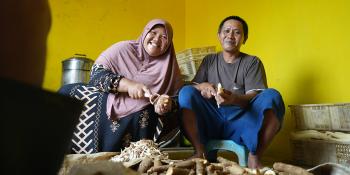
Tasnih runs a food business in her home with passive cooling features. From zero to boss, she says.
DONATE NOWWhen Tasnih first started selling snacks made of fermented cassava, she couldn’t afford to pay her two workers who were her neighbors until well over a month later. That was back in 2018. But the workers continued. “They trusted me,” says Tasnih who lives in Kampung Sukadamai (“Village of Peace” in Indonesian) on Batam island, Indonesia. Looking back on her entrepreneurship journey, she is proud of what she has achieved. “From zero to boss,” she says.
In her words, she only had half a house in the past. In 2023, she built a new, 28-square-meter home under a partnership between Habitat for Humanity Indonesia and Habitat for Humanity Singapore. She used her savings of 40 million rupiah (about US$2,270) to build a bigger kitchen in 2025 that allowed her to expand her home-based business. She says, “I decided to sell it (fermented cassava) because there was no competitor. Others started but they didn’t continue because of the long process.”
Donate
Open the door to economic opportunities for more families in Asia and the Pacific.
Now she employs four workers from the community. They wash, dry, peel and cut the cassava that Tasnih’s husband buys from the market each day. Due to the long fermentation process, she starts at 9 a.m. and ends at midnight. She says, “Patience is key.”
Surprisingly — or not — the kitchen is her favorite part of her home. “I’m proud of my products. Whenever I get bulk orders, I would take photos and post online.”
Tasnih is also among families who are partnering with Habitat Indonesia under its innovative passive cooling project on Batam. In February 2026, reflective roof paint was applied to her home. “The floor felt cool at dawn. It feels like we have A/C,” she says. Two months later, in April 2026, a rooftop ventilator was installed at the highest point of her home as a second phase intervention to manage heat.
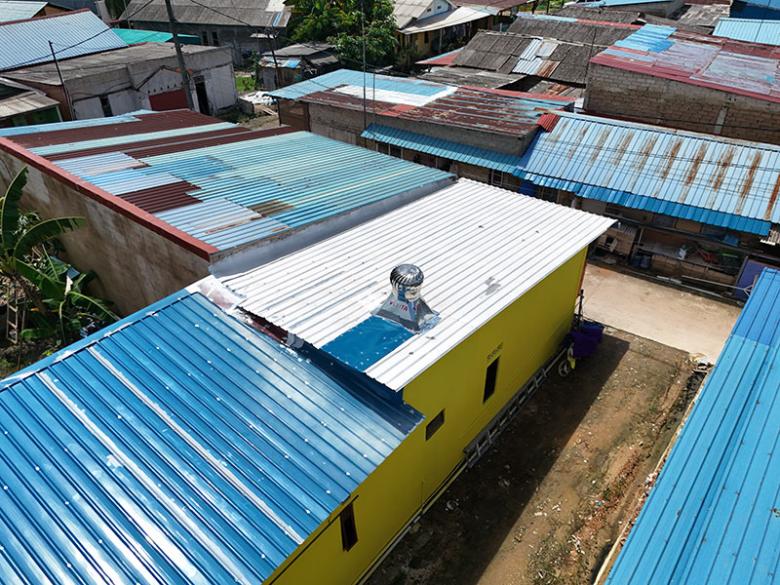
Aerial view of rooftop ventilator on Tasnih’s home in Batam, Indonesia.
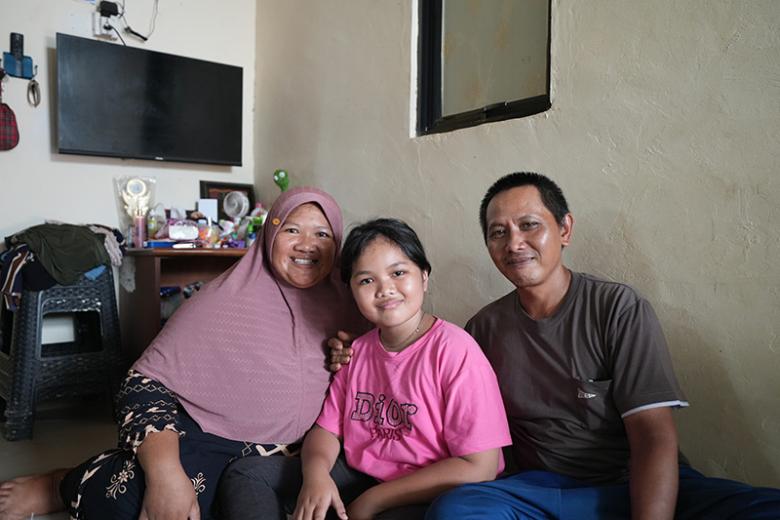
Tasnih and Rusdiandi with their daughter Karos Malasari who loves to draw and wants to be a football player. Photos by Habitat for Humanity Indonesia/Budi Ariyanto.
At home, personal touches such as a framed wedding photo can be seen. A few drawings of her eight-year-old daughter Karos Malasari are on the walls as well as their bedroom’s door. While her daughter likes to draw, her ambition lies elsewhere. “I want to be a football player,” says Karos Malasari who came home from playing football with children from the village.
Since 1997, Habitat for Humanity Indonesia has been working with families like Tasnih to build or improve a place they call home. Through multisector partnerships, Habitat builds resilient homes with communities, strengthens policies and inspires action for housing. Learn more at habitatindonesia.org