Country Facts:
- Capital city – Lilongwe
- Population – 20.1 million
- Life expectancy – 66 years
- Unemployment rate – 5.4%
- Below poverty line – 71.7%
Source: World Bank
Habitat Facts
- Habitat started in Malawi in 1986.
- Individuals served in FY2025 – 9,885
- Through new construction – 395
- Through incremental construction – 4,445
- Volunteers engaged - 1,847
The housing need in Malawi
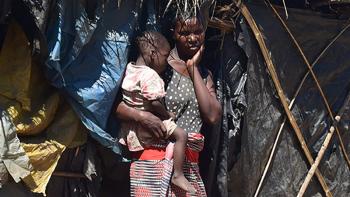
More than half, or 58.9%, of the 4.8 million housing units in Malawi are substandard homes, according to the government’s 2018 population and housing census. Typically, these houses are made of mud walls and grass thatched roofs. To meet the current housing demand, an estimated 21,000 new units will have to be constructed annually in the next 10 years.
Anchored by the conviction that safe and affordable housing provides a path out of poverty, Habitat for Humanity Malawi has partnered with almost 133,600 families to access decent housing. We work with vulnerable groups to build or improve the place they call home, improve water, sanitation and hygiene facilities, help families recover and rebuild following disasters, and provide informal vocational training. We also advocate for security of land tenure as well as sustainable and inclusive policies and systems that promote access to decent housing.
How Habitat addresses the need
Through the following programs, Habitat for Humanity Malawi works with families to build a better future:
Vulnerable group housing
Habitat Malawi builds homes and sanitation facilities with orphans and other vulnerable groups such as people with disabilities in rural communities. We also provide complementary services such as training to raise awareness of malaria and HIV prevention as well as property and inheritance rights. To date we have supported 7,638 households.
Water, sanitation and hygiene, or WASH
We help improve the health and well-being of informal settlement residents and rural communities through constructing user-friendly, sustainable water, sanitation and hygiene, or WASH, facilities. We build communities’ capacity to manage the WASH structures and conduct hygiene and sanitation campaigns to raise awareness. To date, 32,870 households have since been served through our WASH interventions.
Disaster risk reduction and response, or DRRR
Habitat Malawi empowers local communities through the Participatory Approach for Safe Shelter Awareness, or PASSA, to build back better and safer after disasters. We also train local masons to increase their knowledge and skills in building disaster-resilient homes. To date Habitat Malawi has supported 19,093 households.
Advocacy
We advocate for greater access to land and housing. We also promote policies that increase access to adequate, affordable housing for vulnerable groups and low-income families, including the enactment of the National Urban Policy and security of land tenure.
Volunteer engagement
Habitat Malawi is thrilled to welcome Global Village volunteers from around the world, following a hiatus in 2020 due to COVID-19. During the pandemic, we stayed connected with our volunteers through virtual builds, allowing them to watch our construction work online. Since re-opening in FY2024, we have welcomed 135 Global Village volunteers from the Netherlands, Germany, France, Belgium, Spain, and the United Kingdom. Together, we have built 17 houses with families. We look forward to more opportunities to involve volunteers in meaningful ways to support Habitat’s mission and drive sustainable development.
Promoting sustainable construction materials in Malawi
We have set up a facility in Blantyre to contribute towards production and use of sustainable construction materials such as cement blocks and soil stabilized blocks. Through this center we provide training to the disadvantaged youths and other vulnerable groups in vocational skills that relate to the housing industry.
What you can do
DONATE
To donate directly to Habitat Malawi, please contact us via the details below or visit habitat.org/donate and select “Designate your donation” to donate to Habitat Malawi.
VOLUNTEER
The Global Village program has resumed in Malawi. Please visit habitat.org/gv for more information and updates.
TITHE
Habitat affiliates in the U.S. support the international work through an annual tithe. For additional information, email [email protected] or contact your local Habitat organization.
CONTACT
Habitat for Humanity Malawi
Email: [email protected]
Website: www.habitat.mw