Together, we build
Educational opportunities
Together, we build educational opportunities
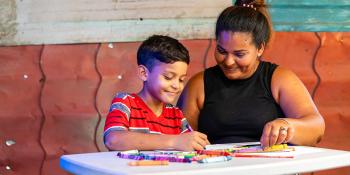
A child gets home from school, visibly discouraged. When his mother asks the reason, he is forced to show her the teacher’s message. He has lost points on his homework because the notebooks are dirty. This is not the first time. His mother tries to minimize the issue, since there is nothing they can do. The house conditions are far from perfect. The roof is leaking, the floor is made of dirt, and the stove is throwing smoke all around the house. He has been trying to keep the pages clean while completing his assignments on the floor, so his mother can use the table to prepare food to sell. The effort has been, again, unsuccessful.
In Latin America & the Caribbean, children face difficulties completing their education. Some challenges are happening in the classroom, but a lot of them extend to the houses due to a lack of proper infrastructure. As Habitat for Humanity, we believe that improving those homes would catapult the children’s educational opportunities. Several studies have helped us show the certainty of this connection.
A healthy home reduces school absences
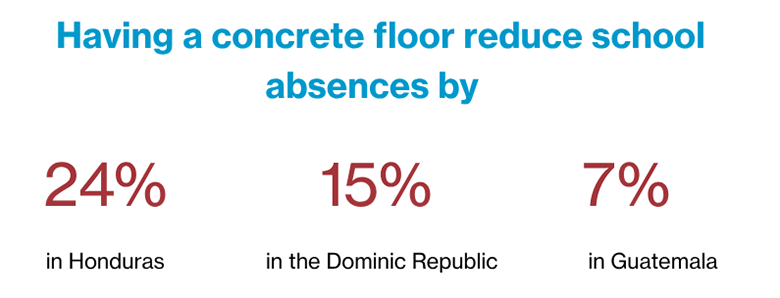
The 100,000 Floors to Play On initiative has replaced more than 30 thousand dirt floors with concrete ones in the region. This upgrade has become a tool to improve people’s health, with a reduction in medicine consumption and doctor appointments. A concrete floor also has effects on school attendance. In Honduras, children with a concrete floor missed 24% fewer days of school than their classmates who did not receive one. The reduction in the Dominican Republic and Guatemala was 15% and 7% respectively.
In Paraguay, families with a bathroom improvement have reported easier mornings when preparing the kids for school: “My children no longer have to rush to bathe before going to school. We no longer heat water for them to bathe in the washbowl; now they can shower directly with hot water.” A bathroom with running water and shower is especially important during the cold winter days.
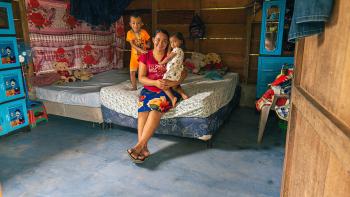
In Petén, Guatemala, Kathy has noticed an improvement in her children’s health after installing a concrete floor.
Children perform better at school when they attend regularly
Attending school is key to improving the children’s learning process. The World Bank (2018) states that school absences significantly affect academic performance, particularly in contexts of poverty. For example, students with chronic school absences score as much as six points lower in math and reading (Gottfried, 2014). According to a report by the World Bank, UNESCO, and UNICEF (2021), when children miss classes regularly, the risk of dropping out of school increases by more than three-fold in regions like São Paulo (Brazil). This trend has also been observed in the United States and across Latin America, especially in rural areas and among students with fewer financial resources, where continuity in education is key to mitigating inequalities and building future opportunities (Espíndola & León, 2002; Balfanz & Byrnes, 2012).
An adequate place to study improves educational development
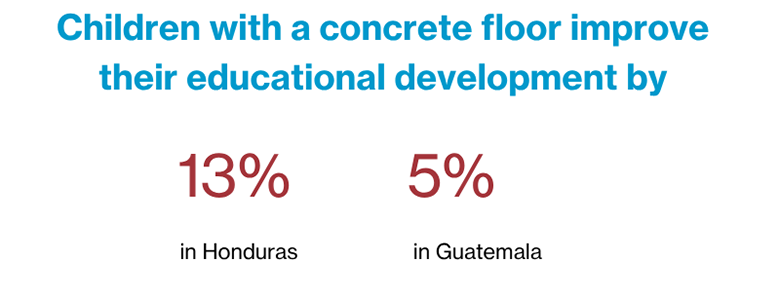
In Honduras and Guatemala, we asked the parents about their perception of the educational development improvement. We inquired about homework completion, motivation, grades, concentration, and learning in general. In both countries, children living in houses with a concrete floor improved their educational development.
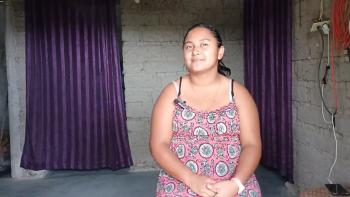
“Now the children study and do their schoolwork calmly and cleanly on the floor. As an adult, one feels more at peace this way.” — Juana, Honduras
A decent home motivates children to play
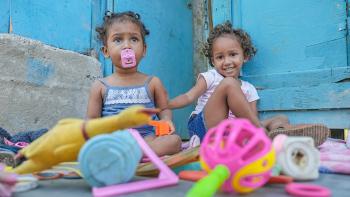
Not all the learning happens at school or by doing homework. Children, especially younger ones, can learn a lot by playing and exploring their surroundings. In the Dominican Republic, Ana has noticed an improvement after receiving a concrete floor: “I feel good because now my grandkids can play with their toys on the floor. Before, they couldn’t because they would get sick; rats and other animals would come in because there was space between the floor and the walls.”
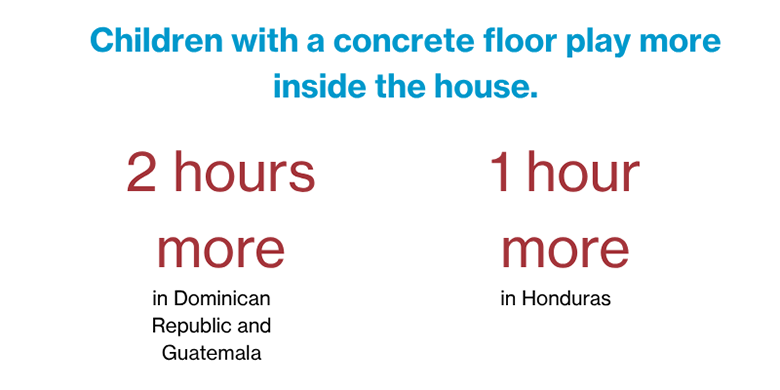
In the Dominican Republic and Guatemala, children living in homes with a concrete floor spent an average of two more hours playing in the home than those who have not yet received this improvement. In Alta Verapaz, Guatemala, a focus group participant shared: “Now the young children are happier because we have moved them onto the cement floor so they can play.” In this country, the increase was one more hour
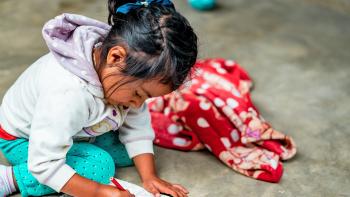
“There is nothing better than seeing my daughter playing on the cement floor. It really helps, because when it gets hotter, she lies down on the floor—not only to play but also to color with her crayons.” — Lorena, Honduras
With their new concrete floor, Kimberly’s kid can now play confortably on the floor.
Children need to feel confident enough to invite their friends over
A decent home is not only a place where people live, it is also associated with their self-image. When families get a house improvement, they start inviting people over. For the children, this is an opportunity to build social connections.
“In my case, my kids didn’t like to bring their friends over before. They said it made them feel bad because their friend’s houses were really nice and ours wasn’t. Now, they bring their friends over, they play, they do schoolwork together, and they feel different—happier and more motivated.” Marta, Nicaragua
Children living in adequate houses can thrive in their education
For children to thrive in their education, we need to leverage the field and provide them with a decent place to play, study and learn. Housing is the foundation for opportunity. When we invest in better and safer homes, we are giving people the key to improve their health, education and economic development. If you or your company is interested in contributing to catalyze this potential, donate or contact us to work together in initiatives to build a world where everyone has a decent place to live.