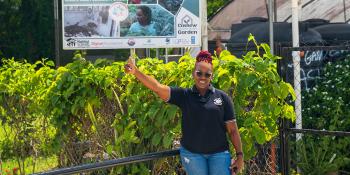
16 voces
Rosalind, Trinidad & Tobago
Trinidad & Tobago, Rosalind
From a Dream to a Thriving Community
Rosalind is the director of the Cashew Gardens Community Council. Cashew Gardens was established in 2000 as a government initiative offering low-cost housing lots to curb informal settlements in Trinidad and Tobago. She welcomes us with the openness and clear vision of someone leading a movement.
Although the community was founded with hope, the passage of time and the lack of basic infrastructure threatened to undermine its surroundings. “We dream. But how do you move your dream from a dream to reality? And this is where Habitat comes in to help us to realize the dreams,” Rosalind says.
The partnership between the Cashew Gardens Community Council and Habitat for Humanity has enabled the community to apply for and receive several grants to improve its infrastructure.
Rosalind’s voice represents community leaders who dedicate their lives to building resilience in the communities they call home.
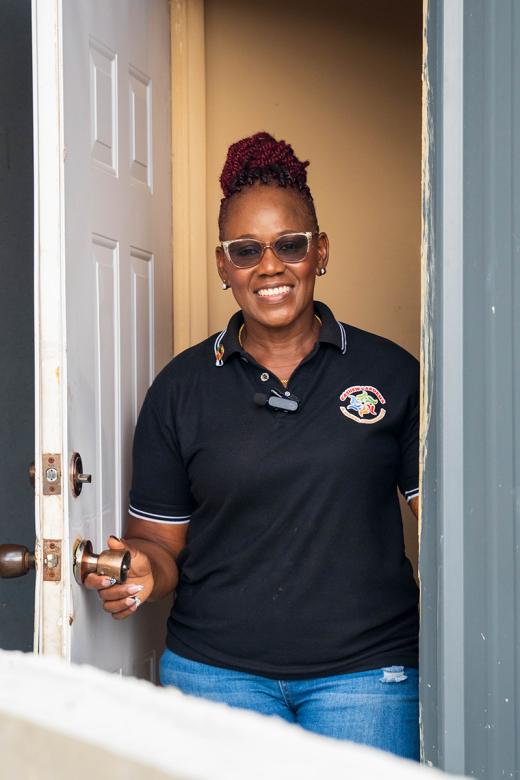
Rosalind highlights the work we have accomplished together: “Whenever we approach Habitat, they always help us find a way. It’s either they have the resources to do it or they would help us navigate another agency to help us get that support to get things done.”
The growth of Cashew Gardens
The Community Council began organizing to advocate for improvements, but its members soon realized that they needed to focus on supporting local residents. Habitat for Humanity has stood by the community since the earliest stages of this effort 26 years ago. The partnership has made it possible to carry out six community projects in Cashew Gardens.
One of their first major victories together was securing a grant for a computer center. Since the council had no experience preparing grant applications, Habitat helped its members write the proposal. As a result, they secured the equipment and found a space where children could do their homework and older adults could learn about technology.
They later established a community garden. Initially, a group of older women grew crops outdoors, exposed to the intense sun. When rain flooded the area, they lost entire harvests. Once again, working hand in hand with Habitat, they built a greenhouse equipped with fans and an automatic irrigation system, dramatically improving working conditions.
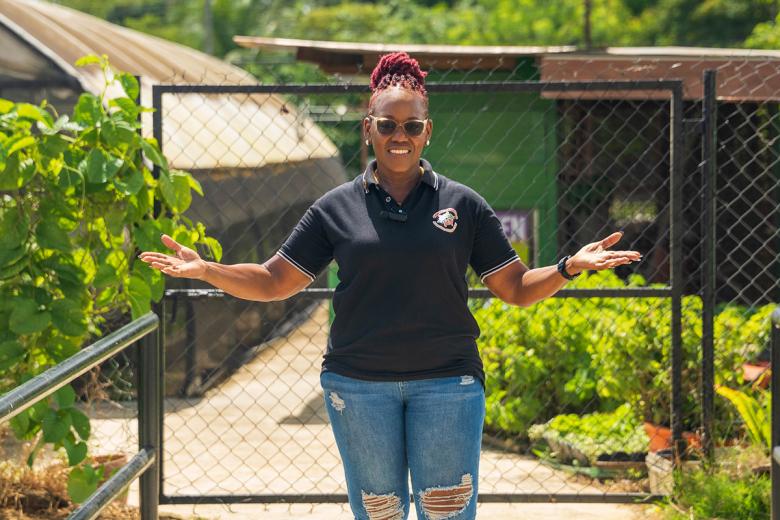
The Cashew Gardens greenhouse generates income for the Community Council and provides employment for local residents.
Home improvements
In Cashew Gardens, as in many communities across our region, the dream of owning a home requires tremendous effort and sacrifice. In Rosalind’s words: “You have to make a choice: Do we feed the children or do we build a house?” Many families build their homes incrementally. Yet, even after 20 years, many residents were still struggling to complete them because of economic hardship.
Much of our work in the community addresses this basic need. In some cases, we have been able to build entire homes. In others, we have helped families add a room or improve their bathroom facilities. Thanks to this ongoing support, housing conditions have been transformed, and the neighborhood has taken shape as a thriving community.
A Safe Place for Children
Rosalind speaks with pride about what the community has accomplished together. “Some of the greatest strengths I have seen is the togetherness of the community,” she tells us. With this spirit of togetherness, the Community Council makes decisions that support children’s development.
Cashew Gardens is a place where children still grow up together and can simply be children. In the afternoons, it is common to see them outdoors, playing football or riding their bikes instead of remaining inside on their devices. “We try to make it a safe space for them as well, where they know that they’re free to roam the streets and they’re free to ride and they’re free to just be themselves and be children,” Rosalind emphasizes.
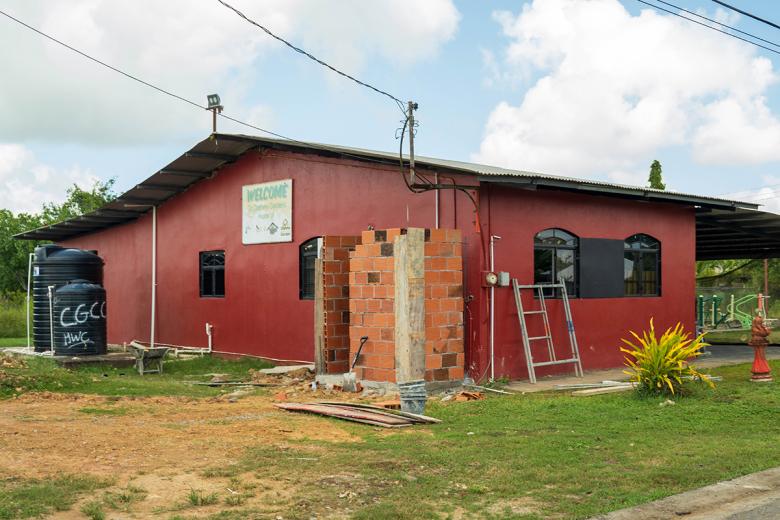
Cashew Gardens has a community center and play areas for children.
To foster this harmonious environment, the Community Council has carried out anti-bullying campaigns and organized camps and book drives that promote respect and unity from childhood.
Rosalind highlights how creating jobs within the community allows parents to be home when their children return from school, providing an additional layer of safety and family care. This is something she would like to promote further in the future.
Project sustainability
The produce grown in the greenhouse, including seasonings and coconuts, is sold to generate sustainable income. These funds make it possible to provide stipends to the women who work there, cover electricity and internet costs for the computer center, purchase school supplies and even provide food for children.
For Rosalind, the community’s transition has been her greatest source of pride. Cashew Gardens has moved from relying on donations to teaching people how to generate their own income. Today, thanks to the community’s persistence, Cashew Gardens has paved roads and proper drainage.
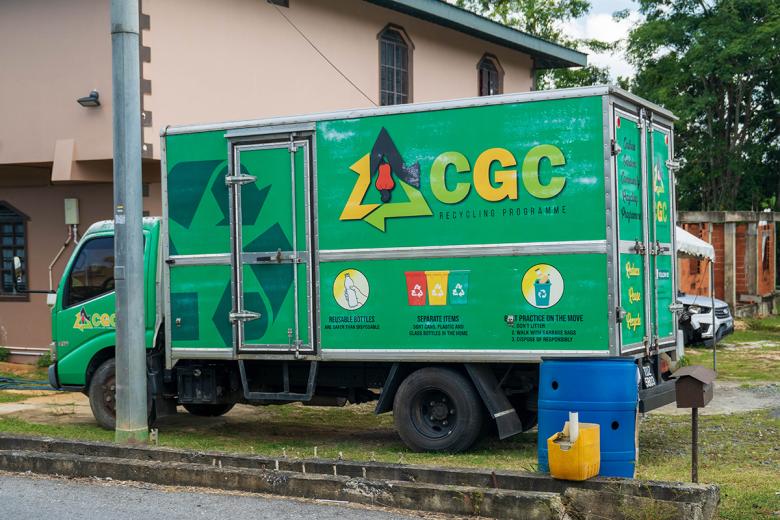
The Community Council’s advocacy efforts have helped bring improvements to Cashew Gardens. The photo shows the truck used for the recycling program.
A shared future
As we celebrate our 50th anniversary, Rosalind’s story joins Habitat for Humanity’s 16 voices. She reminds us that the true meaning of home is found in safety, peace, love and fellowship.
Let’s open the door to opportunities that can transform the lives of more families. If you would like to support projects like these in Trinidad and Tobago, donate through Habitat’s local website.
If you or your company would like to support communities in your country, contact us to learn more about available opportunities.
The partnership has made it possible to carry out six community projects in Cashew Gardens.