Where is the initiative carried out?
The initiative is currently implemented in eleven countries in Latin America and the Caribbean, in collaboration with partners who share our vision of creating positive impact in communities.
Turn your company’s social commitment into long-term transformational impact.
Your company can make a difference. “100,000 Floors to Play On” offers the perfect opportunity to align your social responsibility plan with real, measurable results.
We prioritize families living with dirt or deteriorated floors, especially those led by women, with young children, elderly members, or people with disabilities.
Habitat for Humanity, in partnership with the Inter-American Cement Federation (FICEM), launched 100,000 Floors to Play On in 2022.
This initiative seeks to replace dirt floors with concrete floors in vulnerable homes across the region.
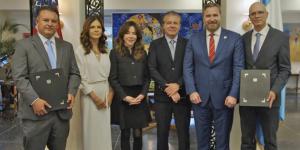
Our 100k floors to play on initiative continue to change lives across Latin America and the Caribbean. This time, in Guatemala, we have joined forces with the Mario López Estrada Foundation to keep building “Floors for Prosperity” in partnership with the U.S. Embassy.
Studies have shown that factors such as poor design and construction materials, lack of water and sanitation services, housing affordability, and tenure insecurity have direct impacts on people’s health.
To generate greater evidence to demonstrate the benefits of concrete floors on people’s quality of life, Habitat for Humanity prepared this report based on the findings of three impact assessments conducted in our region: a quantitative impact assessment in the Dominican Republic and two qualitative assessments in Nicaragua and Guatemala.
Selection of reports and articles.
The goal of the Terwilliger Center is to make the housing market work more effectively and efficiently for people in need of decent and affordable housing, thereby improving the quality of life for these households.
All our projects integrate monitoring, evaluation, accountability and learning (MEAL) strategies.