Together, we build resilience
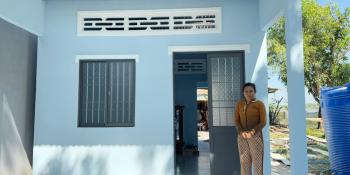
A climate-resilient home brings stability and peace for De and many families in Vietnam.
DONATE NOW.Home to nearly 18 million people, the Mekong Delta is also one of the world’s most densely populated rural regions. Climate change has intensified environmental shocks such as rising salinity, prolonged droughts, flooding and extreme heat. These pressures push people to migrate in search of safer and more stable livelihoods, according to a World Bank report in 2025. Unable to afford land or housing, many urban migrants like De live in inadequate homes or informal settlements.
In two provinces in the Mekong Delta, Habitat for Humanity Vietnam worked with vulnerable families such as De to improve their lives through safe, resilient housing. These efforts were part of Home Equals, Habitat for Humanity’s global advocacy campaign for equitable access to adequate housing, particularly in informal settlements.
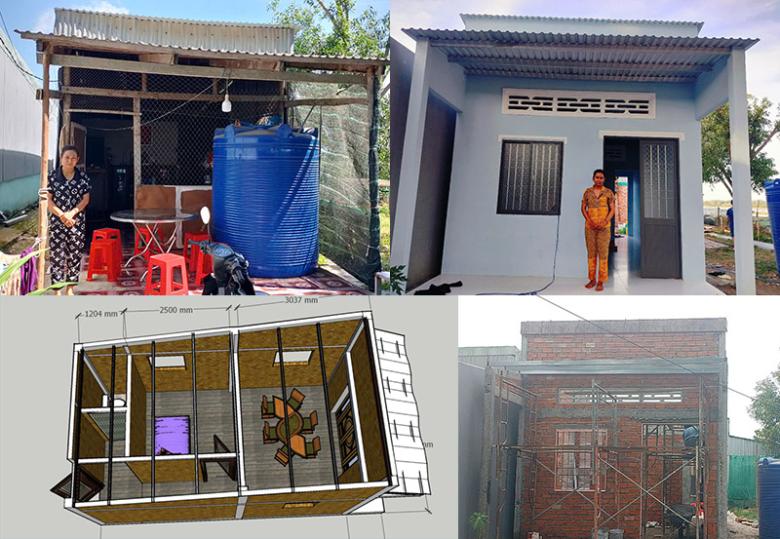
(Clockwise from top left) De in her old house; at the new home she built with Habitat; construction in progress; and a drawing of the house design. Images courtesy of Habitat for Humanity Vietnam.
In Kien Giang province, Habitat Vietnam advocated for improved construction standards in the government’s pro-poor housing program. Three affordable, durable housing models for new homes were proposed after Habitat Vietnam consulted local communities and partners. Locally available construction materials, cultural appropriateness and market prices were taken into consideration. With 30 new homes completed in Kien Giang, Habitat Vietnam aims to encourage the government to integrate more appropriate construction techniques into housing programs at the national level.
Opening the door to future advocacy
Households also gained a better understanding of land registration and inheritance processes through training on the 2024 Land Law. Such efforts open the door to future advocacy and policy dialogue on inclusive housing and land rights in Vietnam.
Over in Dong Thap province, 40 households who relocated from flood-prone areas to settle in two communes repaired their homes through grants and technical support from Habitat Vietnam. These families and the wider district communities also received training on water, sanitation, and hygiene, and how to work with local private sector actors to develop livelihood models.
Habitat Vietnam also worked with local authorities to collect data and analyze policy gaps regarding land use rights for resettled households. As a result, a support plan was developed to help families in resettlement sites obtain their land use right certificates, laying the groundwork for secure tenure and long-term stability.
Learn more about Habitat’s work in Vietnam at habitatvietnam.org.