What a decent home can change

Warren Jack served for over 30 years with Habitat for Humanity in New Zealand. The huge impact on the families served is being passed on inter-generationally, he said.

After more than 30 years with Habitat for Humanity in New Zealand, Warren Jack reflects on what a safe home can make possible.

The Maunu Road public housing development in Whangārei now bears the name Warren Place, in honor of Warren Jack, former director of Habitat for Humanity Northern and one of the longest-serving figures in Habitat New Zealand. He has been part of the organization for more than three decades, first as a volunteer and board member, then as a staff member. Asked what it means to have a road named after him, he says he feels “both honored and humbled”. 

Warren first got involved in November 1994, when Habitat for Humanity Manukau was still a fledgling organization. He was serving on a district-wide Church Property Committee when its chairman, who was also a founding director of the affiliate, urged him to get involved. He went along to a public meeting and, as he puts it, “became hooked”.

What drew him in was Habitat’s promise of “a hand-up and not a hand-out” for families living in unaffordable, overcrowded and substandard housing. Habitat, he says, also offered him a way of expressing his faith “by action rather than words”.

A person holding a key at home dedication in New Zealand

Housing affordability is an issue that confronts low-income families as well as many on ordinary incomes. Photo from Habitat for Humanity Northern’s FY25 annual report.

The housing crisis

Back then, the housing need in parts of New Zealand was stark. He remembers large suburbs of lower-value housing where overcrowding was common, homes were poorly maintained, and damp and mold were part of daily life. The consequences were illness, stress and exhaustion. Warren recalls “appalling health outcomes”, with asthma and rheumatic fever commonplace. Families were worn down. Parents felt overwhelmed. Some had simply “lost hope”.

Much has changed since the 1990s. Housing standards have improved, regulations have been tightened and the community housing sector has grown. But Warren is clear that the pressure has not gone away. Property values have soared. Housing affordability is now a major issue in New Zealand, not only for low-income families, but for many on ordinary incomes.

Population growth has added further strain, public housing waiting lists remain high, and overcrowding has not disappeared. Housing may be healthier than it once was, but decent, affordable housing is still out of reach for too many.

The moments that stay

What has stayed with him over all these years are not the big public moments, though there have been those too. He still remembers the thrill of Habitat’s successful 1999 attempt to break the world Speedbuild record, with more than 200 volunteers building a house in three hours, 44 minutes and 59 seconds. It was, he recalls, “lots of fun” and helped build public awareness and support.
But the stories he returns to are more personal than that.

He talks about one family who had been living in “substandard, unhealthy and overcrowded conditions” before moving into their permanent home. Afterwards, things began to shift in ways that went far beyond shelter. The mother went on to earn a university degree and became a teacher. The father, a community worker, was elected to a city council community board. Their daughter, who had ongoing ear infections in their old home, stopped having them after the move.

Then there is the woman who prepared a speech for the dedication of her home she had built alongside volunteers and staff from Habitat. She laminated the page beforehand, knowing the tears would come and not wanting them to blot the words. It is a small detail that lands harder than any broad statement about impact, reminding him that when people have spent years without stability, getting the keys to a decent home can be overwhelming.
Warren Jack cutting the ribbon at 2023 home dedication in Vietnam

After all the years of support, Warren believes in making a difference one family and one home at a time. Photos courtesy of Warren Jack.

What home means

Ask Warren what home means to him, and he does not ration the answer. “It is love, safety and security, assurance, support, friendship, comfort, protection, learning, joy, laughter, belonging, nurture, growth and memory-building.” That, really, is the heart of how he sees this work. A home is the foundation for better health, more confidence, stronger educational outcomes, and families feeling less battered by life. Or, as he puts it, “The impact on the families we serve is huge and is passed on inter-generationally.”

When asked what he is proudest of, he talks about legacy: helping build something the next generation can carry forward, helping shape an organization where people are valued, respected and work as a team.

His advice to younger staff and volunteers is just as direct: “Adopt its purpose and make it your purpose.” Even now, after all these years, he remains convinced that “you can make a difference one family and one home at a time”.

Children and families
Off
What a decent home can change
Warren Jack, former director of Habitat for Humanity Northern in New Zealand

What a decent home can change

Teaser image
Warren Jack, former director of Habitat for Humanity Northern, at home dedication in Vietnam
Image Caption
Warren Jack, former director of Habitat for Humanity Northern, at home dedication in Vietnam

Together, we build resilience

Home to nearly 18 million people, the Mekong Delta is also one of the world’s most densely populated rural regions. Climate change has intensified environmental shocks such as rising salinity, prolonged droughts, flooding and extreme heat. These pressures push people to migrate in search of safer and more stable livelihoods, according to a World Bank report in 2025. 

In two provinces in the Mekong Delta, Habitat for Humanity Vietnam worked with vulnerable families to improve their lives through safe, resilient housing. These efforts were part of Home Equals, Habitat for Humanity’s global advocacy campaign for equitable access to adequate housing, particularly in informal settlements.

In Kien Giang province, Habitat Vietnam advocated for improved construction standards in the government’s pro-poor housing program. Three affordable, durable housing models for new homes were proposed after Habitat Vietnam consulted local communities and partners. Locally available construction materials, cultural appropriateness and market prices were taken into consideration. With 30 new homes completed in Kien Giang, Habitat Vietnam aims to encourage the government to integrate more appropriate construction techniques into housing programs at the national level.

Opening the door to future advocacy

Households also gained a better understanding of land registration and inheritance processes through training on the 2024 Land Law. Such efforts open the door to future advocacy and policy dialogue on inclusive housing and land rights in Vietnam.

Over in Dong Thap province, 40 households who relocated from flood-prone areas to settle in two communes repaired their homes through grants and technical support from Habitat Vietnam. These families and the wider district communities also received training on water, sanitation, and hygiene, and how to work with local private sector actors to develop livelihood models.

Habitat Vietnam also worked with local authorities to collect data and analyze policy gaps regarding land use rights for resettled households. As a result, a support plan was developed to help families in resettlement sites obtain their land use right certificates, laying the groundwork for secure tenure and long-term stability.

Off
Together, we build resilience
Vietnam
Campaign Tags
Home equals

Finally, we own our land

After more than 20 years of living in Tanjung Kait fishing village, Indonesia, Komariyah and her family have a safe, secure place to call home.

In the coastal community of Tanjung Anom, the fishing village of Tanjung Kait is home to 107 Indonesian families who built their houses with the permission of the previous owners of the land. They have long faced the threat of flooding. Among them are Komariyah, her husband Ahmadi and their three children, who have been living in the community for over 20 years. “When it flooded, we had skin rashes and diarrhea.”

Although she wanted a better place to live, she could not leave Tanjung Kait. “Our livelihood here is quite decent. My husband is a fisherman, so it would be impossible to move inland. If we live in any other village, we would be far from our source of income.”

Ahmadi with his daughter in Tanjung Kait fishing village, Indonesia

Komariyah’s husband Ahmadi was greeted by their daughter after he returned from a fishing trip.

Their family and their neighbors are among the more than 1.1 billion people around the world who live in slums and other informal settlements, and that figure continues to rise. Residents of informal settlements have very limited access to basic services such as clean water, sanitation and electricity. The poor living conditions are a physical manifestation of inequities holding back far too many families and communities.

Home Equals

In 2023, Habitat for Humanity and partners launched Home Equals, a five-year global advocacy campaign to change policies at the local, national, and regional levels so that residents of informal settlements have a safe, secure place to call home. In the Asia-Pacific region, five Habitat entities in Australia, Cambodia, Indonesia, Nepal and Vietnam joined the campaign to pilot advocacy and programmatic interventions to help upgrade housing in informal settlements.

Habitat for Humanity Indonesia’s Home Equals project in Tanjung Kait worked to improve access to adequate housing in informal settlements through policy and systems change. The project helped strengthen long-term residents’ land tenure and enabled the families to upgrade their community facilities and houses. 

In Indonesia, Habitat advocated for the development and implementation of regulations to speed up the provision of decent homes and encourage use of village funds to provide adequate housing. In early 2024, this unlocked an initial US$185,333 in government funds for housing programs—potentially benefiting 14,760 people.

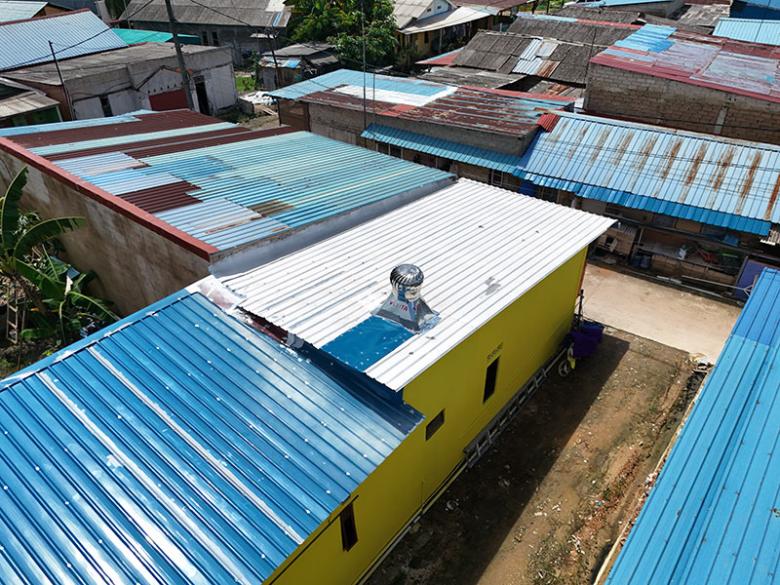
Aerial view of new homes in Tanjung Kait, Indonesia

Aerial view of Habitat Indonesia’s Home Equals project in Tanjung Kait fishing village.

Komariyah became a community leader after she was trained in safe shelter principles. Together with other community members, she joined consultations and created a community action plan. It detailed steps to formalize each family’s ownership of their land, helping to overcome the lack of financial resources to buy the land and process documents to certify their ownership. To bridge the gap, Habitat Indonesia worked with KOMIDA, one of the largest microfinance institutions in the country, to customize an affordable loan scheme that allowed 87 families to each buy a plot of land and cover land certificate costs.

Unlocking land tenure security

By October 2024, 110 families—including Komariyah’s—secured legal land ownership and unlocked US$645,161 in government funds to support their access to financing opportunities for buying the land they have been living on. “Finally, we own our land,” Komariyah said.

To ensure long-term impact, Habitat Indonesia partnered with government officials to develop disaster-resilient housing guidelines and promote inclusive land ownership with both the names of husband and wife included in land certificates.

Empowered participation is at the core of the project. Community members and partners worked alongside government officials to clear the land to prepare for the construction of new, resilient housing. The government, along with private donors, built sustainable road infrastructure, drainage, clean water utilities, electricity networks, green spaces, public facilities, fish-collecting kiosks, and wave-breaking structures.

“A house is essential. It's where we live, a shelter from heat, rain, and wind. It's a place that protects us.”
— Komariyah
Off
Finally, we own our land
Indonesia
Teaser image
Komariyah opening the door to her new home in Tanjung Kait fishing village, Indonesia
Campaign Tags
Home equals

Opening the door to hope

Dan Peyton, Head of Impact and Engagement at Habitat for Humanity Australia, has spent more than a decade helping connect people to Habitat’s mission through fundraising, volunteering and partnerships. Along the way, he has seen how a safe home can change the course of a family’s life.

The family Dan Peyton met in Cambodia had been living with more than their share of hardship. The mother was living with a terminal illness. The father caught rats for a living, earning just US$1 a kilogram. Their son had severe cerebral palsy. Their daughter cycled miles to school each day.

Toward the end of the build, the father told Dan something he hadn’t expected. Each night, he would wake up and find his wife standing outside their new home, smiling from ear to ear.

The mother has since passed away. But she died knowing her children would have a safe place to live.

Over the years, experiences like this have shaped how Dan thinks about impact, and what a home can make possible.

Habitat Australia's Dan Peyton with Cambodian family

Habitat Australia’s Dan Peyton with the Cambodian family who left a deep impression. The mother has since died following a terminal illness. Photos courtesy of Dan Peyton.

What impact really means

Dan didn’t set out to work in housing. When he was approached to join Habitat for Humanity Australia’s fundraising team over a decade ago, he knew little about the organization. “I initially assumed it was about protecting rainforests and koala habitats!”

Today, he leads impact and engagement, shaping how the organization brings in support and turns it into meaningful change, from individual giving and volunteering to corporate partnerships.

“What drew me in was how tangible the outcomes were, and how universal the need for a safe, decent home is.”

At first, that meant the physical things: a house, a toilet, a water system. Over time, he came to see that the deeper impact lies in the opportunities they create.

“When people have a safe place to live and a thriving community around them, they’re empowered to use their strengths to build better futures for themselves and others.”
— Dan Peyton

He recalls a family in Western Sydney who moved into their Habitat home just before Christmas, after escaping domestic violence. While most people were winding down for the holidays, they were stepping into stability for the first time in years.

“It reframed my place in this work,” he says. “Instead of focusing on the scale of the housing problem, I started focusing on the fact that for one family at a time, the change is immediate, profound and life‑altering. That shift has stayed with me.”

Carrying it home

Over the years, the work has found its way into his own life. Dan has volunteered on builds, bringing along friends and family. On those trips, he would connect his children with the families they were building alongside.

“My children have gained perspective on the world and a deeper appreciation for what they have. On many builds, I’ve called home and, through FaceTime, my kids have connected with the children of the families we’re building alongside,” he says.

“Their questions have changed over the years — from ‘Can I see your toy box?’ to conversations that show they now understand that happiness, health, and love matter far more than material things.”

On his arm is a tattoo of ten small bricks. Each one represents a family or volunteer team that has been part of his journey. “Knowing I’ve supported them in some small way is something I’m very proud of.”

Looking ahead

Years in this work have redefined what home means to him.

“Home is no longer just a physical space. It’s safety, belonging, and freedom to dream. It’s where you can relax, feel secure enough to create memories, and build a future. It is the foundation for everything else:­ opportunity, stability, and hope.”

Dan with colleagues painting a Sydney youth housing facility (left) and at an event.

To Dan, people can support Habitat by volunteering, donating, or speaking up for housing. 

Support, he believes, can take many forms: volunteering locally or overseas, making a small monthly donation, or speaking up for housing. Whatever the contribution, the impact can be transformational, not only for families and communities being supported, but for those who choose to get involved.

And if there is one message he hopes will endure, it is this:
“The world can feel dark at times, but my wish for the next generation is that they see the good in it and recognize that even the smallest act of support for someone less fortunate can change a life, and sometimes, change it for generations.”

Off

Opening the door to hope

Health and hope start with a home

Jungbae and his family have lived in the home that they built with Habitat in Korea since 2004. Healthier and hopeful, Jungbae is a community leader who sees civic volunteering as a way of spreading happiness. 

In 2004, Jungbae and his family opened the door to a better future by moving into a home of their own. Over 20 years later, in 2026, we asked him about the changes in his life and his family’s life. “We still live in the same house. My second daughter came here when she was 10, and she’s already 32. The difference is that I’m living a happier life! A cute dog is also spending happier days in this house.”

Jungbae is a civic police volunteer. Together with his wife and his younger daughter, they live in Cheonan city, South Chungcheong province, South Korea.

He could recall the days of living in a run-down rental place where he was constantly worried. Each month, he paid about 300,000 Korean won (equivalent to US$204 at April 2026 rate) for the room in Pyeongtaek City, about 70 kilometers south of the capital city of Seoul. Back then, his family was glad they had a place to stay. But they did not feel safe. There was also a lack of public transportation.

Housing challenges

Jungbae shared about some of the challenges. “At that time, it was not a good environment for young children to live in. I was most worried about health problems. I remember being very uncomfortable because there was a lot of mold at home. The children also had problems commuting to school.”

The heating often broke down in their old home, making winter even colder. It was also hot and humid in summer. “I was in poor health; so I couldn’t work much. I didn’t have enough money so I only made minimal repairs.

“The house was quite isolated and not very secure, so there were many days when I couldn’t concentrate on my work, worrying about my family at home,” he added.

Then his wife Gunae came across a notice in the local newspapers while she was looking at job recruitment advertisements. They learned that Habitat for Humanity Korea’s affiliate was looking to partner with families in need of decent housing. “At that time, we were truly desperate, and we felt a sense of hope. We decided to apply so we could live warmer, happier lives.”

Korean homeowner Jungbae and his family in 2004 photo

Jungbae (second from left) with (from left) his younger daughter Hayeon, wife Gunae, and older daughter Jiyeon, at their new home in 2004. Photos courtesy of Jungbae.

Bird's eye view of the multiplexes in Habitat Korea's Village of Hope (bottom right)

Bird’s eye view of the multiplexes in the Village of Hope (bottom right). Photo courtesy of Habitat for Humanity Korea.

In 2002, his family was among 16 families who took part in a weeklong blitz build organized by Habitat Korea. They partnered with local volunteers to construct their new homes. As Jungbae was not in good health, his wife Gunae worked alongside the volunteers, contributing almost 500 hours of her labor. A total of four buildings — each with four housing units — were built. Their community is known as the Village of Hope following a naming contest.

A healthy home sparks wider change

Jungbae used to suffer from severe asthma. He said in a 2018 interview: “After living in this house, my asthma is almost gone now. This village is located at the foot of a mountain and the temperature is three to four degrees lower than Cheonan city. There is a lot of snow in winter but the air is clean and good.”

Two decades on, he feels just as comfortable in his 51-square-meter home. “It’s cool in summer, and warm in winter.” His family spends most of their time in the living room, talking and eating together. “I feel happy because this is a home where I could stay comfortably and safely.”

There are also other positive changes. “My health improved a lot. I worked and ate delicious food more often. I was grateful that my children could go to a nearby school.”

As Jungbae became healthier, he started volunteering as a civic police officer. He continues to contribute to his community till today. Other than the civic police, he is part of the Saemaul Leaders’ Association and volunteers with the local fire brigade.

Korean homeowner Jungbae, a civic police volunteer, at a Sept. 2025 event.

Habitat for Humanity’s Asia-Pacific meta-evaluation study in end-2025 showed safe, secure homes not only improved physical living conditions but also unlocked pathways to health, education and economic opportunities. More stable living environments were often associated with a greater sense of safety, peace of mind, and dignity. The meta-evaluation synthesized findings from 34 project evaluations conducted between 2016 and 2023 across nine countries in the Asia-Pacific region.

When asked about the future, Jungbae said, “My hope is for my family to stay healthy, for my children to marry good partners and live happy lives, and for my spouse and me to grow old happily in this home.”

He added, “I will try to live a life where I can share happiness with people through volunteer work that I can do.” Reflecting his wish, he wrote:

Korean homeowner Jungbae's handwritten message "Open the door to hope"

The original web story in Korean can be read here.

Learn more about how Habitat Korea brings people together to address the housing need.

Are you inspired?

Give, volunteer, speak up, get involved, because a better future starts with a home. 

Health
Off
Health and hope start with a home
Korean homeowner Jungbae (center) with his wife, younger daughter, and dog

Health and hope start with a home

Teaser image
Korean homeowner Jungbae (center) with wife (left), younger daughter (right) and dog
Image Caption
Korean homeowner Jungbae (center) with wife (left), younger daughter (right) and dog

Let's Open the Door

Over the past fifty years, we have helped more than 65 million people around the world build, improve or finance places to call home. Now, we’re building on that momentum.

Teaser title
Let's Open the Door

Let's open the door to gender equity

International Women’s Day is more than an annual observance. For women and girls, equitable access to housing means they can live life on their own terms. Read more stories.

MANILA (March 8, 2026) At Habitat for Humanity, we believe everyone should have the opportunity to envision their future on their own terms. It all starts with an open door. Justice. Inclusiveness. Sustainable housing for all. 

This International Women’s Day, we want to highlight the daily realities of the women and girls we work with. We share some stories that show how a safe, affordable home sparks wider change. 

1 / 3

Facebook photo from Habitat for Humanity Fiji

Build more and smarter homes. By 2050, urban areas are expected to house an estimated 70% of the world’s female population, totaling 3.3 billion. One third of these women and girls could find themselves living in inadequate housing or slums or informal settlements (UN Women, 2023). Women are less likely to own or earn resources, make decisions or access services related to housing, they are more likely to experience energy poverty and they are more likely to die or be injured in disasters. 

When Melania lost her husband in 2018, she would not have thought it possible to have her own safe, secure home amid rising construction costs. With the support of Habitat for Humanity New Zealand, she partnered with Habitat for Humanity Fiji to build a new home. Now she shares a cyclone-resilient home in Fiji with her son and daughter-in-law that is designed to withstand strong winds and extreme weather. “It’s a blessing,” Melania said.

Photo ©Habitat for Humanity Nepal/Abisek Bista

Transform the housing sector to increase housing access. The housing system does not serve all people equally. Despite the progress in recent years, 740 million
women still lack access to financial services (UNDP, 2023). Gender pay gaps, limited access to credit, lack of awareness of available financial services, and exclusion from decision-making spaces constrain women’s ability to purchase or improve housing, especially in rural or indigenous communities where financial information is often shared in male-dominated forums. 

Lalita gained confidence in starting her own business after being trained in financial literacy through Habitat for Humanity Nepal’s microfinance partner. With some savings, she and her husband set up a shop just outside their home, selling household items and tea. As part of the training, she also learned about ways to make her home safe. She started building a new home incrementally in 2022 and was looking forward to expanding the upper story. 

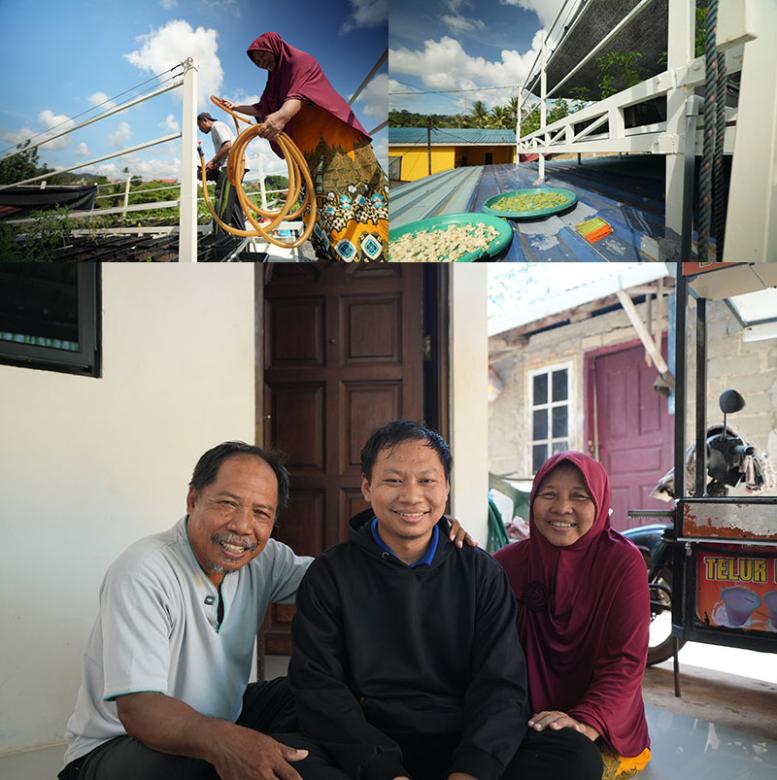
Transform the housing sector to increase housing access. Through our work, we also support women to influence market, social, economic and political systems to address their concerns through advocacy and policy change. In the coastal community of Tanjung Kait, Habitat for Humanity Indonesia works with long-term residents like Komariyah (pictured above) to secure land tenure and upgrade their homes and community facilities. Habitat Indonesia also partnered with communities and local governments to leverage village funds to provide adequate housing.

Facebook photo from Habitat for Humanity Hong Kong

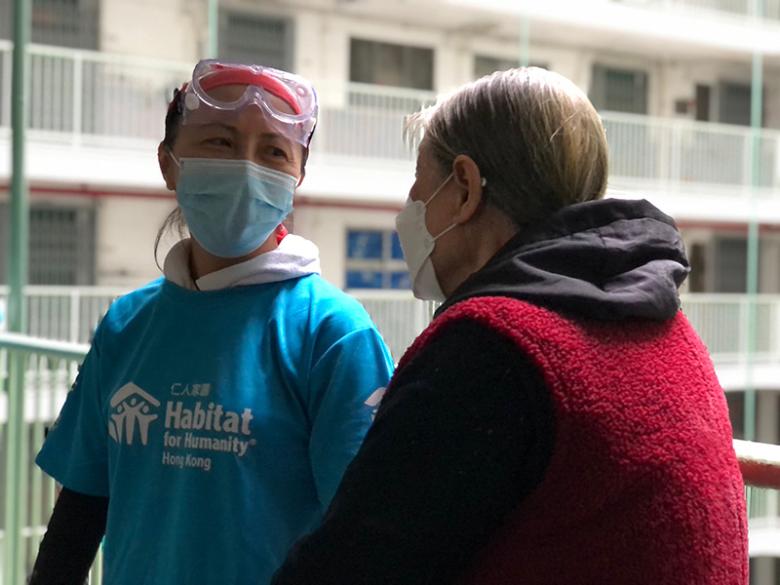
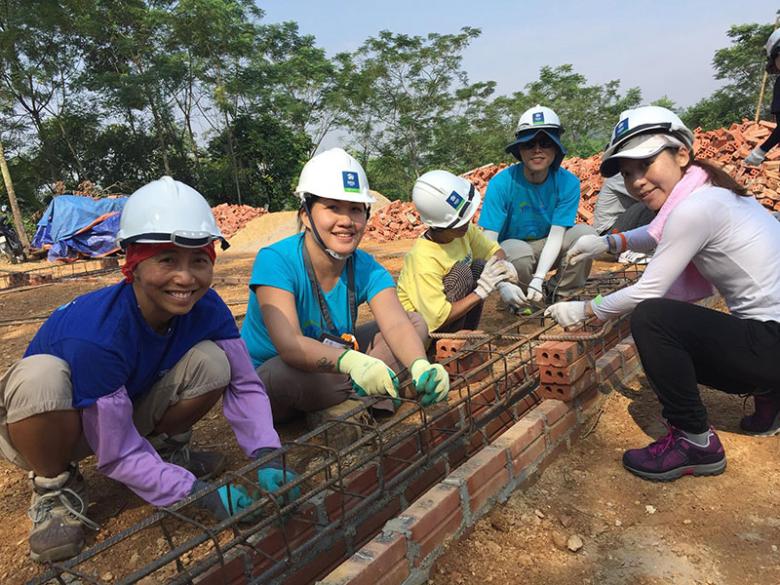
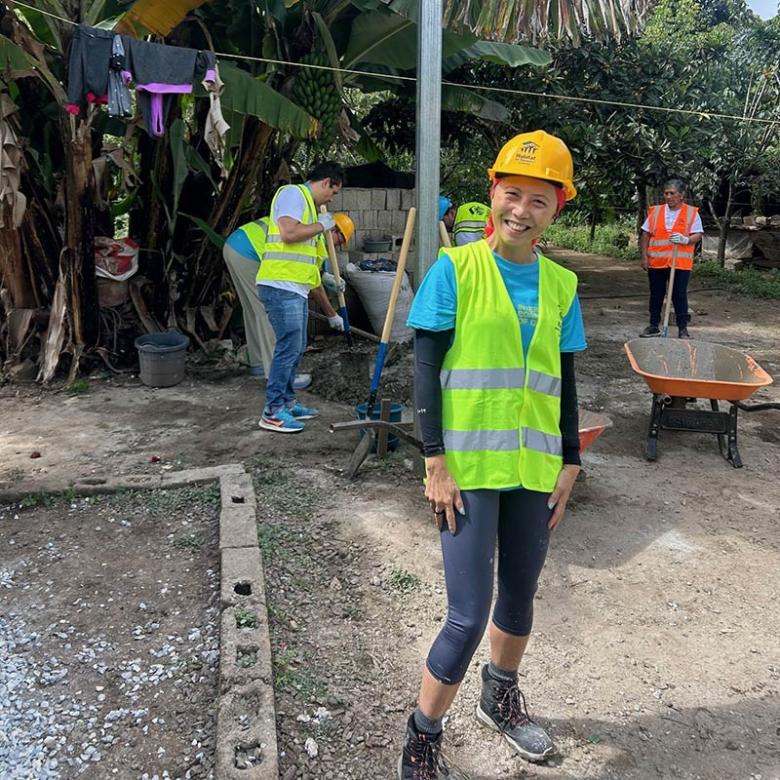
Inspire action for housing through deep engagement with individuals. Women are already volunteering their time and energy in Habitat’s programs across the Asia-Pacific region and around the world. We draw on their power and potential to catalyze change through advocacy and influencing. In Hong Kong SAR, China, Habitat launched its Women Build program in 2025 to address the pressing need for safe, secure housing for single mothers and their children. Emily Lam-Ho, a passionate advocate for Habitat Hong Kong, continued her support by chairing the Women Build Advisory Committee.

Facebook photo from Habitat for Humanity Fiji

Build more and smarter homes. By 2050, urban areas are expected to house an estimated 70% of the world’s female population, totaling 3.3 billion. One third of these women and girls could find themselves living in inadequate housing or slums or informal settlements (UN Women, 2023). Women are less likely to own or earn resources, make decisions or access services related to housing, they are more likely to experience energy poverty and they are more likely to die or be injured in disasters. 

When Melania lost her husband in 2018, she would not have thought it possible to have her own safe, secure home amid rising construction costs. With the support of Habitat for Humanity New Zealand, she partnered with Habitat for Humanity Fiji to build a new home. Now she shares a cyclone-resilient home in Fiji with her son and daughter-in-law that is designed to withstand strong winds and extreme weather. “It’s a blessing,” Melania said.

Photo ©Habitat for Humanity Nepal/Abisek Bista

Transform the housing sector to increase housing access. The housing system does not serve all people equally. Despite the progress in recent years, 740 million
women still lack access to financial services (UNDP, 2023). Gender pay gaps, limited access to credit, lack of awareness of available financial services, and exclusion from decision-making spaces constrain women’s ability to purchase or improve housing, especially in rural or indigenous communities where financial information is often shared in male-dominated forums. 

Lalita gained confidence in starting her own business after being trained in financial literacy through Habitat for Humanity Nepal’s microfinance partner. With some savings, she and her husband set up a shop just outside their home, selling household items and tea. As part of the training, she also learned about ways to make her home safe. She started building a new home incrementally in 2022 and was looking forward to expanding the upper story. 

Transform the housing sector to increase housing access. Through our work, we also support women to influence market, social, economic and political systems to address their concerns through advocacy and policy change. In the coastal community of Tanjung Kait, Habitat for Humanity Indonesia works with long-term residents like Komariyah (pictured above) to secure land tenure and upgrade their homes and community facilities. Habitat Indonesia also partnered with communities and local governments to leverage village funds to provide adequate housing.

Facebook photo from Habitat for Humanity Hong Kong

Inspire action for housing through deep engagement with individuals. Women are already volunteering their time and energy in Habitat’s programs across the Asia-Pacific region and around the world. We draw on their power and potential to catalyze change through advocacy and influencing. In Hong Kong SAR, China, Habitat launched its Women Build program in 2025 to address the pressing need for safe, secure housing for single mothers and their children. Emily Lam-Ho, a passionate advocate for Habitat Hong Kong, continued her support by chairing the Women Build Advisory Committee.

Basic
Gender equality
Off
Let's open the door to gender equity
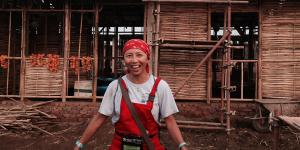
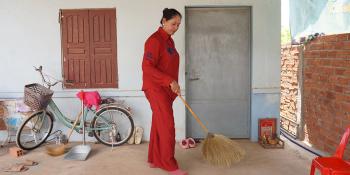
Rem(R) and daughter Sonita outside their home in Siem Reap, Cambodia

Let's open the door to gender equity

International Women's Day is more than an annual observance. For women and girls, equitable access to housing means they can live life on their own terms. Read more stories.

Teaser image
Rem(R) and daughter Sonika outside their home in Siem Reap, Cambodia

Let's open the door to a better future

Since 2003, Eunjin Kim has been donating regularly to Habitat Korea. She has also inspired her children to do likewise. She believes home is the foundation of our lives.

Volunteer

In 2026, we commemorate Habitat for Humanity’s 50th anniversary and get ready for the next 50 years of impact. Long-term supporters such as Eunjin Kim from South Korea play a key role in powering Habitat’s mission.

When Eunjin started studying in the university in 1997, she saw Habitat for Humanity Korea’s flyers on campus recruiting for volunteers. She decided to join an international volunteers build in a remote area in the Philippines.

“I have always been interested in homes — the foundation of our lives. I believe a home is what everyone needs. The first-hand experience of building a home gave me a whole new perspective,” she said.

“I remembered drawing a picture of a house together with a child from the community. Unlike other children, he started by drawing the house from the pillars. I thought, ‘This child has witnessed the entire process of building a house.’ This memory has stayed with me. I hope he would grow up to be someone who can help others some day.”

The following year, in 1998, Eunjin helped to raise funds for Habitat Korea under its campaign by cycling across Taebaek, Gwangyang and other cities. “We traveled from place to place, raising awareness and funds. My bike helmet was often used as a donation box,” she recalled. “It was really challenging but it remains an unforgettable and meaningful memory.”

A regular donor of Habitat Korea for more than two decades, Eunjin has inspired both her children to do likewise. “We donate regularly because I want my children to always think of sharing with others as a natural part of their lives.” The various campaign merchandise and publications from Habitat Korea in Eunjin’s home speak of her family’s support.

(From top left): Kim Eun-jin's children; Habitat Korea's merchandise; and Eun-jin at a build site in Korea

Eunjin (bottom, center) wants her children to learn to share with others. She looks forward to volunteering together with them when they grow up. Photos courtesy of Eunjin Kim.

Her long-term involvement has an effect on the children. One of them was proud to hear the name of Habitat for Humanity during their social studies class about nongovernmental organizations. When asked to introduce herself in school, another child drew a picture of Eunjin volunteering with Habitat Korea at a build site. “When my children grow up, I really want to volunteer together as a family with Habitat Korea. My children are eagerly awaiting that day.”

“When we think of a miracle, we often think of something grand and vast. For me, a miracle is when countless small drops of perspiration come together and a home is built. And it is so rewarding because a home is tangible and visible,” said Eunjin.

Food, clothing and shelter are considered as important in people’s lives. “Among these, I believe a safe, secure and affordable home — a place to lay one’s head — is the most important. Even though building a home requires a great deal of time and financial resources, I believe it is truly remarkable and I deeply appreciate Habitat Korea for continuing to build and repair homes with people in housing vulnerability.”

Thinking of families who partner with Habitat Korea, she quoted Albert Schweitzer, “if there is light within me, it will shine on its own.” She added, “I hope you will never forget that each of you has the ability to shine in your own way, and that you will never let the spark within you fade.”

Eunjin hopes Habitat Korea will be more widely known. Currently, there aren’t any Habitat activities for students in middle and high schools. “If there were, children might be with Habitat Korea — like I did — when they grow up.”

The original web story in Korean can be read here

Learn more about how Habitat Korea brings people together to address the housing need. 

Are you inspired?

Give, volunteer, speak up, get involved, because a better future starts with a home. 

Basic
For over two decades, Eunjin Kim has been donating regularly to Habitat Korea. She has inspired her children to do likewise because home is the foundation of our lives.
Off
Let's open the door to a better future
Habitat Korea supporter Kim Eun-jin at a build site

Let's open the door to a better future

For over two decades, Eunjin Kim has been donating regularly to Habitat Korea. She has inspired her children to do likewise because home is the foundation of our lives.

Subscribe to