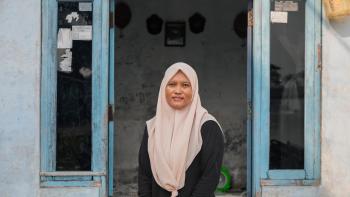
Barrier-Free Futures
Delivering safe, inclusive and accessible homes for people with disabilities in Kaliagung, Yogyakarta


Challenges
Many low-income families in Sentolo, especially people with disabilities, live in unsafe or inaccessible homes with poor sanitation. Families face intersecting barriers of poverty, inadequate housing and social exclusion.
Across Indonesia, nearly 10 million families lack decent homes, and almost 27 million live in unsafe or poorly built houses. Low-income households, female-headed families and families with members with disabilities are severely affected. Even though the law requires inclusive housing, high costs, low awareness, weak enforcement and social stigma make it hard to improve living conditions.
In Kaliagung Village, these challenges are acutely felt. 86 families continue to live in unsafe, deteriorating homes without proper accessibility features, and many face limited job opportunities and inadequate sanitation. Habitat Indonesia has already demonstrated a successful model by constructing barrier-free homes for eight of the most vulnerable families, providing a strong proof of concept and raising awareness within the community about inclusive, resilient housing. Yet the need remains urgent. Most families in Kaliagung still live in high-risk conditions, with women and persons with disabilities the most exposed to health, mobility and safety hazards.

Solution
This initiative seeks to scale up interventions to reach more families and strengthen local systems for inclusive housing.
This project will improve housing for families with disabilities through both new construction and upgrades to existing homes. Barrier-free features, including ramps, grab bars, wider doors, non-slip flooring, accessible sanitation and improved water systems, will enhance safety, dignity and independence, particularly for women with disabilities.
Our approach:
- Co-design barrier-free features with universities, involving families, Habitat staff, Kelompok Disabilitas Kaliagung — a support group that advocates for the needs of people with disabilities — and others. Final-year architecture students will create designs guided by faculty, fostering innovation to upgrade substandard homes and build new, accessible, inclusive houses particularly to reduce risks faced by women with disabilities.
- Upgrade existing homes and build new homes to meet accessibility standards, with features tailored to the needs of people with disabilities. For homes that cannot be safely renovated, new homes will be built with appropriate accessibility features.
- Conduct inclusive training and awareness sessions for families, communities and village officials to reduce stigma, strengthen support systems and empower people with disabilities to participate actively in housing and community decisions.
- Advocate for allocation of village funds — or APBDes, used to support local governance, development and community empowerment — and a Regent Regulation to ensure long-term support for inclusive housing. Evidence from this project will help local government adopt policies and budgets for barrier-free homes.
Timescale: The project will be completed within 6 months.
Results and benefits
- The project will provide safe, accessible housing for families with disabilities in Kaliagung, directly benefiting 109 individuals.
- 10 new barrier-free homes will be built.
- 8 substandard houses will be upgraded to include ramps, grab bars, wider doors, non-slip flooring, accessible sanitation and improved water systems, enhancing safety, dignity and independence, especially for women with disabilities.
- In total, 18 families, about 90 people, will directly benefit from these new and upgraded homes.
- Inclusive training and awareness sessions for 55 individuals will equip families and local laborers with practical skills, reduce stigma and strengthen community support systems.
- Advocacy and engagement with government and local stakeholders will indirectly reach more than 31,700 people, promoting inclusive housing practices and sustainable long-term support.
- These measures will empower people with disabilities to actively participate in their homes and communities while ensuring lasting access to safe and inclusive housing.
Long-term impact
Families, especially those with people with disabilities, will live safely and independently in barrier-free homes designed to meet their needs, gaining greater dignity, mobility and the ability to participate actively in household and community decisions.
Skills from co-design participation and inclusive training will strengthen households and local labor capacity for future construction and maintenance.
Partner universities will help train future architects and professionals to value accessibility and inclusive housing in their careers.
Advocacy and collaboration with the government will embed inclusive housing practices and APBDes funding into public systems, ensuring long-term support.
Together, these measures will create resilient, equitable and empowered communities with sustainable access to safe and inclusive housing.
Scale-up
With further co-funding, this project could extend its impact, delivering accessible, inclusive homes and empowering families with disabilities in Kaliagung to participate actively in their communities. Please get in touch to request a detailed proposal.
-
When you co-fund a project, you help transform lives. By building housing, we build beyond the physical homes: adequate living conditions have a powerful impact on the livelihoods, health, education and more of households and communities.
-
Half of the global population living in poverty resides in Asia and the Pacific. To help address these issues, Build Beyond funds locally led initiatives to transform lives through improved housing conditions.