RISE BUILD: Data-Driven Resilience for Informal Settlements
Supporting vulnerable families in urban informal settlements through inclusive, data-driven and innovative housing solutions.


Challenges
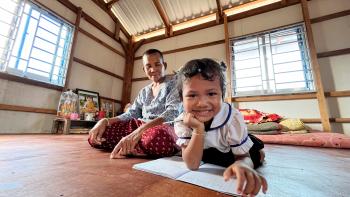
Rapid urbanization is accelerating the expansion of informal settlements in Battambang and Serei Sophorn, where elderly residents, persons with disabilities, female-headed households and low-income families struggle to secure safe and dignified living conditions. Many face insecure land tenure, fragile and poorly constructed homes, and limited access to essential services, leaving them without a stable foundation for their well-being or economic participation.
These communities are repeatedly hit by flooding, exposed to contaminated water sources and left out of formal infrastructure and service systems. This brings high health risks, heightened insecurity and further isolation for families.
Many homes are built with weak materials and lack proper sanitation, often standing in flood-prone areas where stagnant water can remain under houses for months, increasing disease, safety and protection risks.
Despite growing interest from government and civil society organizations, housing-related scalable and climate-resilient solutions remain scarce. Fragmented data, low awareness of legal rights, and gaps in planning and advocacy continue to deepen community vulnerability.
While relocation of these communities is anticipated by authorities, the timeline and destination remain uncertain. In the meantime, families continue to live in unsafe conditions without housing options that are both secure and compliant with public land regulations.
Solution
This project will support vulnerable families living in informal settlements in Battambang and Serei Sophorn.
Our approach:
- Train 60 data collectors and establish a housing database covering all informal settlements in the target cities to inform evidence-based planning and advocacy. The database will be officially handed over to the General Department of Housing under the Ministry of Land Management, Urban Planning and Construction.
- Design and build 60 low-cost, movable, climate-resilient homes with the participation of trained local construction workers and co-developed with government authorities. The homes will be relocatable, allowing families to maintain continuity of housing even if they are moved to new sites, while immediately improving safety, comfort, and dignity in their current locations.
- Raise awareness on inclusive urban development to empower informal settlement communities and foster collaboration local authorities.
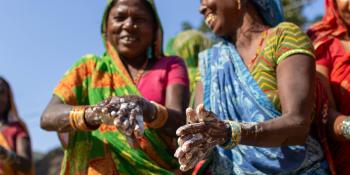
- Conduct WASH awareness campaigns and community engagement sessions to promote hygiene, health, and resilience.
- Share knowledge and best practices to enable scaling of inclusive housing solutions.
Insights from the database will map risks, prioritize needs, and advocate for tenure security and infrastructure upgrades. By combining data-driven planning, climate-resilient movable homes and participatory community engagement, the project will improve housing security, resilience and dignity for vulnerable families while creating scalable models for informal settlement upgrading.
Timescale: The project is expected to be completed within 36 months.

Results and benefits
The project will directly benefit an estimated 9,400 people through the construction of climate-resilient, movable homes; WASH engagement; and participatory capacity-building. Indirectly, approximately 10,000 people will benefit from improved housing data systems, policy advocacy and knowledge-sharing initiatives.
Communities will gain practical skills in safe home construction, WASH management, and participatory planning, fostering local ownership and long-term resilience.
The housing database, combined with advocacy, will support evidence-based planning and replication, embedding sustainable, inclusive housing practices into government policy and local development programs.
Awareness-raising events with local authorities will promote understanding, and stakeholders will engage in peer-learning to scale solutions. Low-cost, climate-resilient homes will be designed, built and handed over to vulnerable families.
Long-term impact
Families in Battambang and Serei Sophorn City will have increased comfort, dignity and safety through housing that is decent and climate resilient.
Through skills in safe construction, WASH management and participatory planning, communities will be able to maintain improvements and replicate best practices.
Homes and communities will be better prepared for disasters, and stakeholders will engage in peer-learning to scale innovative solutions. Over time, this will strengthen resilience, expand equitable access to housing and create a scalable model for sustainable urban development.
Scale-up
With additional co-funding, this project could reach more vulnerable families in Battambang and Serei Sophorn City, providing climate-resilient, movable homes, WASH engagement and skills-building opportunities. Please get in touch to request a detailed proposal.
-
When you co-fund a project, you help transform lives. By building housing, we build beyond the physical homes: adequate living conditions have a powerful impact on the livelihoods, health, education and more of households and communities.
-
Half of the global population living in poverty resides in Asia and the Pacific. To help address these issues, Build Beyond funds locally led initiatives to transform lives through improved housing conditions.