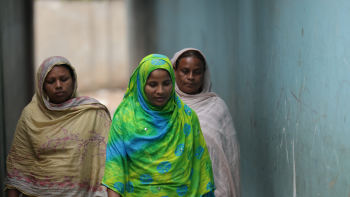
Resilient Lives, Resilient Communities in Coastal Bangladesh
Accelerating adaption for climate-affected migrants through housing, livelihoods and women-led action

Challenges
Climate migrants and vulnerable families in Satkhira are living in deeply unsafe conditions, with overcrowded shelters, inadequate WASH facilities, and constant exposure to health and protection risks. Each year, over 500,000 people are displaced within the coastal districts, with many gravitating towards urban informal settlements, putting immense pressure on existing infrastructure and resources.
Each cyclone and flood destroys homes and cuts off access to clean water, sanitation, and essential healthcare, pushing families further into crisis. For women and girls, the dangers are even more acute.
With limited policy support, insecure land tenure, unstable livelihoods, and few gender-responsive services, communities are left vulnerable to exploitation, child marriage, and gender-based violence. Women’s economic participation is constrained by restrictive social norms, limited skills training, and lack of financial access, leaving them with little control over their futures.
Decisive interventions are needed now. Climate-resilient housing, strengthened livelihood opportunities, and robust protection services are essential for those living on the front lines of climate change.


Solution
This project will help climate migrants and vulnerable populations in Satkhira.
Our approach:
- Provide climate-resilient, gender-responsive housing and safe WASH facilities.
- Train local carpenters and masons in climate-adaptive housing designs that improve daylight and cross-ventilation.
- Build 2 smart climate houses with proper ventilation and daylight facilities.
- Build and repair 250 linear feet of drainage and footpaths.
- Build 3 communal toilets and repair 2 existing community toilets, designed for disaster resilience, gender inclusion, and accessibility for persons with disabilities.
- Deliver livelihood training and start-up support for women and youth.
- Conduct 6 training sessions for climate-displaced individuals focused on water safety and hygiene practices during disasters.
- Provide start-up capital and essential equipment to support participants’ transition to self-employment.
Establish 10 youth and women-led self-help groups to strengthen community leadership. - Facilitate 6 Operation and Maintenance training sessions to strengthen leadership, empower women and improve community resilience.
- Pilot innovative, community-led climate adaptation solutions, with active involvement of residents to ensure effectiveness and long-term sustainability.
- Promote responsive, gender-inclusive climate strategies through advocacy efforts.
Together, we will create supportive environments that enhance long-term resilience.
Timescale: The project is expected to be completed within 12 months.
Results and benefits
This project will support almost 3,800 vulnerable people across six informal settlements in Satkhira.
Residents, especially women and children, will experience safer, healthier and more dignified living conditions through improved homes and infrastructure, enhancing overall well-being and supportive environments for climate migrants and vulnerable families.
Households will gain more stable and diversified income sources, reducing vulnerability to climate-related economic shocks and strengthening their resilience and adaptive capacity, with a focus on gender-equitable climate adaptation.
Women will be empowered to be leaders in their communities, contributing to gender-inclusive decision-making and local leadership.
Local policies and plans will become more adaptive to the needs of climate migrants and vulnerable populations, with a focus on gender-inclusive climate adaptation, strengthening the overall policy environment.
Lessons learned will generate new solutions that contribute to broader climate adaptation efforts and promote innovation for future interventions.
Overall, the project strengthens immediate living conditions while building long-term adaptive capacity for vulnerable communities
Long-term impact
Over time, families will live in safer, climate-adapted homes with inclusive WASH facilities, reducing risks from cyclones, floods, and other environmental shocks.
Health, well-being, and safety will improve, especially for women and children, as families experience cleaner, more hygienic living conditions.
Community-driven approaches and women-led groups will build local capacity, empowering residents to manage future climate challenges independently.
Greater social cohesion will emerge as climate migrants and vulnerable populations are included and gender inequalities are addressed.
Evidence and lessons learned will influence local and national policies, guide climate adaptation strategies, and support replication of effective solutions in other vulnerable communities.
Scale-up
With additional co-funding, this project could reach more vulnerable families in Satkhira, providing climate-resilient homes, safe WASH facilities and opportunities for sustainable livelihoods. Please get in touch to request a detailed proposal.
-
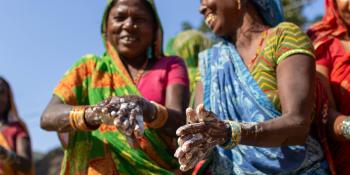
When you co-fund a project, you help transform lives. By building housing, we build beyond the physical homes: adequate living conditions have a powerful impact on the livelihoods, health, education and more of households and communities.
-
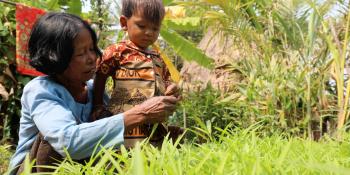
Half of the global population living in poverty resides in Asia and the Pacific. To help address these issues, Build Beyond funds locally led initiatives to transform lives through improved housing conditions.