Safe Shelter, Stronger Communities
Enhancing the health and well-being of ethnic communities in Hue City, Central Vietnam, through safe and resilient housing solutions

Challenges
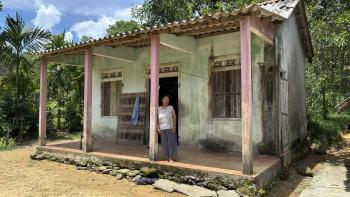
Many low-income households in Hue City continue to live under fiber-cement roofing sheets containing white asbestos because they are affordable, despite the health risks. Field visits in Nam Dong and Phu Vang districts by Habitat Vietnam in 2021-2024 revealed that around 70-80% of homes still use asbestos-containing roofing, many of which have been in place for over a decade. It is estimated that 70% of households live under asbestos-containing roofs and are substandard.
Prolonged exposure to asbestos is linked to serious health issues. Ethnic minority communities like the Co Tu are especially vulnerable because households lack knowledge of safer alternatives and the resources to switch to safer roofing materials. Only 4.7% of Vietnamese are aware of asbestos-related health risks.
Asbestos and fiber-cement sheets are increasingly compromised under extreme weather events such as hailstorms and whirlwinds, which may expose families to injury and airborne asbestos fibers.
Government efforts to phase out asbestos have stalled, leaving families vulnerable to hazardous materials and climate-related dangers.

Solution
This project will reduce health and disaster risks for low-income and ethnic minority households in Long Quan Commune, Hue City. This project builds on two previous initiatives in Hue City by Habitat Vietnam and supports national advocacy for non-asbestos construction materials.
Our approach:
- Conduct community awareness and education campaigns to inform families about the health risks of asbestos and promote safer alternatives.
- Replace asbestos roofing with affordable, durable and culturally-appropriate materials.
- Provide technical guidance and training for safe handling and disposal of asbestos, minimizing exposure during removal.
- Collaborate with local authorities to identify and establish designated disposal sites to ensure environmentally-responsible management of asbestos waste.
- Engage in policy advocacy and market interventions to strengthen regulations and ensure non-asbestos construction materials are available and affordable for vulnerable communities.
- Work with suppliers and manufacturers to increase the availability and affordability of non-asbestos construction material.
Families will participate by attending sessions, contributing labor or co-financing for roof replacement, supporting safe removal and disposal, and providing feedback to improve project implementation.
Timescale: The project will be completed within 12-15 months.

Results and benefits
The project will directly benefit 630 people through safer housing improvements, including the replacement of asbestos roofs with durable, non-hazardous materials.
Indirectly, approximately 8,830 people — 85% in Co Tu — in the wider commune will benefit from asbestos awareness campaigns, safe handling practices and improved environmental safety from designated disposal sites.
- 4,415 people in Long Quang Commune will acquire knowledge of asbestos-related health risks.
- 120 households or around 600 people will live in houses with safer roofing.
- 30 local masons and 120 household representatives trained in safely handling asbestos.
- One communal policy banning asbestos in housing programs.
- At least four construction material distributors committed to ban the sale of asbestos-containing materials.
- One distributor program promoting safer alternatives to fiber-cement roofing sheets.
Communities will gain skills in safe construction, disaster preparedness and responsible asbestos management, fostering local capacity and self-reliance. Policy advocacy and market engagement will support systemic change, increase the availability and affordability of non-asbestos materials, and promote long-term improvements in housing safety and community health.
Long-term impact
Communities in Vietnam’s Central and Northern provinces will live in safer, healthier homes, free from asbestos-related hazards. Awareness campaigns and technical training will empower households to maintain safe construction practices. Stronger policies and market access will ensure affordable, non-asbestos materials are available, embedding safer housing into local development strategies. These efforts will strengthen community resilience, protect vulnerable ethnic minority groups and create lasting public health benefits.
Scale-up
With increased co-funding, this project could benefit more vulnerable households in Central Vietnam by replacing hazardous asbestos roofs, improving housing safety and building local capacity for safe construction and disaster resilience. Please get in touch to request a detailed proposal.
-
When you co-fund a project, you help transform lives. By building housing, we build beyond the physical homes: adequate living conditions have a powerful impact on the livelihoods, health, education and more of households and communities.
-
Half of the global population living in poverty resides in Asia and the Pacific. To help address these issues, Build Beyond funds locally led initiatives to transform lives through improved housing conditions.