Challenges
Women in these districts face multiple, overlapping vulnerabilities due to climate change, poverty and entrenched gender norms. Traditional social norms, such as Chbab Srey — a traditional Cambodian code of conduct emphasizing women’s obedience, caregiving and domestic duties — restrict women’s mobility, leadership and participation in decision-making, while systemic barriers, including limited land ownership, access to credit and technical resources, reduce adaptive capacity.
Women hold only 17% of local governance seats, limiting influence over resilience planning. Female-headed households shoulder 50% of microfinance debt and 40% of informal loans and are concentrated in low-paid informal sectors such as agriculture and construction, earning 29% less than men despite comprising 35% of the construction workforce.
Climate-induced disasters further exacerbate vulnerabilities, increasing exposure to unsafe housing, poverty and gender-based violence, with 21% of women reporting intimate partner violence. Housing insecurity is severe: 20% of households in Angkor Thum village live in substandard homes, while many lack access to durable housing, piped water, sanitation and climate-resilient livelihoods. Environmental degradation, reliance on fired clay bricks and limited green construction opportunities further restrict women’s leadership in climate-resilient housing.
Green construction technologies such as Compressed Stabilized Earth Blocks, or CSEB, remain underutilized — especially by women — due to limited technical knowledge, lack of access to tools and markets and weak institutional support for women-led enterprise.
Solution
This project empowers women affected by climate change through combining gender-responsive planning and climate adaptation, green livelihoods, and resilient housing solutions.
Our approach:
- Establish and strengthen women-led PASSA groups to lead inclusive, climate-resilient community planning and integrate gender priorities into Commune Investment Plans, or CIPs.
- Conduct awareness campaigns, leadership training, and provide micro-grants to women to co-develop and implement local adaptation plans.
- Establish a new women-led, solar-powered CSEB enterprise in Battambang and upgrade an existing enterprise in Siem Reap using solar-powered technology for eco-friendly construction materials.
- Train and employ women and youth in CSEB production, entrepreneurship and financial management, supporting green economic growth.
- Build 60 climate-resilient homes for female-headed and vulnerable households using CSEBs and other eco-materials.
- Train construction trainees and ensure at least 50% of local construction trainees are women to expand the skilled workforce in green building.
- Develop marketing, distribution and local sales strategies to link the CSEB enterprise with local builders, vendors and the Cambodia Women Entrepreneurship Association.
- Promote and facilitate cross-learning activities, including provincial exchanges and national dialogues, to share lessons and support replication and scale-up.
This project offers a replicable, community-driven model that addresses structural gender inequalities while building long-term resilience.
Timescale: This project is expected to be completed within 36 months.
Results and benefits
By combining climate-resilient housing, women-led enterprise development and inclusive community engagement, the project builds sustainable resilience among female-headed and vulnerable households. Women gain leadership skills, economic independence and decision-making power, while communities benefit from strengthened local capacities to adapt to climate change.
The integration of solar-powered eco-material production ensures long-term environmental sustainability, reduces reliance on harmful fired bricks and promotes green livelihoods. Knowledge-sharing through PASSA groups, cross-provincial exchanges and local networks positions the project as a replicable model for climate-smart, gender-responsive development in Cambodia.
Long-term impact
The project directly improves living conditions, economic opportunities and climate resilience for women and vulnerable populations. Female-headed households gain safer, durable homes and access to technical training, while women and youth acquire employable skills and participate in sustainable, green enterprises. The broader community benefits from environmentally friendly construction materials, reduced climate-related risks and strengthened social cohesion through participatory planning. By linking livelihoods, housing and climate adaptation, the project empowers women to lead sustainable change and contributes to lasting improvements in social, economic and environmental outcomes.
Scale-up
With additional support, this project could expand to other climate-vulnerable districts in Battambang and Siem Reap, empowering more women-led PASSA groups, increasing solar-powered CSEB production and constructing additional climate-resilient homes, while fostering broader community adaptation and green livelihoods.
-
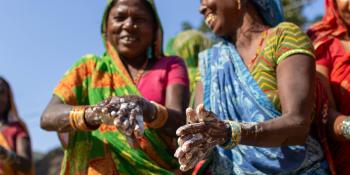
When you co-fund a project, you help transform lives. By building housing, we build beyond the physical homes: adequate living conditions have a powerful impact on the livelihoods, health, education and more of households and communities.
-
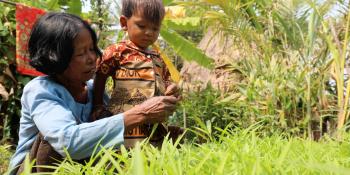
Half of the global population living in poverty resides in Asia and the Pacific. To help address these issues, Build Beyond funds locally led initiatives to transform lives through improved housing conditions.