Neighborhood revitalization is a long-term, holistic strategy that supports residents to improve the quality of life in under-resourced communities. Habitat for Humanity takes a local and community-based approach to neighborhood revitalization to ensure that our work is driven by those with lived experience.
Residents know their neighborhood’s unique challenges and opportunities. We listen to the community’s priorities and build on their strengths, leveraging our resources and partnerships to invest in community-led projects that improve the lives of current and future residents.
Donate to support this strategy.
What Habitat affiliates’ neighborhood revitalization efforts can look like:
- Building inclusive partnerships with residents and local organizations.
- Supporting coalitions to define and achieve neighborhood goals.
- Uplifting residents’ collective action as they advocate for equitable policy changes or implement community-led projects.
- Redistributing resources to support the priorities of community members.
- Preserving and repairing houses.
- Hosting leadership training.
All our work seeks to undo a legacy of systemic racism in housing and community development, which has resulted in an unfair distribution of resources across racial lines. When Habitat and communities improve neighborhoods with an intentional racial and social equity approach, it can help prevent displacement and spur further investment in historically marginalized communities.
Community development place-based initiatives
Ultimate outcome: Just and livable communities
All people, no matter their background, can live in thriving, resilient and livable communities.


Economic prosperity
Residents have access to employment with fair, livable wages.

Clean and green environment
Neighborhood residents have a right to clean air, water and environments that promote health and safety.

Inclusive safety practices
Residents have a sense of personal and neighborhood safety.

Just education
Children are prepared for and succeed in education, and adults have lifelong learning opportunities.

Health and wellness
The neighborhood and environment support residents’ physical and mental health.

Housing access
Residents have decent, safe, stable and affordable housing.

Accessible transportation
Safe and affordable transportation options are available and easily accessible for all residents.
Testing and implementing a neighborhood revitalization approach
In April 2018, Habitat for Humanity International began a five-year initiative to test one neighborhood revitalization approach. We partnered with 10 affiliates working in diverse, under-resourced neighborhoods across the U.S. to:
- Understand how neighborhoods change.
- Test and implement resident-centered approaches to neighborhood revitalization.
- Build an evidence base for how to spur systemic and sustainable change in neighborhoods that informs recommendations for the wider Habitat network and beyond.
During the five years, Habitat partnered with residents and local organizations to tailor their neighborhood revitalization efforts to address the needs of their unique communities. This work has led to many accomplishments, including:
- Building more affordable homes
- Creating parks and community centers
- Opening community gardens
- Investing in small local businesses
By the end of the pilot in 2023, all 10 participating communities saw measurable improvements in neighborhood conditions. Through resident surveys, focus groups and interviews, Habitat and our research partner, ORS Impact, found:
- 100% of communities perceived measurable increases in collective action.
- 100% of communities demonstrated an increased capacity to work together to make change.
- Residents who engaged more with the community work rated their neighborhood as providing a higher quality of life and were more likely to say their neighborhood is a good place to live.
-
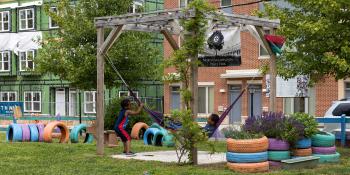
ORS Impact, an external evaluation firm, examined enabling factors to neighborhood change, racial equity and inclusion, and how Habitat’s neighborhood revitalization efforts contributed to quality-of-life improvements across 10 neighborhoods.
-
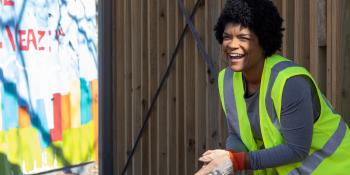
From building local parks to scaling homebuilding to opening community gardens, discover how residents and affiliates are using Habitat’s neighborhood revitalization approach to drive change in their communities.