Roofs of Resilience
Creating safe, durable and culturally responsive homes for ethnic minority households in northern Vietnam

Challenges
Many ethnic minority households in Den Sang and Ban Xeo face challenges of unsafe housing, lack of access to proper sanitation and weak disaster preparedness, leaving them highly vulnerable to climate-related risks.
Many households still live under asbestos-containing roofs that pose serious health issues. Inadequate toilets, livestock shelters and waste management contribute to environmental pollution and diseases, as waste is discharged in public spaces, affecting women and girls who conduct primary caregiving roles. Lack of emergency preparedness plans, insufficiently trained frontline response teams and low community awareness on disaster risk reduction further heighten risks during floods, landslides and extreme weather events.
Women, children, persons with disabilities and the elderly are particularly affected by lengthy administrative procedures, entrenched gender norms and weak institutional support. Around 37,000 houses in Lao Cai lack legal land use certificates, restricting access to housing assistance and social services.
Solution
This project will improve living conditions, public health, legal empowerment and climate resilience for ethnic minority communities in Den Sang and Ban Xeo. Our approach includes:
- Replace hazardous housing materials with safe, durable and culturally-appropriate designs to reduce health risks and improve resilience to climate hazards. Housing solutions will be co-designed with community members to ensure accessibility, ownership and sustainability.
- Upgrade sanitation and waste management systems using circular economy models, turning waste into resources such as compost while improving hygiene, environmental quality and livelihoods.
- Support legal land procedures to ensure equitable access to development programs and strengthen long-term tenure security, providing targeted legal assistance to overcome language, cost, and administrative barriers.
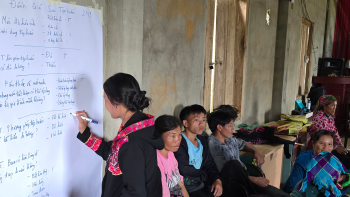
- Build community capacity through inclusive disaster risk reduction and climate adaptation training, participatory planning and leadership development, with modules adapted to different literacy levels, languages and accessibility needs.
- Foster multi-level partnerships and integrate project interventions into local governance frameworks to ensure institutional sustainability and long-term impact.
By building on proven models from previous initiatives in Lao Cai, this project will scale community-led solutions. By empowering local actors, strengthening government collaboration, the project aims to create safer, healthier, and more equitable futures for ethnic minority households.
Timescale: The project will be completed within 12 months.

Results and benefits
The project will directly benefit over 2,300 people, and more than 5,700 people indirectly, through safer, culturally-appropriate housing, legal empowerment and climate resistance, improved sanitation, and training in disaster risk reduction and climate adaptation.
At least 100 community members — 50% being women — will be trained in safe construction, asbestos-containing materials (ACM) awareness and WASH practices.
40 households will receive climate-resilient, gender-responsive homes with maintenance plans, contributing to a 40% reduction in ACM use.
Circular economy actions will enable 60 households to improve sanitation, 80% to adopt composting and recycling, with most households reporting cost savings or new income opportunities. Legal support will assist 20 households to complete land documentation with at least 14 certificates issued, and secure commitments from local authorities to simplify procedures.
Community capacity will be strengthened through Participatory Approach for Safe Shelter Awareness (PASSA) based disaster risk reduction, with three community groups, 90 people, trained in three gender-integrated adaptation plans.
At least 50% of participants will be women and ethnic minority leaders, with one community-led initiative benefitting 600 people. Integration with local governance and multi-level partnership will ensure that safer housing practices, circular economy models, and legal inclusions continue beyond the project period.
Long-term impact
Communities in Den Sang and Ban Xeo will enjoy safer, healthier and more resilient homes with sustained reductions in asbestos exposure and climate risks. Skills gained in safe construction, waste management and disaster preparedness will empower residents to maintain improvements and protect livelihoods.
Legal empowerment and inclusive planning will secure long-term access to development programs, while circular economy approaches will continue to improve health and environmental outcomes. Institutional partnerships and adaptation into local systems will ensure that these benefits endure beyond the project lifecycle.
Scale-up
With additional co-funding, this project could reach more ethnic minority households in Lao Cai, providing safer housing, improved sanitation, legal empowerment and climate-resilience training. Please get in touch to request a detailed proposal.
-
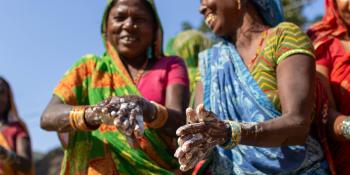
When you co-fund a project, you help transform lives. By building housing, we build beyond the physical homes: adequate living conditions have a powerful impact on the livelihoods, health, education and more of households and communities.
-
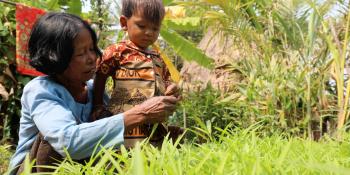
Half of the global population living in poverty resides in Asia and the Pacific. To help address these issues, Build Beyond funds locally led initiatives to transform lives through improved housing conditions.