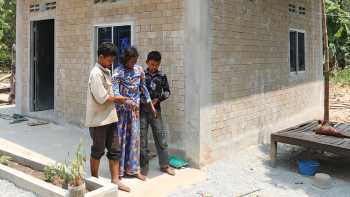
Home for Dignity and Resilience
Co-creating safe, inclusive homes for the elderly and persons with disabilities in Cambodia

Challenges
Cambodia’s elderly population is rapidly growing, with women and people with disabilities facing heightened vulnerabilities due to exclusion. Many elderly and disabled individuals are living in unsafe or poorly maintained, overcrowded homes with inadequate sanitation, while many older people also shoulder the responsibility of being primary caregivers.
Common health issues, including diabetes, hypertension and chronic illness are worsened by extreme heat and seasonal flooding, increasing risks for older adults. Women with disabilities are more vulnerable to discrimination, violence and limited participation in society, with their needs frequently neglected in traditional housing programs.
Limited government and NGO support and policies leave many without the assistance needed to improve their living conditions, making it difficult for vulnerable elderly populations to live safely and with dignity.
Solution
This project will support elderly people and persons with disabilities living in Phnom Penh and Kampong Chhnang Province. Through a participatory, gender-responsive design process, inclusive and climate-resilient housing designs will address the specific needs of elderly women and women with disabilities.
Our approach:
- Build 60 inclusive, climate-resilient homes, featuring passive cooling, solar energy, ramps and safe toilets, co-designed to meet homeowners’ specific needs, with a focus on elderly people and persons with disabilities. Each home will feature solar panels, accessible toilets, ramps and shaded outdoor spaces to enhance comfort and resilience.
- Train 60 local builders, including women, in inclusive and climate-resilient construction practices, such as universal design and passive cooling methods.
- Provide orientation for 800 community members on Social Equity Cards, protection schemes, and access to services to strengthen social support for vulnerable populations.
- Support approximately 100 families in availing of the Social Equity Card System, allowing them to access health services and social protection, receive monthly stipends and essential services.
- Generate learnings from the pilot to support replication, policy advocacy, and scaling of inclusive housing models across Cambodia, including evaluation and documentation of housing design’s effectiveness in accessibility, passive cooling and renewable solar energy use.
By integrating co-design, climate-resilient technology and community engagement, the project will improve living conditions, safety and dignity for elderly and disabled women while fostering scalable models for inclusive housing.
Timescale: The project is expected to be completed within 36 months.

Results and benefits
The project will directly benefit 2,600 individuals through the construction of safe, climate-resilient, inclusive homes; participatory training; and targeted shelter interventions. Indirectly, approximately 13,000 people in the wider community will benefit from improved knowledge of inclusive housing, access to protection schemes and strengthened community support networks.
The project will specifically address the urgent housing-related vulnerabilities of elderly people and persons with disabilities, particularly women, through the application of universal design principles in both housing and WASH facilities.
Key design features include accessible entrances and pathways, handrails and grab bars, non-slip and safe floor materials, adequate lighting, raised toilet seats, sufficient space for wheelchair maneuvering, clearly marked and easy-to-use fixtures, privacy, proper drainage, and ventilation to ensure hygiene, comfort and safety.
Local builders will gain skills in inclusive construction and climate adaptation, while elderly and disabled participants will be empowered through co-design workshops and orientation sessions. The project will generate evidence and technical guides to support policy advocacy and replication, embedding long-term improvements into government housing strategies and community practices.
The project’s effectiveness will be monitored through assessments, with lessons compiled into technical guides and learning materials to support replication, policy advocacy and broader adoption of inclusive housing models.
Long-term impact
Elderly and persons with disabilities, particularly women, in Phnom Penh and Kampong Chhnang will live in safe, accessible and climate-resilient homes that enhance dignity, comfort and security.
Local builders and communities will gain skills and knowledge to maintain improvements and replicate inclusive housing solutions. The project’s co-design approach and alignment with national policies will institutionalize best practices, ensuring continued government support.
Over time, these efforts will strengthen resilience, foster social inclusion and provide scalable models for sustainable, climate-adaptive housing.
Scale-up
If further co-funding is available, this project could extend its impact, improving living conditions, accessibility and resilience for more elderly and disabled women in Phnom Penh and Kampong Chhnang. Please get in touch to request a detailed proposal.
-
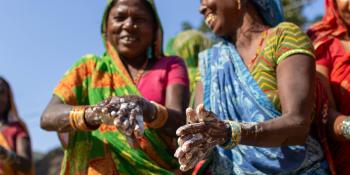
When you co-fund a project, you help transform lives. By building housing, we build beyond the physical homes: adequate living conditions have a powerful impact on the livelihoods, health, education and more of households and communities.
-
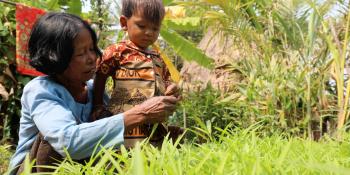
Half of the global population living in poverty resides in Asia and the Pacific. To help address these issues, Build Beyond funds locally led initiatives to transform lives through improved housing conditions.