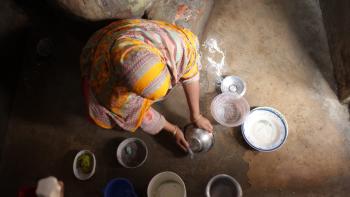
Housing and Gender Equity: A Global Literature Review
A home is more than shelter. It can shape a person’s health, safety, economic opportunity and ability to make decisions about their future.
Yet women and girls around the world often face greater barriers to adequate housing, secure land rights and basic services. These barriers can affect nearly every part of their lives — from health and safety to financial security and opportunity.
Housing and gender equity are deeply connected. Globally, women and girls perform 16 billion hours of unpaid care work each day, much of it in and around the home. In other words, women spend nearly three times as much of their day on unpaid care work as men. Women are also less likely than men to own property, more likely to experience housing insecurity, and often face a disproportionate share of the health and safety risks associated with inadequate housing. From exposure to indoor air pollution and unsafe sanitation to higher rates of eviction and displacement, housing conditions can affect nearly every aspect of women’s lives.
Through a global literature review, Habitat examined how housing affects gender equity and how gender inequity shapes housing outcomes.
The findings show that because women and girls often spend more time at home and carry a greater share of caregiving responsibilities, housing conditions can have a significant impact on their well-being, safety, income and opportunities.
Read the research highlights below and download the full literature review to learn more.
View and download the report
(PDF, 2.09 MB)
Secure housing can strengthen women’s economic opportunity and independence
- Women are less likely than men to own homes in many countries due to lower incomes, unequal access to credit and discriminatory property systems.
- In Mexico, only 35% of homes are registered to women, and just 34% of housing loans are granted to women.
- Research from Colombia found that homeownership can increase women’s sense of security, decision-making power and ability to plan for the future.
- Women are less likely than men to own homes in many countries due to lower incomes, unequal access to credit and discriminatory property systems.
- In Mexico, only 35% of homes are registered to women, and just 34% of housing loans are granted to women.
- Research from Colombia found that homeownership can increase women’s sense of security, decision-making power and ability to plan for the future.
Housing conditions affect women’s health and wellbeing
- Women and girls perform much of the world’s unpaid caregiving and household work. As a result, they may face greater exposure to housing-related hazards such as poor ventilation, indoor air pollution, mold, unsafe water and inadequate sanitation.
- Studies in Turkey found chemicals in household dust that may affect women’s reproductive and hormonal health.
- In many low- and middle-income countries, women may spend decades exposed to smoke from biomass fuels, increasing the risk of respiratory and cardiovascular disease.
- Women and girls perform much of the world’s unpaid caregiving and household work. As a result, they may face greater exposure to housing-related hazards such as poor ventilation, indoor air pollution, mold, unsafe water and inadequate sanitation.
- Studies in Turkey found chemicals in household dust that may affect women’s reproductive and hormonal health.
- In many low- and middle-income countries, women may spend decades exposed to smoke from biomass fuels, increasing the risk of respiratory and cardiovascular disease.
Housing instability can put women and girls at greater risk of harm, stress and displacement
- Women experience higher rates of eviction than men in many places. In the United States, researchers estimate that about 342,000 women are evicted each year — about 16% more than men.
- In Australia, 45% of all women and girls seeking homelessness assistance identified family and domestic violence as a cause.
- Overcrowding, housing instability and inadequate housing conditions have been linked to increased stress and higher risks of gender-based violence.
- Women experience higher rates of eviction than men in many places. In the United States, researchers estimate that about 342,000 women are evicted each year — about 16% more than men.
- In Australia, 45% of all women and girls seeking homelessness assistance identified family and domestic violence as a cause.
- Overcrowding, housing instability and inadequate housing conditions have been linked to increased stress and higher risks of gender-based violence.
Learn how Habitat works to advance gender equity through housing:

-
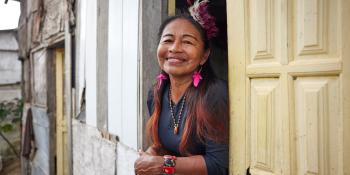
“Hogar es” (Home Equals) es la campaña global de incidencia de cinco años dedicada a lograr cambios en políticas en todos los niveles, que garanticen que las personas que viven en asentamientos informales tengan acceso equitativo a una vivienda adecuada.
-
Pre-existing gender and identity inequalities are being compounded by the Ukraine war – affecting the risks and impacts of the war, the patterns of displacement, and access to humanitarian aid. Vulnerabilities due to longstanding gender inequality intersect with several other aspects of identity diversity within Ukraine, that have traditionally resulted in discrimination and inequities. Read more about the challenges in the Ukraine Rapid Gender Analysis.