
Habitat for Humanity at World Urban Forum 2026
Driving global solutions for adequate housing at the world’s leading urban platform
Habitat for Humanity joined global leaders in Baku for the World Urban Forum 2026 — the world’s premier platform for shaping sustainable urban development. Convened by UN-Habitat, this year’s forum was the first ever dedicated to housing, making it a pivotal moment for global action. We were excited to bring our on-the-ground experience from over 60 countries to the conversation. Our goal was clear: to amplify the call for adequate housing for all and strengthen Habitat’s role as a global housing authority within civil society.
At WUF13, we connected, influenced and drove solutions to match the scale of the housing crisis.
Jonathan Reckford on World Urban Forum's The Century of Cities podcast: What Would It Take to House the World?
Bringing housing to the global stage
At WUF13, Habitat for Humanity championed three clear messages.
First, housing must be recognized as a foundation for economic growth, climate resilience and human dignity — and placed at the center of development agendas.
Second, the global community needs a shared language and framework for housing to align policy, investment and action across systems.
Third, we must scale proven, systems-based housing solutions that reflect how cities actually grow — solutions that are inclusive, climate-responsive and grounded in real-world practice.
Together, these messages call for a shift from fragmented efforts to coordinated, large-scale housing systems transformation.
Turning ideas into action
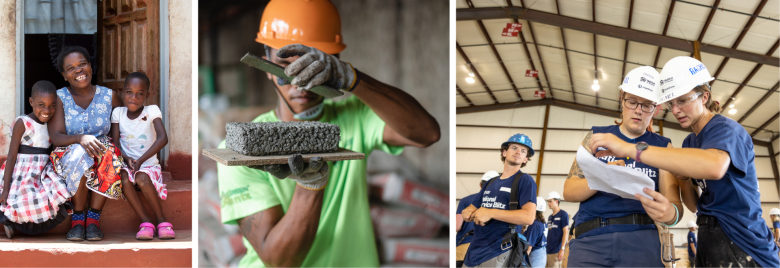
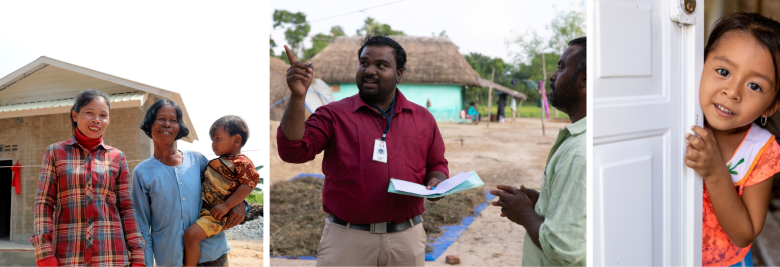
From strategy to implementation, Habitat for Humanity delivers practical solutions that transform housing systems in cities. The models and case studies below highlight how we turn ideas into scalable impact on the ground.
Urban models
Habitat for Humanity works across diverse urban contexts with integrated, people-centered approaches to housing challenges at scale. Our work is guided by five core intervention models — from informal settlement upgrading and sustainable urban expansion to adaptive reuse, disaster response and diverse tenure solutions — showing how partnerships, markets and policy can transform housing systems.
Case studies
At WUF13, we showcased field-tested solutions from across our global network — from converting vacant buildings into affordable housing in Europe to upgrading informal settlements in Malawi, advancing climate resilience in Fiji, supporting incremental housing in Peru and scaling bamboo-based homes in Nepal. Together, these examples show how locally driven solutions can create systemic impact globally.
Introducing the Housing Continuum Report
At WUF13, Habitat for Humanity launched the Housing Continuum Report — a flagship contribution to global housing thought leadership.
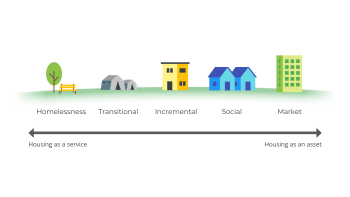
The report establishes a shared framework for understanding the full spectrum of housing need, from homelessness to market-based solutions, including the critical role of incremental housing. By creating a common global language, it enables better policy alignment, smarter investments and more effective housing systems. This work positions Habitat at the forefront of shaping how the global housing crisis is defined, discussed and solved.
Habitat at WUF13
Habitat for Humanity contributed across a range of dialogues, side events and high-level discussions aligned with the forum’s key themes, including housing finance, informal settlement transformation and the climate-housing nexus. Our sessions brought together global experts, partners and communities to share insights, spark collaboration and accelerate action.
Across the forum, Habitat for Humanity representatives joined a wide range of conversations and collaborative discussions, including:
-
Assembly: Grassroots & Civil Society
Time: 13:00 – 17:00
Location: Voices from the Cities Room A (and breakouts)
Habitat for Humanity representative: Brenda PerezWorld Assembly of Local and Regional Governments (WALRG): “Local Leadership Shaping a Renewed Multilateralism”
Time: 13:00 – 17:00
Location: Think Pod Room
Habitat for Humanity representative: James Schell
-
Cities for Children Annual Meeting
Time: 09:00 – 17:00
Habitat for Humanity representative: James Schell
-
High Level Dialogue 1: The housing crisis – what is the plan?
Time: 09:30 – 11:30
Location: Dialogue Room A
Habitat for Humanity representative: Jonathan ReckfordPolicy Pathways for Advancing Adequate Housing through Circular Construction
Time: 12:00 – 13:30
Location: Room B
Participants: Orkhan AliyevNew strategy to address the Qualitative Housing Deficit in Latin America and the Caribbean
Time: 12:00 – 13:30
Location: Multipurpose Room 8
Habitat for Humanity representative: Gema StraticoSanitation as a Foundation for Safe and Resilient Housing: Lessons from Low-Income Cities in Asia-Pacific
Time: 12:00 – 13:30
Location: One UN Room C
Habitat for Humanity representative: Mario FloresGlobal Urban Data Coalition (GUDC), Annual Meeting
Time: 12:00 – 13:30
Habitat for Humanity representative: Brenda PerezSpecial Session: Housing at the Centre of Global Coalitions
Time: 13:00 – 15:00
Location: Special Session Room A
Habitat for Humanity representative: James SchellIntersessional Thematic Meetings: Housing Sustainability and Resilience
Time: 13:30 – 15:30
Habitat for Humanity representative: Boram KimCities under Multiple Displacement Pressures: Governing Inclusive, Sustainable Cities
Time: 14:00 – 15:30
Location: TBC
Habitat for Humanity representative: Ekin OgutogullariGuardian Constructor: inclusive business model for incremental housing construction in Peru
Time: 14:00 – 15:30
Location: Practice Hub
Habitat for Humanity representative: Gema StraticoFrom Policy to Practice: Advancing & Financing Housing, Inclusion and urban resilience through global exchange in Kenya and Beyond
Time: 14:00 – 15:30
Location: Multipurpose Room 7
Habitat for Humanity representative: Jonathan ReckfordAdequate and Affordable Housing Takes Shape – Redefining the Global Housing Continuum
Time: 16:00 – 17:30
Location: Room 11
Habitat for Humanity representative: Marina Munoz Garcia, Jonathan Reckford, Brenda Perez, James SchellAdequate and Affordable Housing Takes Shape - Redefining the Global Housing Continuum
Time: 16:00 – 17:30
Location: Room 11
Habitat for Humanity representatives: Marina Munoz Garcia (remote), Jonathan Reckford, Brenda Perez, James Schell
Role: OrganiserInformal Settlements Upgrading as Housing Policy. Insights from the Latin America and Caribbean experience
Time: 16:00 – 17:30
Location: Multipurpose Room 6
Habitat for Humanity representative: Marina Munoz Garcia
-
What Works in Low-Income Rental Housing? A Global Peer-Learning Lab for Scalable Solutions
Time: 09:30 – 11:00
Location: Multipurpose Room 2
Habitat for Humanity representative: Marina Munoz Garcia, Deena KhalilHousing as a Human Right: Regional Insights and Strategies for the Arab World
Time: 10:30 – 12:00
Location: Room A
Habitat for Humanity representative: Deena KhalilNegotiating power in the Co-Production of Public Space Within Post-Displacement housing in Cairo
Time: 13:00 – 13:45
Location: Urban Cinema
Habitat for Humanity representative: Deena KhalilThe Transformational Role of Housing in Humanitarian Crises and Disaster Recovery
Time: 14:00 – 15:30
Location: Room B
Habitat for Humanity representative: Mario FloresFrom Commitment to Impact – Advancing Quality of Life in Cities as ONE
Time: 14:00 – 15:30
Location: One UN Room C
Habitat for Humanity representative: Deena KhalilFinancing Housing in a Shifting Funding Environment - From ODA to Philanthropy and Local Funding Mechanisms
Time: 16:00 – 17:30
Location: Multipurpose Room 2
Habitat for Humanity representative: Deena Khalil
-
Remove the risk, not the people: Slum transformation as key to housing justice and climate resilience (ITF)
Time: 14:00 – 15:30
Location: One UN Room B
Habitat for Humanity representative: James SchellBridging the Climate-Housing Data Gap: Connecting City Needs with Earth Observation Solutions
Time: 14:00 – 15:30
Location: Multipurpose Room 7
Habitat for Humanity representative: Brenda PerezBuilding a global network for Climate-Resilient Housing
Time: 14:00 – 15:30
Location: Multipurpose Room 3
Habitat for Humanity representative: Mario FloresRoundtable 10: Grassroots & Civil Society
Time: 15:30 – 17:30
Location: Roundtable Room B
Habitat for Humanity representative: Brenda PerezFrom Ruins to Rental: Social Housing as a Rapid, Affordable, and Climate-Smart Response to Urban Displacement
Time: 16:00 – 17:30
Location: Room B
Habitat for Humanity representative: Orkhan Aliyev
-
Housing Rights in Reconstruction Contexts - Bridging Humanitarian Response and Recovery
Time:10:00 – 11:30
Location: Multi-purpose Room 2
Habitat for Humanity representative: Mario FloresThe Rights of Indigenous Peoples Roundtable: “How can housing solutions respect Indigenous rights, land, and cultural identity?”
Time: 10:00 – 12:00
Location: Roundtable Room A
Habitat for Humanity representative: Marina Muñoz Garcia
Informal Settlement Upgrading Initiative through the Home Equals Campaign
Time: 12:00 – 13:30
Location: TBC
Habitat for Humanity representative: Grace Ananda
Shaping the future of housing — together
The global housing crisis demands bold ideas, strong partnerships and coordinated action. Habitat for Humanity is committed to working alongside governments, partners and communities to drive solutions that are inclusive, scalable and sustainable. Whether through policy influence, innovative housing models or on-the-ground implementation, we believe that adequate housing for all is achievable.
Join us as we help shape the future of housing worldwide.
Get in touch
For inquiries or to explore opportunities to engage with us around WUF13, please contact:
James Schell
Senior Director of Program Partnerships
[email protected]