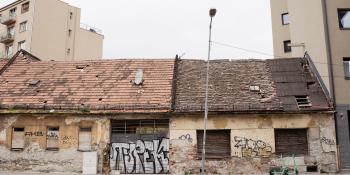
Habitat for Humanity joins Transforming Invisible Buildings project to advance affordable housing through building reuse
Habitat for Humanity is contributing to the Transforming Invisible Buildings project, which has been underway since February 2026 and is helping cities turn vacant and underused buildings into affordable, energy-efficient homes. The partnership builds on Empty Spaces to Homes, our flagship initiative helping European cities put unused buildings to work for people who need a decent place to live.
Empty buildings, unmet housing needs
Nearly 20% of dwellings across the EU are unoccupied, including vacant units, seasonal homes and underused properties, while 9.7% of office space is vacant, according to the European Affordable Housing Plan 2025. At the same time, more than 39 million people across Europe cannot afford a decent home. Housing costs have also climbed sharply: between 2010 and 2024, rents across the EU rose by a quarter and house prices increased by more than half.
The housing challenge also carries a climate cost. Buildings account for around 40% of EU energy consumption and about a third of energy-related greenhouse gas emissions, according to the European Commission. Reusing suitable buildings can reduce demand for new materials and land, while energy improvements can make homes more comfortable and less costly to heat and cool.
Transforming Invisible Buildings brings these housing and climate priorities together. The project runs until January 2028 and helps cities identify suitable vacant buildings and test policies and support services that make reuse a more practical route to affordable, energy-efficient housing.
How the project will help cities turn vacant buildings into affordable homes
Together with our project partners, we are working in Athens (Greece), Zagreb (Croatia) and Ljubljana (Slovenia) to tackle the barriers to bringing empty buildings back into use. The work focuses on five areas:
Map buildings with potential for reuse as affordable housing. Using a methodology developed by Habitat for Humanity and adapted with local partners, the project maps vacant and underused buildings in selected neighborhoods and assesses their suitability for reuse. This gives cities a clearer picture of where existing buildings could help meet local housing needs.
Identify barriers to reuse and test policy solutions. Workshops in each pilot city bring together local authorities, property owners and community organizations to explore what prevents buildings from being reused and develop possible solutions. Each city is testing one policy change, with partners assessing how effectively it supports reuse.
Help homeowners navigate renovation. The project helps renovation advice services, known as “one-stop shops”, support homeowners who want to bring empty properties back into use. Connecting advice on finance, permits and energy improvements helps households understand the steps involved and the support available.
Provide training, practical guidance and carbon assessment tools. Training, exchanges between cities and a practical handbook explain how to identify suitable buildings and plan for their reuse. Tools for assessing the carbon impact of renovation also help partners understand the climate implications of different approaches.
Support more cities to take action. The project provides technical guidance and small grants to six additional cities to adapt the approach to their own circumstances. Their experiences, together with the pilots, will inform recommendations for national and EU policymakers on how to make building reuse easier.
At Habitat for Humanity, we help connect local action with wider change in housing policy. We lead the project’s mapping work by developing the methodology and overall approach, support local policy and advocacy activities by facilitating local policy labs, and bring experience from the pilot cities into discussions with national and EU policymakers through policy recommendations and broader advocacy efforts. Our aim is to make building reuse a lasting part of how cities expand access to affordable housing and respond to climate change.
Building on the Empty Spaces to Homes approach
Through Empty Spaces to Homes, our flagship initiative, we are already working with partners across Europe to turn vacant and underused buildings into affordable, energy-efficient homes. We combine research, advocacy and pilot projects with new financing and rental models, partnerships with cities and communities, and tools to assess carbon emissions.
Through Transforming Invisible Buildings, we are bringing this experience and expertise to the current project work with partners and cities. Through this new partnership, we are working to make building reuse a practical option for more cities and a route to a decent, affordable home for more people.
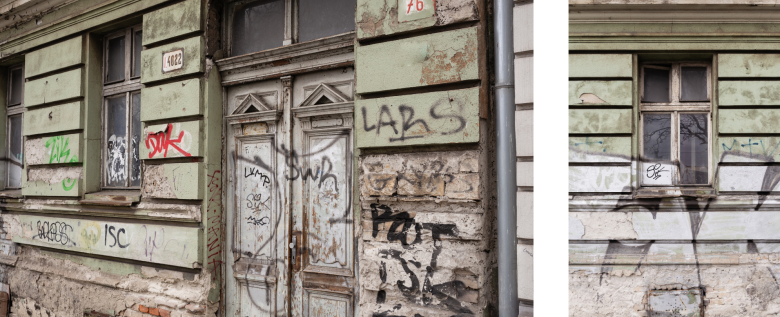
Project partners and funding
The project brings together Energy Cities (France) as coordinator and four partners: Nadácia Habitat for Humanity International (Slovakia); INZEB (Greece); the Society for Sustainable Development Design(DOOR, Croatia); and the Institute for Innovation and Development of the University of Ljubljana (IRI UL, Slovenia).
This project is part of the European Climate Initiative (EUKI) of the German Federal Ministry for the Environment, Climate Action, Nature Conservation and Nuclear Safety (BMUKN).
Follow the project’s progress
Visit the official project page for activities and results, explore our wider Empty Spaces to Homes initiative, and follow Habitat for Humanity Europe and the Middle East on LinkedIn and X for updates.
About Habitat for Humanity
Habitat for Humanity is a movement of people in your local area and around the world, working together to build more prosperous and vibrant communities by making sure everyone has a safe, affordable place to call home. Since our founding in 1976, together we have helped more than 62 million people globally build their futures on their own terms through access to decent housing. We’ve done that by working alongside people of all walks of life to build, repair and finance their homes, by innovating new ways of building and financing, and by advocating for policies that make constructing and accessing housing easier for everyone. Together, we build homes, communities and hope. To learn more, visit habitat.org