Roma Housing: Who Will Take Responsibility?
As housing finally rises on the EU’s political agenda, one question remains largely unanswered: where do Europe’s most marginalised communities – especially Roma – fit into the European affordable housing agenda?
For decades, housing sat at the margins of EU policy, constrained by Treaty limits and fragmented national competences. That era is ending. Today, housing affordability, availability, and adequacy are discussed at the highest political levels, with new initiatives, task forces, and funding debates underway. This is a welcome shift, but it also creates a responsibility: when the EU sets the direction, it must ensure no one is left behind. At present, Roma housing risks being exactly that: left behind.
A Blind Spot in a Time of Crisis
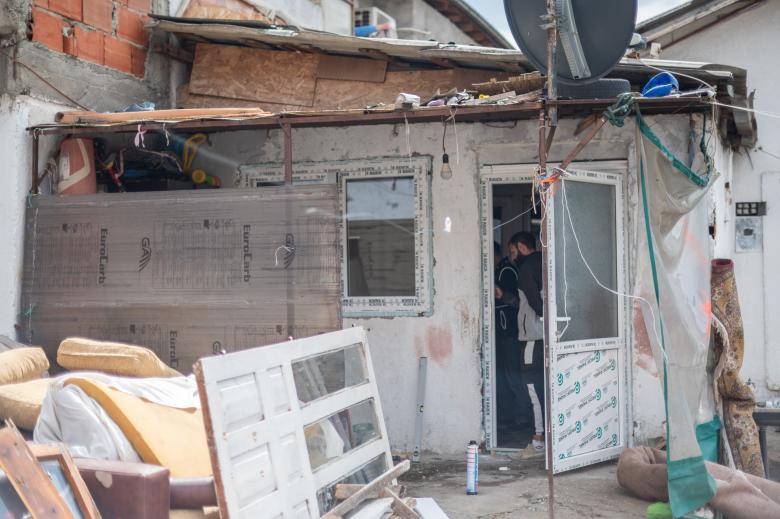
Across Central and Eastern Europe, housing affordability has reached crisis levels. Prices have soared, rents have followed, and social housing stocks remain critically low. For Roma communities, however, this is not a new crisis but a chronic condition. More than half of Roma in the EU live in housing deprivation, often without basic services such as running water, sanitation, or security of tenure. Segregation, discrimination, and forced evictions remain everyday realities. And yet, in the current European debate, Roma housing is barely visible. The Affordable Housing Plan focuses on increasing affordable housing supply, also through conversion and renovation of existing stock, mobilising investment, and addressing energy efficiency – but it stops short of meaningfully addressing groups facing the most extreme forms of deprivation and exclusion.
This raises an uncomfortable but necessary question: if the EU does not explicitly lead on Roma housing, who will?
National Roma inclusion plans often mention housing, but implementation is inconsistent and frequently avoids the hard issues – desegregation, affordability, and long-term sustainability. Monitoring how EU funds are spent on Roma housing remains weak. Too often, projects are not sustained once funding ends or, even worse, reinforce spatial segregation.
The EU has both an opportunity and a duty to ensure that inclusion is not merely rhetorical. Symbolic gestures are no longer enough. High-profile events such as Roma Week in Brussels help visibility and dialogue, but visibility does not build nor renovate homes, secure tenure, or dismantle segregation. Roma communities need concrete measures now – integrated into mainstream housing policies, not relegated to side discussions.
What Real EU Leadership Could Look Like
A credible EU response would mean:
- Explicit inclusion of Roma housing within the EU housing agenda, including European Affordable Housing Plan and following legislation, recognising extreme housing deprivation as a European – not just national – challenge.
- Clear guidance to Member States on designing Roma housing programmes that prioritise desegregation, affordability, and community participation.
- Dedicated and traceable EU funding for Roma housing under cohesion policy and future financial frameworks.
- Robust monitoring and evaluation by the European Commission of how funds are used, with consequences when they reinforce segregation or violate rights.
- Meaningful involvement of Roma communities in designing and implementing housing solutions.
These are not radical demands. They are aligned with existing EU values, human rights obligations, and the evidence from decades of practice across Central and Eastern Europe.
A Test for Europe’s Housing Ambitions
Housing is finally a European topic – that is progress. But it will only be a success if Europe’s new housing agenda tackles inequality at its roots. If the EU can integrate Roma housing into its core housing policies, it sends a powerful signal to Member States and local authorities. If it does not, the gap between political ambition and lived reality will continue to grow. Europe’s affordable housing moment is here. The question is whether it will be inclusive, or whether Europe’s largest minority will once again be asked to wait.