London Opened the Door and the Conversation Followed
Hundreds of visitors, powerful stories and unforgettable artwork brought Habitat for Humanity’s global campaign to life in Covent Garden
For two remarkable days, Covent Garden became a gathering place where reflection, conversation and connection unfolded through art, storytelling and shared experiences.
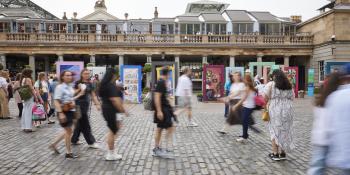
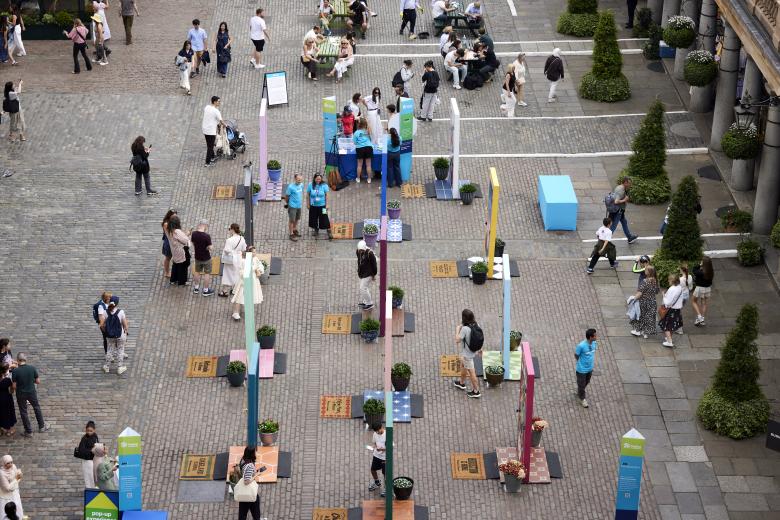
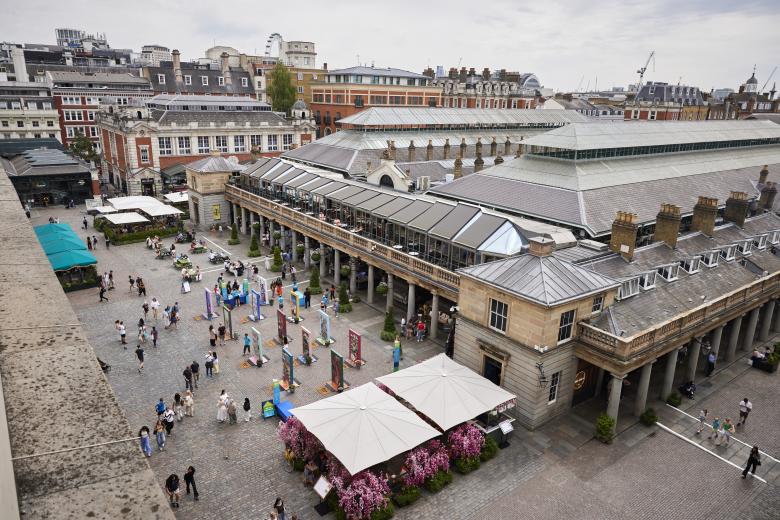
On May 29–30, Habitat for Humanity’s global public art installation Let’s Open the Door arrived in London, transforming one of the city’s busiest public spaces into an immersive experience exploring what home means, why it matters and why everyone deserves one.
As one of only two international cities selected to host the campaign outside the United States, London joined a global movement that has already inspired audiences in New York, Washington D.C., Orlando, Atlanta and Chicago. Through striking artistic doors, real homeowner stories and opportunities for public participation, the installation invited thousands of people to consider a simple but profound question:
What does home mean to you?
Over the course of the weekend, visitors walked through the exhibition, met artists, listened to stories and shared their own experiences of housing, belonging and security. Some arrived out of curiosity. Many left asking how they could help.
And perhaps most importantly, conversations began.
Behind Every Door Was a Story
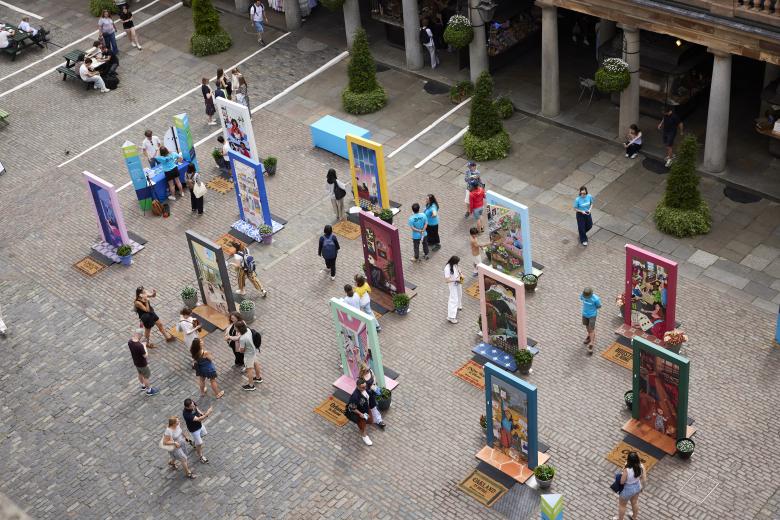
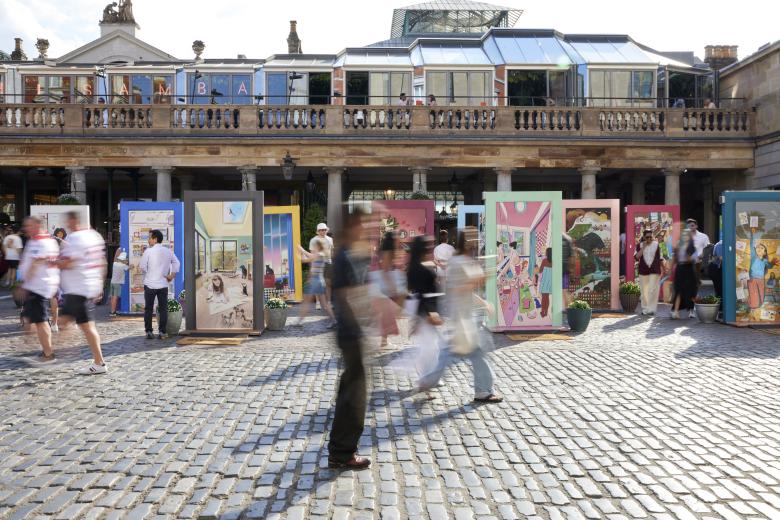
The installation featured a series of artistic doors created by local and global artists, each exploring a deeply personal interpretation of home.
From childhood memories and family life to identity, creativity and belonging, every door offered a unique perspective while reinforcing a universal truth: a safe home is the foundation upon which lives are built.
Two of the featured UK artists, Bex Glendining and Howard Lee, brought especially personal stories to the London exhibition.
Bex Glendining: A Bedroom Full of Identity, Comfort and Belonging
For illustrator Bex Glendining, home is not about perfection. It is about safety.
Today, Bex Glendining’s artwork is helping spark conversations about housing and belonging around the world. But becoming a professional artist was never part of the plan. As a teenager, Bex spent every spare moment drawing, filling sketchbooks alongside school coursework. Yet becoming a professional artist never felt realistic.
“I loved drawing and would do it in any spare time, but I didn’t really think about trying to do it as a career. It didn’t seem possible or realistic.”
Instead, they considered following family members into nursing or care work. Today, however, their artwork is helping spark conversations about housing and belonging across the world.
Seeing visitors engage with the installation in person has been especially meaningful for Bex.
“It feels unreal. Just the idea of knowing that the doors and my artwork were travelling about was so exciting, but actually seeing people interact with them and read the statistics was incredibly moving.”
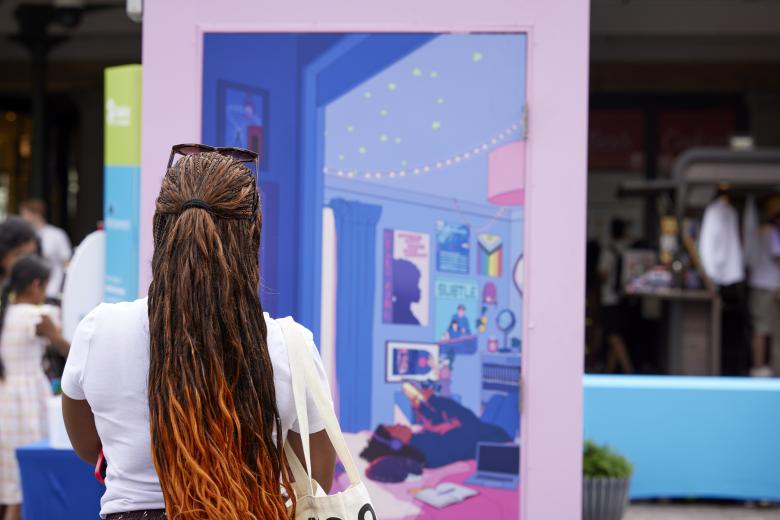
Their door, which is travelling across every participating U.S. city as well as being featured in London, invites visitors into a warm, cluttered teenage bedroom filled with books, plants, soft toys, artwork and personal treasures. Far from being tidy or idealised, the space feels lived in.
And that was exactly the point.
“I hope they see a sense of comfort and a lived-in space. I hope people can see themselves represented in it and feel that sense of having a safe, cosy place where you can simply be yourself.”
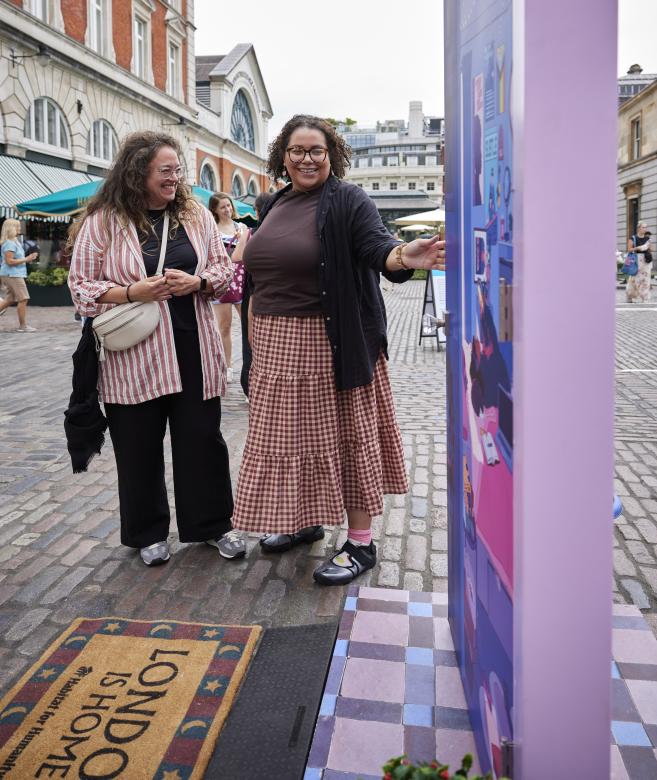
Many of the objects depicted are inspired by Bex’s own bedroom, including favourite books, treasured belongings and the small details that reveal a person’s identity even when they are not physically present. The artwork explores a stage of life many people recognise: the uncertain space between childhood and adulthood.
Reflecting on their teenage years, Bex described a period of experimentation and self-discovery, when bedrooms often become sanctuaries where young people can explore who they are without judgement.
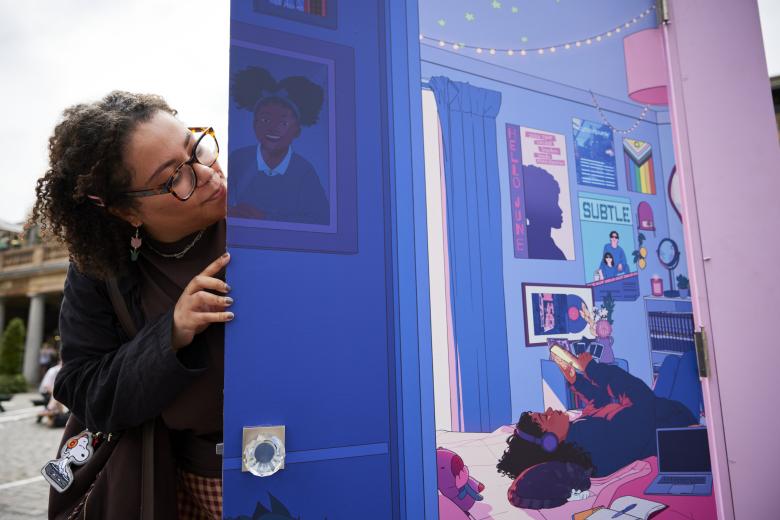
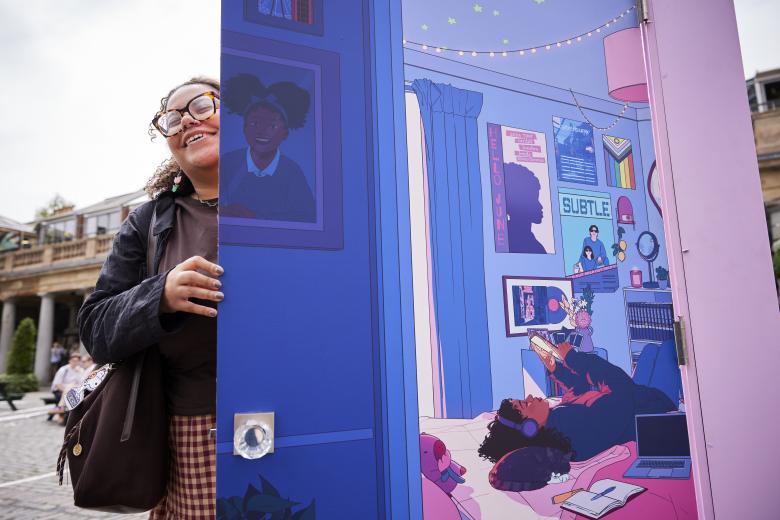
“You don’t fully feel like an adult, but you don’t feel like a child anymore. Your room becomes a place where you can experiment with who you are and show parts of yourself you might be hesitant to share elsewhere.”
For Bex, the project also highlighted an important reality: the ability to fill a room with books, artwork, treasured objects and personal memories is itself a privilege. Much of their artistic work focuses on interior spaces and making rooms feel lived in, yet the campaign reinforced that not everyone has the security or stability needed to create those spaces.
“I love filling a room with clutter and trinkets, but I’m aware that these things are a privilege, as is being able to make art. I hope people recognise that what many of us take for granted isn’t a given, and that fighting for equal housing for all is so important.”
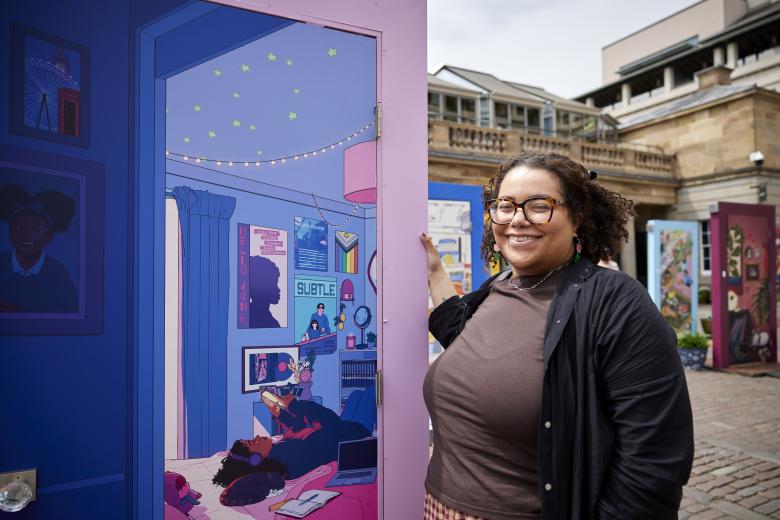
For Bex, that is ultimately what Let’s Open the Door is about. Beyond the artwork, it is an opportunity to encourage conversations about housing, belonging and the simple things many people take for granted. Through a bedroom filled with books, memories and self-expression, their door reminds visitors that home is not defined by perfection. It is defined by the safety, stability and freedom to be yourself.
Howard Lee: Celebrating the Beautiful Chaos of Family Life
While Bex’s door focused on personal identity and self-expression, artist Howard Lee explored another powerful aspect of home: family.
His artwork presents a scene from his own home, filled with familiar details that many visitors immediately recognised — children’s toys, creative projects, scattered belongings and a beloved family dog.
At first glance, it may appear ordinary.
But that ordinariness is exactly what Howard wanted people to notice.
Reflecting on the creation of the piece, he explained that the most meaningful parts of home are often the things we overlook.
The toys left on the floor.
The artwork pinned to the wall.
The clutter we step over every day.
The signs of life that make a house feel alive.
As Howard described, these small details tell the story of a family growing together.
His children’s creativity plays a central role in the artwork. Crochet projects, drawings, imaginative games and cherished possessions are scattered throughout the scene, representing the freedom children experience when they feel secure.
For Howard, a safe home provides much more than shelter.
It creates the conditions for imagination to flourish.
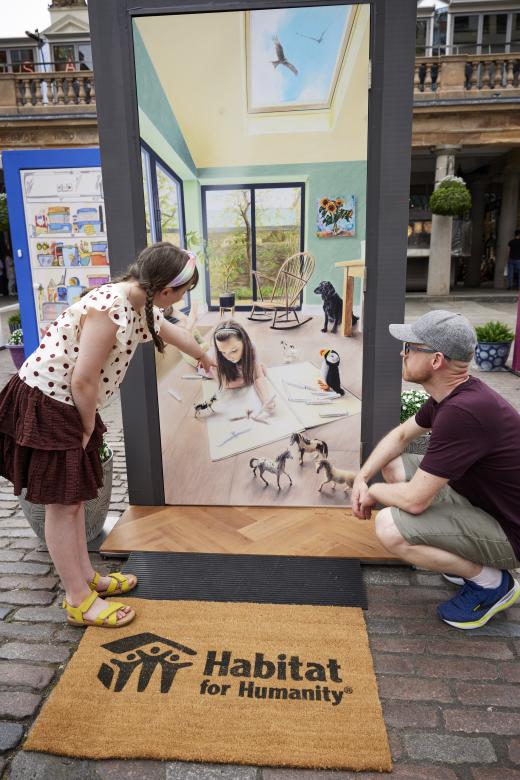
“Children are able to create their own worlds because they feel safe,” he said. “Home gives them the confidence to explore, imagine, develop and grow.”
One object holds particular significance: a toy puffin inspired by a family trip to observe puffins in their natural habitat. The toy became a symbol of curiosity, adventure and discovery — all made possible by the stability of home.
The artwork also features red kites, birds that have made a remarkable recovery in Britain after years of conservation efforts.
For Howard, they serve as a powerful metaphor.
“Just as species can thrive when given the right environment, people can flourish when they have access to safe and supportive homes.”
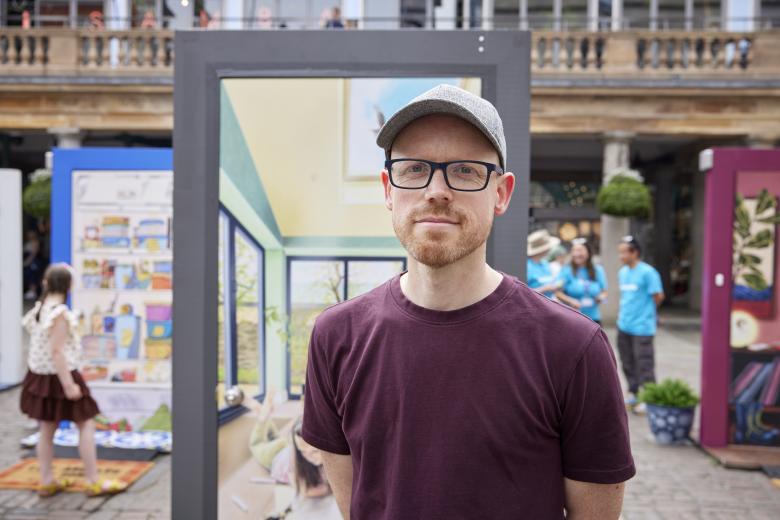
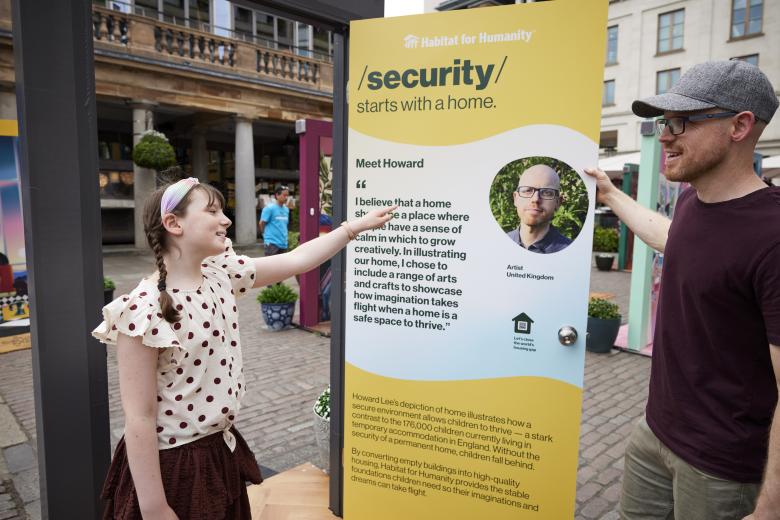
Throughout the weekend, visitors repeatedly pointed to familiar details within the artwork.
Children recognised toys.
Parents recognised clutter.
Pet owners spotted the dog.
And many saw reflections of their own families.
That response was exactly what Howard hoped for.
“I want people to see their own home reflected in the artwork,” he said. “Their own children, their own pets, their own mess and their own clutter. Those are the things that come together to make a home.”
His message was both simple and profound:
The things we sometimes take for granted are often the things that matter most.
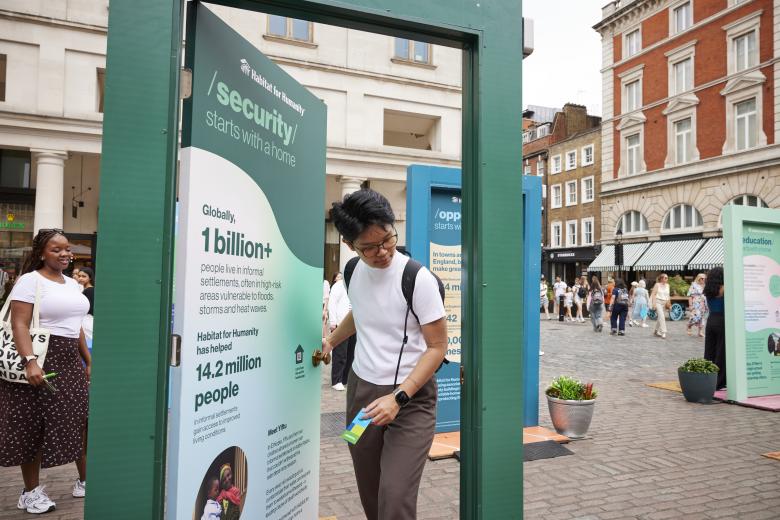
When Art Opens the Door to Real Conversations
While the artwork attracted attention, it was the conversations that followed that revealed the true impact of the installation.
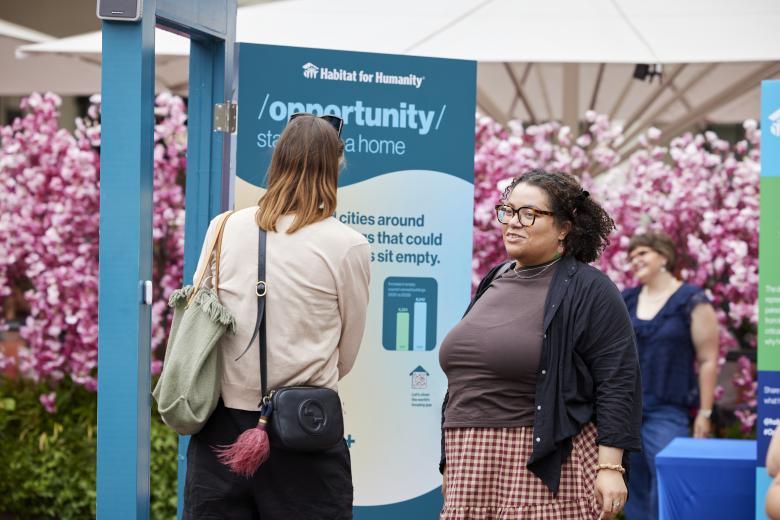
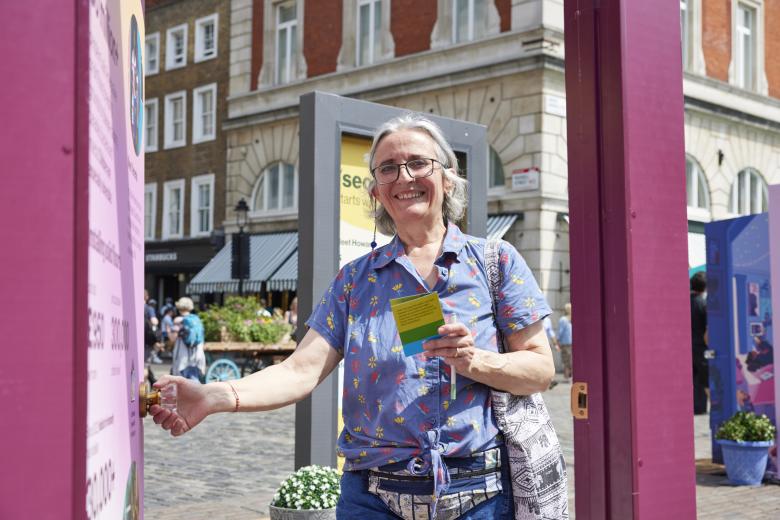
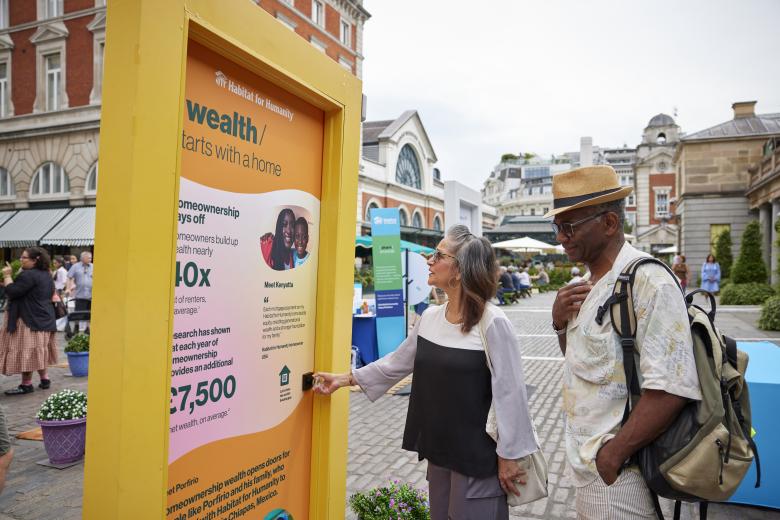
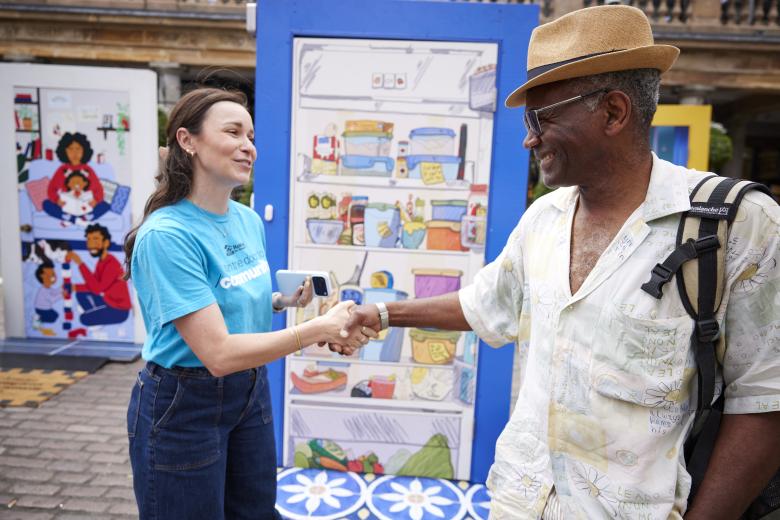
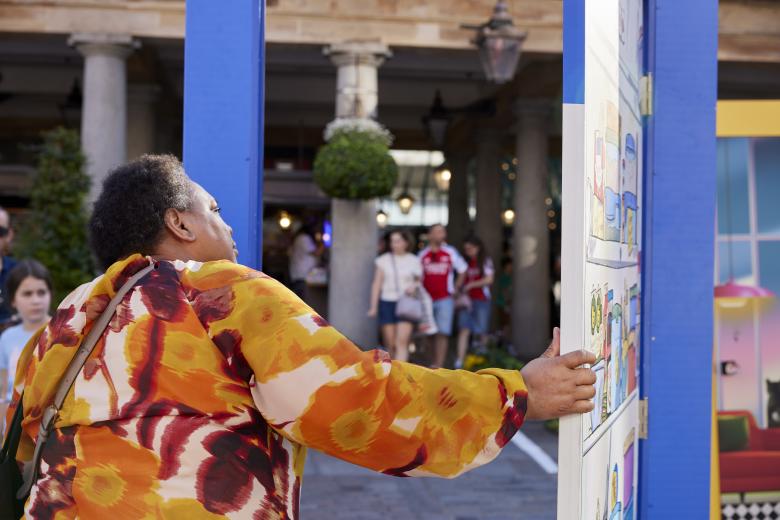
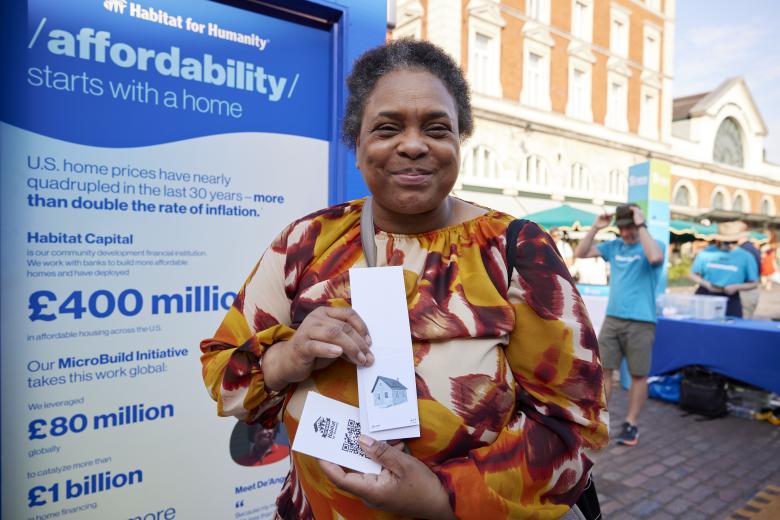
Throughout the weekend, visitors spent time reading housing statistics, listening to artist recordings and engaging with Habitat for Humanity staff and volunteers.
Many arrived knowing little about Habitat’s work. Many left wanting to get involved. Again and again, visitors asked the same questions:
- How can I help?
- Can I volunteer?
- Can I donate?
- What does Habitat do in the UK?
The housing stories resonated strongly.
In particular, discussions around damp and mould sparked immediate recognition among many Londoners, highlighting how housing challenges affect communities much closer to home than many people realise. Others were surprised to learn that Habitat for Humanity operates in Great Britain, not only internationally. Learning about Habitat’s work transforming empty and vacant buildings into affordable homes opened up conversations about practical solutions to the UK’s housing challenges.
The combination of visual storytelling and housing facts helped make complex issues feel accessible and personal. People first fell in love with the art. Then they stayed for the conversation.
“I'm Born Here, But I'm Struggling to Afford My Own Home”
Among the many conversations that took place over the weekend, some of the most powerful came from people sharing their own housing experiences.
A Habitat representative working at the event, spoke candidly about her own reality. “Even myself, I live in a guardianship, which is basically a building that will get demolished and you look after it for cheaper rent because the rent is so unaffordable,” she said “It’s very sad for me because I’m born here, but I’m really struggling to afford my own home.”
She also shared that her parents live in social housing, underscoring how closely housing challenges touch many families across Britain today.
Her reflections echoed what many visitors expressed throughout the event. Housing insecurity is not an abstract issue. It affects neighbours, colleagues, friends and family members. And that is precisely why the exhibition resonated so deeply. “To thrive, you need a safe environment,” she said. A statement as simple as it is true.
Stories That Travel Across Borders
The weekend also brought unexpected encounters.
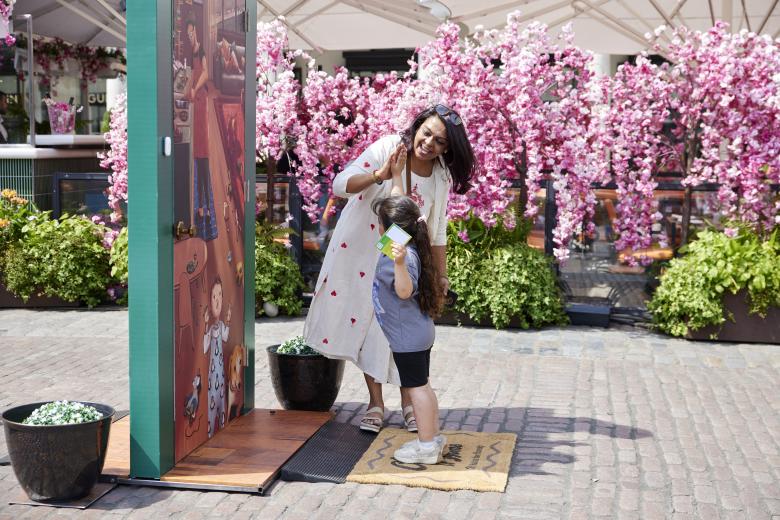
Visitors shared stories of volunteering with Habitat in countries including Cambodia and Vietnam. Others spoke about relatives whose homes had been built through Habitat for Humanity in the United States. Many were delighted to discover the organisation’s presence in the UK and eager to learn how they could contribute locally.
These conversations reinforced one of the central messages of Let’s Open the Door:
Housing challenges may look different from country to country, but the need for a safe place to call home is universal.
More Than an Exhibition
As the doors closed on Saturday evening, what remained was more than a successful public art installation.
Thousands of conversations had taken place. People had reflected on their own homes. Artists had shared deeply personal stories. Visitors had learned about housing challenges they had never considered before. And many left inspired to become part of the solution.
For two days, a collection of doors in the heart of London reminded us that home is far more than a physical structure.
It is safety. It is identity. It is opportunity. It is belonging.
And for millions of people around the world, it is still something worth fighting for.
As Let’s Open the Door continues its journey around the world, the message that echoed through Covent Garden remains as relevant as ever:
Every brighter future starts with a home.