Rebuilding after disaster
How housing and water are supporting recovery in Ethiopia’s Gofa Zone
When disaster strikes, lives, livelihoods and ways of life can be lost. Homes and the community infrastructure that supports daily life can be destroyed, disrupting routines, compromising privacy, health and safety, and making the path to recovery even more difficult.
In July 2024, a devastating landslide struck Gofa Zone in southern Ethiopia, claiming lives and destroying homes and infrastructure. For the families who survived, recovery meant rebuilding not only houses but the foundations of everyday life.
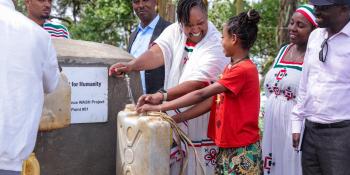
Habitat for Humanity Ethiopia joined the recovery effort in Burda resettlement village alongside the community, government authorities and other partners. Through housing, water and hygiene interventions, the work has supported new homes for 88 households and improved access to safe water for more than 735 community members.


Each new home includes a household toilet, while the water infrastructure includes a 100 m³ reservoir, three water points with four faucets each and 4.4 kilometres of internal water supply lines. Sanitation and hygiene capacity-building training has also supported users of the new facilities.
For Yenenesh, who lost her husband in the disaster, having a permanent home has been part of a longer journey toward recovery.
“After the disaster, we moved into a temporary shelter. It was then that Habitat for Humanity joined the recovery effort and followed up on our progress until we were finally settled into our own home. We are truly thankful.”
The impact is also felt beyond individual households.
For Nebire, a young member of the community, access to homes, clean drinking water and latrines represents an important improvement for the wider community.
“The homes, clean drinking water and latrines are improvements that mean a lot, especially to our elders, mothers and fathers.”


The experience in Gofa highlights the interconnected nature of recovery. Safe housing, water and sanitation are not separate needs. Together, they help create the conditions in which families and communities can begin to rebuild with greater dignity, safety and stability.
The work also demonstrates the importance of partnership in responding to the aftermath of disaster. Communities, government authorities and development partners each have a role to play in creating pathways from immediate displacement toward longer-term recovery and resilience.
Recovery often means more than replacing what was lost. It means rebuilding the foundations of everyday life. In Gofa Zone, safe homes, clean water and sanitation are helping families move forward with dignity, safety, and hope, while creating the conditions for stronger and more resilient communities.