Health starts with home: Water, sanitation and hygiene
Habitat expands access to water, sanitation and hygiene through housing solutions that improve health, quality of life and dignity
Access to safe and reliable water, sanitation and hygiene, known as WASH, is essential to adequate housing. Yet 1 in 4 people globally lack access to clean drinking water, and 3.4 billion people do not have access to sanitation facilities.1
Habitat works alongside governments and communities to expand household- and community-level access to these fundamental services. Through innovative healthy housing solutions, our WASH work helps improve health, quality of life and dignity while advancing women’s empowerment, economic opportunity, environmental conservation and community resilience.
The need for WASH
Where we live shapes how healthy we are. When WASH services are out of reach, families face a much higher risk of illness, and deadly diseases can spread through communities.
Today, access to clean water is becoming even more challenging for families around the world. People in the least-developed countries are more than twice as likely to lack basic WASH services. And every day, 1,000 children younger than 5 die from unsafe water, inadequate hygiene and lack of sanitation facilities.2
Extreme weather events are becoming more frequent, threatening the quality and quantity of fresh water sources. This makes water availability more unpredictable and worsens existing inequities in access.
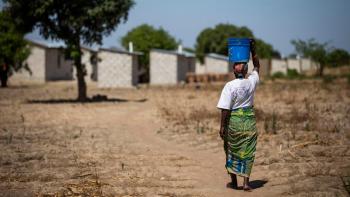
For example, WASH insecurity disproportionately impacts women and girls. Women and girls often bear the burden of water collection, spending valuable hours walking to water sources, which harms their education and economic outcomes. Without toilets and WASH access at home, women and girls are at greater risk of gender-based violence, and menstrual hygiene challenges often keep girls out of school.
Our integrated, inclusive and innovative WASH strategy
Access to clean water, sanitation and hygiene could save 1.4 million lives every year.3
With 50 years of experience advancing housing solutions around the world, Habitat is uniquely positioned to catalyze community interventions that are integrated with the overall housing ecosystem. When WASH is integrated with housing, healthier futures begin right at home.
Our holistic WASH solutions are implemented at the community, market and policy levels to deliver long-lasting impact. The most marginalized communities are at the center of our strategy, and our approach is tailored to local needs and designed to be inclusive, affordable and sustainable.
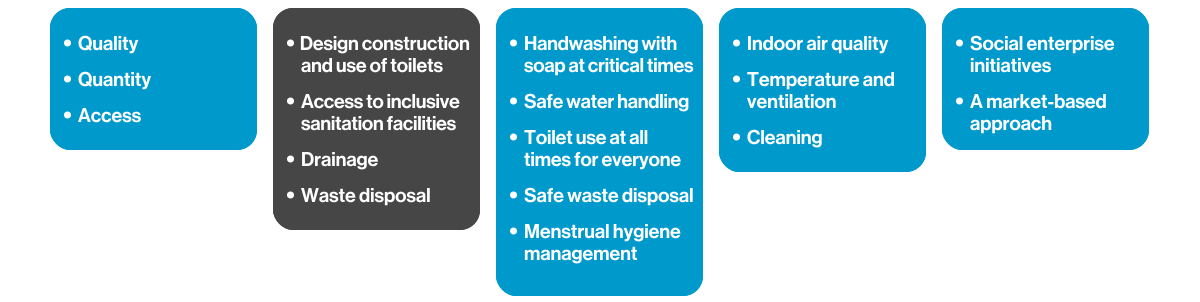
Our integrated solutions respond to the greatest needs in the communities where we work, from building clean water points and latrines to promoting household sanitation, handwashing and behavior change. We also address the unique needs of women and girls, increasing their safety while promoting better health, education and economic outcomes.
In communities affected by disaster, Habitat includes WASH initiatives in our responses to protect health, restore essential services and support early recovery.
We also connect WASH solutions with housing conditions and livelihoods. To promote healthier housing conditions, Habitat connects families with clean energy solutions, from supplying biogas for indoor cooking to teaching families about adequate ventilation and indoor temperature, which minimize dampness and prevent pathogen growth.
Incorporating a focus on livelihoods also enables people to generate income through WASH solutions. We create economic opportunities for families in several ways: developing social enterprises that transform household waste into building materials, setting up women-run sanitary napkin businesses, employing women to operate community WASH facilities, and more.
Sustainable WASH services
Habitat’s WASH work supports the United Nations’ Sustainable Development Goal 6: ensuring availability and sustainable management of water and sanitation for all. We build sustainability into our solutions from the outset by considering social, environmental, economic and technological factors, alongside government programs and policies. Habitat prioritizes climate-adaptable, sustainable solutions that help communities manage resources responsibly over the long term. To help sustain WASH improvements over the long term, Habitat empowers and builds the capacity of local leaders from start to finish.
Examples of our work
Energy efficient
- Establishing low-cost and energy-free biosand filters in rural Tajikistan.
- Supporting community-based water systems with wells and submersible pumps powered by green energy or hybrid models in Indonesia, Ethiopia and Liberia.
Waste to resource
- Turning toilet waste into renewable fuel through biogas initiatives in Liberia.
- Processing household plastic waste into building materials in Liberia and other countries through circular-economy approaches.
Climate adaptability
- Building raised sanitation and water supply facilities that are more resilient to floods and droughts. In Bangladesh, Habitat builds raised platforms for toilets and tube wells.
Environmental conservation
- Incorporating activities such as tree planting to help protect water resources and absorb carbon dioxide, including in coastal communities in Mexico and Kenya.
Affordable solutions
- Introducing slow sand filters at the household level in Nepal, which are affordable and easy to maintain.
- Promoting twin leach pit toilets in India and Nepal, which are more affordable than traditional septic tank toilets.
Market-based approaches bring WASH into the home
Habitat works through financial institutions and local businesses to deliver innovative solutions that help make WASH improvements inside the home more affordable for low-income families.
Affordable housing microfinance loans help families cover the up-front costs of meaningful WASH improvements, creating healthier living conditions and durable gains in quality of life. Our local partners, including Jeevan Bikas Sama in Nepal and ASA Philippines Foundation, support WASH solutions under their home improvement loans. Habitat’s MicroBuild Initiative helps partners like these expand and strengthen their housing loan portfolios to reach more families.
Habitat also provides investment and advisory services to housing startups such as TapEffect in Cambodia through our Shelter Venture Fund. TapEffect provides clean and affordable tap water to underserved rural and semi-rural communities.
-

See Habitat CEO Jonathan Reckford’s appearances at the 2026 World Economic Forum in Davos, Switzerland, highlighting the importance of safe, affordable housing.
References
- World Health Organization and UNICEF, Progress on household drinking water, sanitation and hygiene, 2000–2024: Special focus on inequalities, 2025