From Empty Spaces to Homes
Join Habitat for Humanity in Katowice to Explore the Future of Housing in Europe
With millions of dwellings standing empty across Europe while affordable housing remains out of reach for many, Habitat for Humanity is bringing together cities, policymakers, researchers and housing experts to explore a different approach: turning vacant spaces into homes.
On 24 November 2026, Habitat for Humanity will host The Future of Housing: From Empty Spaces to Homes, the final conference of its Empty Spaces to Homes initiative, at the Silesian Museum in Katowice, Poland. The event will also be livestreamed, allowing participants from across Europe and beyond to join the conversation.
The conference represents an important milestone of an initiative focused on unlocking the potential of vacant and underused buildings to create affordable, energy-efficient housing. It will bring together practical experience, research findings and policy discussions to explore how building reuse and vacant housing stock mobilization can become a more widely adopted solution to Europe’s housing challenges.

Beyond reflecting on the project’s achievements and lessons learned, the conference will also provide an opportunity to look ahead, identify priorities for future action and explore how the initiative’s results and approaches could be further developed and scaled up in a potential next phase.
Europe's housing paradox
Across Europe, millions of people struggle to access decent, affordable housing. At the same time, an estimated 47 million dwellings remain unoccupied, representing an opportunity for bringing these back into use.
The challenge extends beyond housing affordability. Buildings also play a major role in Europe’s climate transition, making it increasingly important to consider how existing structures can be renovated, adapted and used more efficiently.
What if part of the answer to Europe’s housing crisis is already standing?
Rather than relying exclusively on new construction, repurposing vacant residential, commercial and public buildings, and mobilizing vacant housing units offers an opportunity to expand affordable housing, reduce pressure on resources and revitalise communities.
This is the idea behind Habitat for Humanity’s Empty Spaces to Homes initiative.
From research to real homes
Launched in 2024 with the support of the Laudes Foundation, Empty Spaces to Homes set out to demonstrate that transforming vacant and underused properties into affordable, energy-efficient housing can deliver benefits for people, communities and the environment.
Working with local partners and stakeholders across Europe, the initiative has combined practical demonstration projects, research, financing solutions and policy advocacy to better understand what it takes to bring empty buildings back into use.
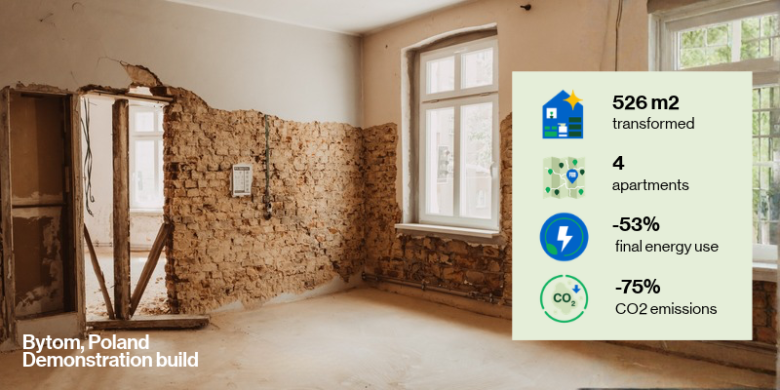
In Bytom, Poland, a once-abandoned 19th-century building has been transformed into four modern, energy-efficient apartments, providing affordable homes for families, including people displaced by the war in Ukraine and local residents.
The transformation demonstrates how existing buildings can be given a new purpose while contributing to neighbourhood regeneration and more sustainable housing solutions.
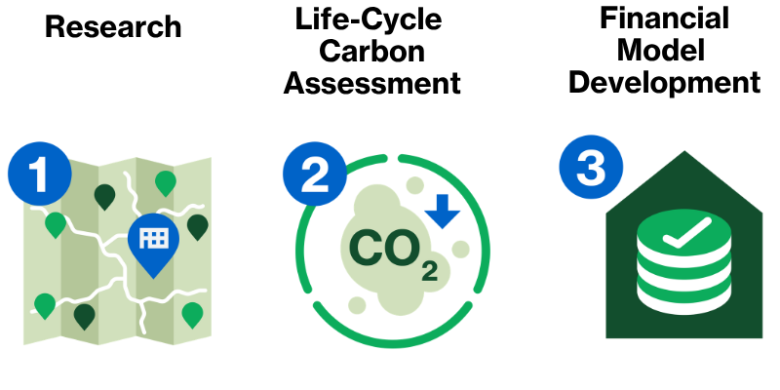
Beyond demonstration projects, the initiative has also generated research on vacant properties and their potential for affordable housing in Poland, Great Britain, Hungary and Croatia. These studies examine the scale of vacancy, the barriers preventing buildings from being reused, and the policies and partnerships needed to unlock their potential.
Additional research has explored financing mechanisms for building renovation and methodologies for assessing the environmental impact of reuse, helping to build the evidence needed for wider adoption.
Together, these activities have contributed practical knowledge, tools and recommendations that can support cities, housing providers and policymakers seeking to turn underused spaces into affordable homes.
Explore the Empty Spaces to Homes research, demonstration projects and resources.
A conference focused on solutions
The final conference will be more than a reflection on the initiative’s achievements. It will provide an opportunity to examine how the lessons learned can inform future housing policies, investment decisions and practical action across Europe.
Through four thematic sessions, participants will explore the key questions shaping the future of vacant building reuse:
1) Cities Leading the Way
How can municipalities identify vacant buildings, overcome regulatory and practical barriers, and turn unused properties into affordable housing? This session will examine local approaches, mapping tools and lessons from cities already taking action.
2) Who Pays for Vacancy Reuse?
Transforming empty buildings requires investment and sustainable financial models. Public and private financiers, development banks and housing experts will explore financing mechanisms and the conditions needed to make reuse projects viable and scalable.
3) The Triple Dividend of Vacancy Reuse
Bringing buildings back into use delivers benefits for housing affordability, climate action and local communities at the same time. Drawing on research and practical examples, this session will explore the social, environmental and economic benefits of reuse.
4) Renovate, Reuse, Revitalise
How can European climate, energy and housing policies help unlock vacant buildings for affordable housing? This discussion will examine the role of renovation, energy efficiency and supportive policy frameworks in making better use of Europe’s existing building stock, especially in the context of Energy Performance of Buildings Directive and Social Climate Plans.
The conference will also feature findings from Habitat for Humanity’s latest global housing research, Home at What Cost?, which examines how housing affordability and insecurity affect people’s health, well-being and life decisions.
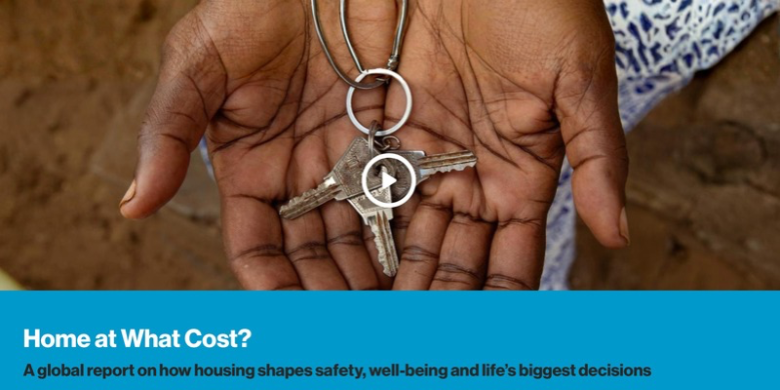
Based on a survey of more than 30,000 respondents across 22 countries, the research reveals the hidden sacrifices people make to afford housing. Globally, 75% of respondents reported cutting back on at least one expense in the previous year to meet housing costs, while one in three spent less on food or groceries.
These findings reinforce why expanding access to decent, affordable housing remains so urgent — and why innovative approaches to housing supply deserve greater attention.
Scaling Up Across Europe
While the Empty Spaces to Homes initiative is reaching its first phase, the challenge it addresses — and the opportunities it has identified — remain.
Habitat for Humanity’s longer-term vision is to partner with at least 50 European cities by 2030, supporting the transformation of vacant and underused spaces into affordable, energy-efficient homes.
Achieving this ambition will require cooperation between municipalities, governments, financial institutions, housing providers, researchers and civil society.
To support the next phase of this work, Habitat for Humanity has developed practical resources aimed at strengthening the evidence base for vacancy re-use, including the Vacancy Identification and Mapping Framework and policy recommendations linked to ongoing EU housing policy discussions, including the future Affordable Housing Act.
Together, these initiatives seek to support more informed and systematic approaches to unlocking vacant buildings for affordable housing.
At the same time, broader public engagement will be essential to keep housing high on the European agenda, including through initiatives such as the European Citizens’ Initiative (ECI) Right to Housing, which calls for stronger action to ensure access to adequate and affordable housing across Europe.
The conference in Katowice offers an opportunity to strengthen these connections, share practical knowledge and explore how vacant building reuse can move from individual projects towards a more mainstream approach to affordable housing and urban regeneration.
Join us in Katowice — or online
Whether you are a city representative exploring solutions for vacant properties, a policymaker working on affordable housing, a researcher studying urban regeneration, or a financial institution interested in sustainable investment, this conference offers an opportunity to exchange knowledge, connect with peers and contribute to the conversation.
Event details
✔️ Conference: The Future of Housing: From Empty Spaces to Homes
✔️ Date: 24 November 2026
✔️ Time: 09:00–17:00 CET
✔️ Venue: Silesian Museum, Tadeusza Dobrowolskiego 1, Katowice, Poland
✔️ Participation: In person or online via livestream
✔️ Language: English, with interpretation into Polish
✔️ Registration: registration link
Two Days of Housing Dialogue
Participants travelling to Katowice are also invited to attend Housing Forum 2026: More Than Construction, organised by Habitat for Humanity Poland on 23 November 2026. The Housing Forum will bring together representatives of national and local governments, the private sector, civil society and research institutions to discuss affordable housing, housing policy and vacant properties.
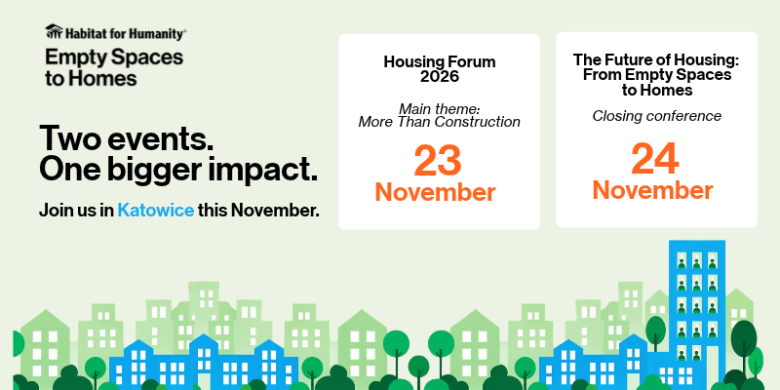
Together, the two events offer complementary opportunities to exchange ideas, strengthen partnerships and explore practical solutions to Europe’s housing challenges.
Registration Is Now Open!
Join us on 24 November 2026 in Katowice or online to explore how Europe’s empty spaces can become homes.
Register to Attend in Person
Register to Attend Online
The detailed programme, speaker announcements and additional event information will be shared soon.
Register for Housing Forum 2026
Join us as we explore how Europe’s empty spaces can become homes — and how the lessons learned today can help shape the housing solutions of tomorrow.
See you in Katowice!