Empty Spaces Resources
This section is your comprehensive source for materials and tools related to the Empty Spaces to Homes project. Here, you will find a curated collection of resources, including guides, reports, studies, and other valuable materials that support the project’s mission of transforming unused spaces into homes.
Whether you are looking for detailed information, practical tools, or inspiration to contribute to this initiative, the Resources page is designed to provide everything you need. Explore and utilize these materials to better understand and engage with the project’s goals and impact.
Demonstration Builds
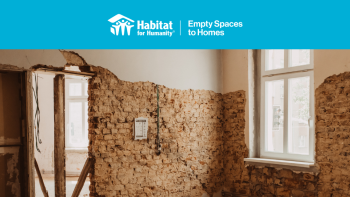
Demonstration Builds showcase on the ground how unused spaces can become energy-efficient, affordable housing units, addressing critical issues such as housing affordability, homelessness and overcrowding. Part of this activity is to measure of how much carbon dioxide will be saved by repurposing instead of building anew.

Research papers
Repurposing Empty Spaces: Addressing the Housing Crisis Across England, Scotland and Wales (2025)
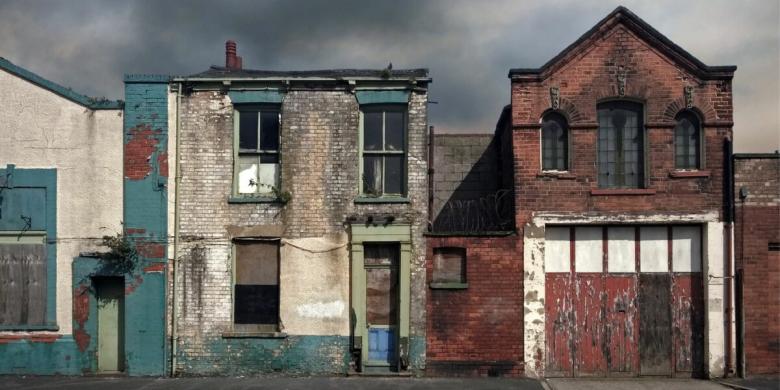
A new research explores the growing potential of vacant non-residential buildings across Great Britain to address housing need. The report analyses rising commercial vacancy—particularly in publicly owned assets—and highlights how repurposing empty buildings can deliver social and genuinely affordable homes while supporting climate goals, reducing public costs, and revitalising communities.
Turning Vacant Spaces into Social Housing in Poland (2025)
A new research examines how unused non-residential buildings across Poland—such as schools, offices, and industrial sites—could be adapted into affordable and social housing. By mapping vacancy and analysing legal, financial, and governance barriers, the report outlines how adaptive reuse can provide a faster, greener, and more inclusive alternative to new construction.
How Hungary’s Empty Spaces Could Become the Future of Affordable Housing (2025)
A new research analyses Hungary’s housing landscape, highlighting the stark contrast between widespread housing poverty and a large number of vacant and underused buildings. The report explores how repurposing empty residential and non-residential spaces—through targeted financing tools, updated regulations, and cross-sector partnerships—could expand affordable housing and support a more inclusive, sustainable housing system.
Unlocking the Potential of Empty Spaces in Croatia (2025)
A new research explores Croatia’s housing paradox, where rising housing costs and limited access to affordable rentals coexist with a high share of vacant homes. The report examines how repurposing underused residential properties—supported by stronger regulation, policy alignment, and lessons from international practice—could expand affordable housing and help build more inclusive, sustainable cities.
Review Report of Existing Methodologies and Requirements Related to Life-Cycle Assessment Carbon Footprint and Construction Sector (January, 2025)
A new research reviews key methodologies and standards for life-cycle carbon assessments (LCA) in building renovation, identifying best practices and gaps. The findings will inform a new, accessible methodology that prioritizes whole-life carbon reduction, circular economy principles, and practical tools for sustainable decision-making.
Financial Instruments for Renovation of Vacant Spaces in Europe
HFHI research shows that vacant buildings across Europe can be transformed into affordable, energy-efficient housing through innovative finance and supportive public policy. Case studies highlight that success depends on long-term affordable funding, strong regulation, and coordinated public action, supported by tools like blended finance and renovation funds. The report frames vacant space as a major opportunity to address housing shortages and climate goals in Europe — with affordable housing already existing, just unused.
Policy papers
The Housing Paradox Surplus and Shortage Policy Brief by Habitat for Humanity Europe and the Middle East (November 2025)
The policy brief highlights Europe’s housing paradox: rising unaffordability despite millions of vacant buildings. The report argues that adapting existing residential and non-residential spaces offers a faster, greener alternative to new construction, and calls for stronger EU coordination, better vacancy data, and targeted incentives to turn empty properties into affordable homes.
Vacant Building Conversion in Europe A Policy Brief from Habitat for Humanity Europe and the Middle East on Affordable Housing Plan (October 2025)
The policy brief shows how converting vacant residential, commercial, and public buildings can tackle Europe’s housing crisis. Rather than focusing only on new supply, the report highlights reuse as a faster, lower-carbon solution and calls for stronger EU coordination, better data, and targeted investment to turn empty spaces into affordable homes.
Position Paper on Europe Affordable Housing Plan by Habitat for Humanity Europe and the Middle East (June 2025)
The position paper highlights the untapped potential of vacant residential and commercial buildings to tackle Europe’s housing crisis. With millions of empty properties across the EU, repurposing existing spaces can deliver affordable, low-carbon homes faster than new builds. The brief calls for coordinated EU action to unlock this potential.
Toolkits
Great Britain 2023
Based on insights from extensive research and case studies in Great Britain, our Empty Spaces to Homes Toolkit provides guidance on developing and delivering empty spaces programmes that are translatable and adaptable for a variety of markets.
Poland 2022
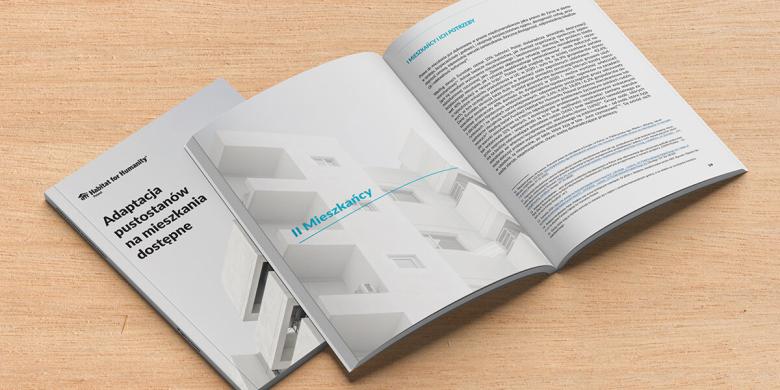
The toolkit, available in Polish and English, was created primarily to describe in a practical way the basic aspects of the process of adapting vacant properties to affordable housing based on the insights gathered in Poland in 2022.
Progress Reports
Follow the progress of the ESTHer (Empty Spaces to Homes) initiative as we work to transform vacant and underused buildings into affordable, sustainable homes across Europe. These reports highlight key achievements, research findings, policy developments, and on-the-ground renovation efforts that are helping address both the housing crisis and climate change.
-
This first report introduces the ESTHer program, its vision, partners, and long-term goals. It highlights early achievements in research, advocacy, stakeholder engagement, and preparation for demonstration housing projects in Poland and the United Kingdom.
-
The second report provides an update on progress across ESTHer’s eight work streams, including demonstration builds, financial model development, policy advocacy, and sustainability measurement. It also shares new research insights from Hungary and Croatia and outlines how the project is building scalable solutions for affordable housing across Europe.
-
This report highlights major progress across the ESTHer initiative, including the completion of key research activities, growing advocacy efforts at national and EU levels, and significant advancements in demonstration housing projects in Poland and Great Britain. It also introduces the broader “Empty Spaces 50 Cities Vision,” aimed at scaling the reuse of vacant buildings into affordable homes across Europe.
-
The fourth report focuses on expanding policy influence, launching new research in Great Britain and Poland, and strengthening national and European coalitions working on vacant building conversion. It also highlights major communications successes and growing momentum around financial models and policy solutions for adaptive reuse.
Read here
-
This quarterly update presents progress on developing practical financing mechanisms for converting vacant buildings into affordable housing, alongside ongoing advocacy and coalition-building efforts across Europe. The report also outlines preparatory work for future demonstration projects in Great Britain and continued dissemination of ESTHer research and learning outputs.
Webinars
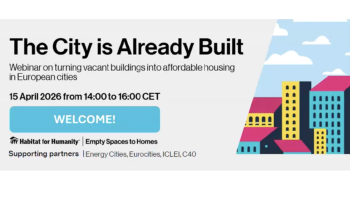
The City is Already Built is a webinar (April 15, 2026) exploring how European cities are tackling the housing crisis by transforming vacant and underused buildings into affordable homes. Featuring insights from city representatives and practitioners across Vienna, Budapest, Lille and Thessaloniki, the discussion highlights practical strategies, partnership models, and lessons learned in bringing empty properties back into use.