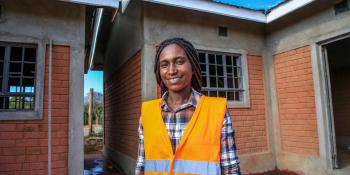
How alternative building technologies are expanding affordable housing in Kenya
Decent housing remains out of reach for many low-income families in Kenya due to rising construction costs and limited access to affordable building materials. To help address this challenge Habitat for Humanity Kenya is championing alternative building technologies that reduce construction costs, create local economic opportunities and expand access to safe sustainable housing.
These solutions were showcased at the Laikipia Housing Expo 2026, where Habitat for Humanity Kenya joined government, private sector, development partners and community representatives to explore practical approaches to housing affordability. Held under the theme “Catalyzing Sustainable Demand for Alternative Building Technologies,” the one-day forum brought together more than 500 participants to discuss housing affordability, green construction, housing finance, incremental housing, enterprise development and technical skills development.
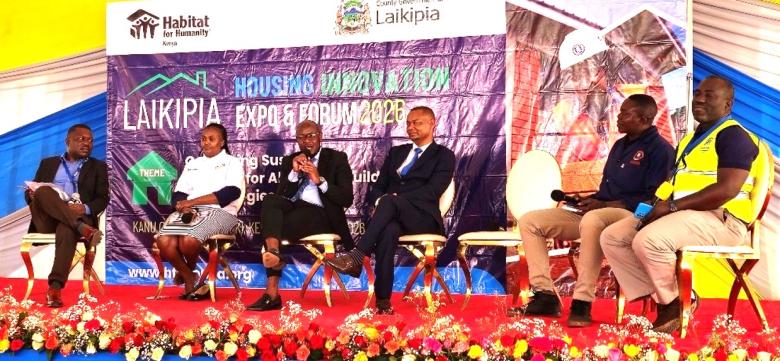
A panel discussion with sector players at the Expo
A key feature of the event was Habitat for Humanity Kenya’s demonstration of Compressed Stabilized Soil Blocks (CSSB) and Interlocking Stabilized Soil Blocks (ISSB). Produced using locally available materials, the technologies can reduce construction costs, shorten building timelines and lower environmental impacts while increasing access to durable housing suited to local conditions.
Through its Integrated Housing Support Project, Habitat for Humanity Kenya’s has already supported the construction of 12 teacher and community housing units using CSSB and ISSB technologies, enabled community enterprises to produce more than 21,000 stabilized soil blocks, and expanded the adoption of alternative building technologies through partnerships with Technical and Vocational Education and Training (TVET) institutions.
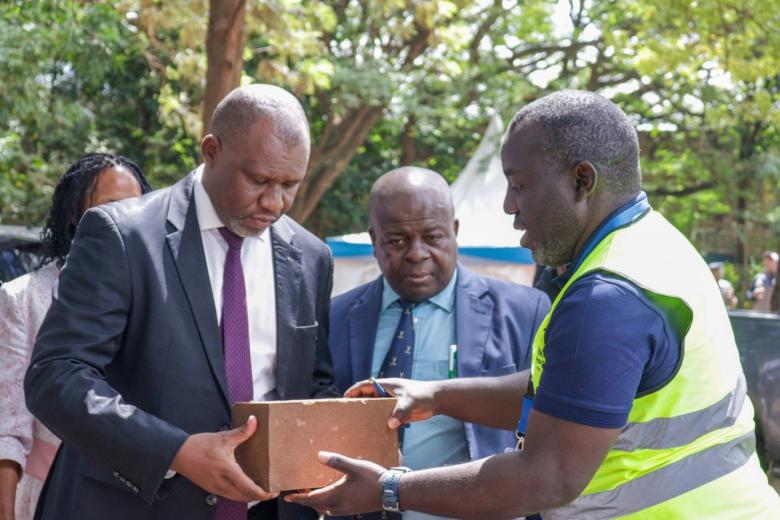
Laikipia Deputy Governor H.E. Reuben Kamuri receives a freshly pressed Interlocking Stabilized Soil Block (ISSB) from Levy Obatsa, Habitability Manager at Habitat for Humanity Kenya.
Speaking during the forum, Habitat Kenya National Director Dr. Eileen Mokaya, highlighted the importance of locally produced building materials in reducing housing costs while creating livelihood opportunities for local communities.
“Often, transporting construction materials costs more than the materials themselves,” she said. “By producing quality building materials where construction is taking place, we can significantly reduce costs while creating economic opportunities for local artisans, especially youth and women.”
Laikipia County Deputy Governor H.E. Reuben Kamuri echoed the importance of collaboration, noting that addressing Kenya’s housing challenge requires collective action across government, the private sector and communities. He also highlighted secure land tenure as a critical enabler of housing development and reaffirmed the County Government’s commitment to working with Habitat for Humanity Kenya to improve access to land documentation.
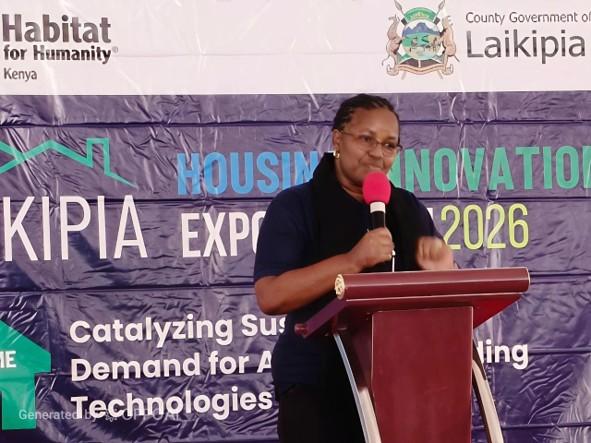
National Director Habitat for Humanity Kenya, Eileen Mokaya, speaks at the forum.
Beyond the policy discussions and technology demonstrations, the forum celebrated the graduation of 48 youth and women artisans who completed National Industrial Training Authority (NITA) certification in masonry and sanitation construction. Strengthening local skills and technical capacity is an important step toward enabling communities to deliver and sustain affordable housing and sanitation solutions.
As Africa continues to face a growing housing deficit, experiences from Laikipia in Kenya demonstrate how locally driven innovation, technical skills development and multi-sector partnerships can make affordable housing more accessible, support livelihoods and help open the door to safe, decent housing for more families.