Climate resilience begins at home: Why housing matters for Africa’s urban poor
Across Africa, millions of families living in informal settlements face growing threats from floods, extreme heat, storms and other climate-related shocks. As governments and development partners seek solutions that can protect vulnerable communities, a simple reality is becoming clear: resilience starts at home
The Building Climate Resilience with the Urban Poor (BCRUP) Programme hosted by the Government of Kenya and co-led by Kenya and Brazil, is emerging as a landmark initiative that is helping place housing at the centre of Africa’s climate adaptation agenda.
BCRUP has expanded to 20 African countries and established a Governance Structure, Operational Framework and Resource Mobilization Strategy all aiming to strengthen resilience in vulnerable urban communities through improved housing, basic services and more inclusive urban development.
Habitat for Humanity Africa has played an important role in helping to elevate the role of housing within this agenda by contributing evidence, country experiences and data that demonstrate how climate-resilient housing, secure land tenure, neighbourhood upgrading and access to basic services can help communities adapt to climate change.
Across Côte d’Ivoire, Kenya, Uganda and Ethiopia, common challenges underscore the need for collective action. Informal settlements remain a dominant urban reality, exposing millions of residents to flooding, poor sanitation, insecure tenure and climate-related risks. These realities are compounded by significant gender disparities in housing and land ownership.
Through BCRUP, Habitat for Humanity is helping elevate these challenges from isolated local concerns to part of a coordinated continental agenda focused on resilient urban development and climate adaptation.
In Kenya, Habitat for Humanity’s partnerships with county governments have supported responses to land tenure insecurity, recurrent flooding, WASH challenges and climate-resilient housing. Initiatives such as the Building Resilient and Habitable Housing programme and insights from the Home at What Cost? survey demonstrate how housing investments can contribute to climate resilience while informing policy discussions at national and local levels.
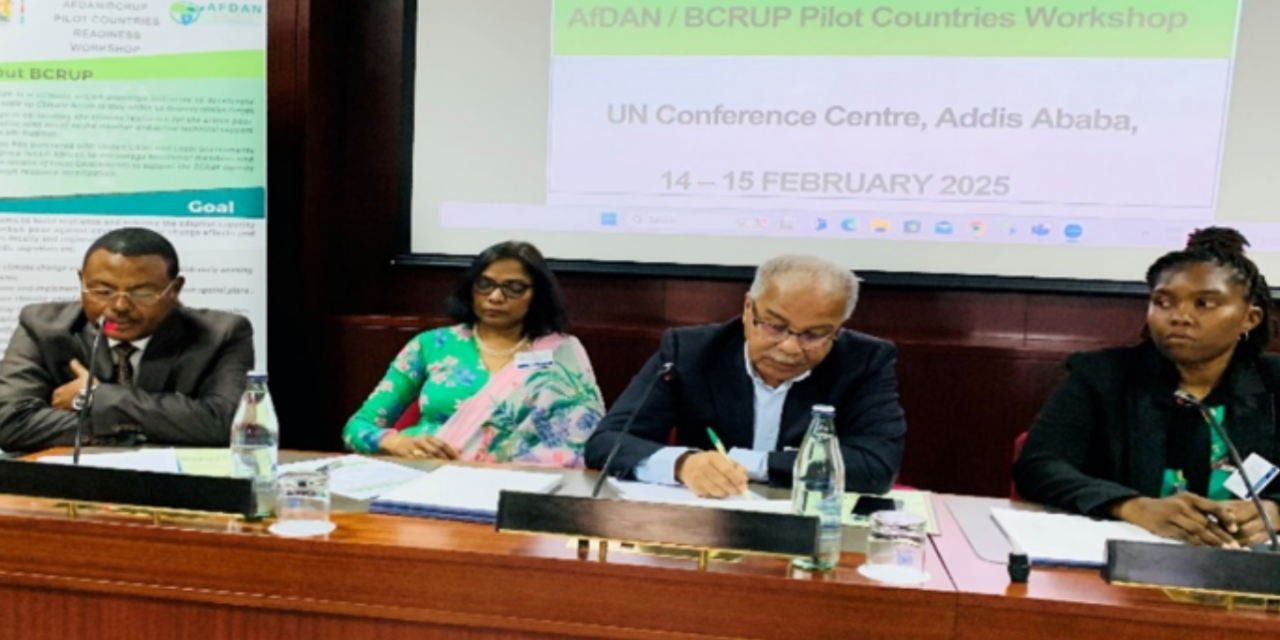
A notable example of our engagement in BCRUP was the contribution of Habitat for Humanity Ethiopia to the Africa Development Action Network (AfDAN)/BCRUP Pilot Countries Workshop in Addis Ababa in February 2025. As a co-sponsor of the workshop, and drawing on its experience in climate-resilient housing, land tenure security and inclusive urban development. Habitat Ethiopia advocated for stronger engagement of civil society, youth, persons with disabilities and women in climate resilience planning. They further committed to supporting Ethiopia’s Ministry of Urban Development and Infrastructure as the country advances BCRUP implementation.
These collective efforts contributed to Habitat for Humanity International’s participation in a high-level dialogue during the 81st Session of the United Nations General Assembly (UNGA), where governments, climate finance institutions, UN agencies and development partners came together to mobilize support for scaling BCRUP implementation.
For Habitat for Humanity in Africa, this marks an important opportunity to deepen collaboration.
As Africa’s cities continue to grow, investing in safe, resilient and inclusive housing will be essential to protecting vulnerable urban populations. By connecting community realities with regional and global policy action, Habitat for Humanity is helping demonstrate a powerful principle: resilience begins at home.