ComAct shortlisted for the EU Sustainable Energy Week Award
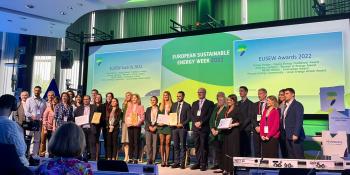
On September 26, 2022, ComAct partners participated in the EU Sustainable Energy Week (EUSEW) Award Ceremony after having been selected as one of the three finalists in the local energy action category. In total, twelve outstanding projects, chosen by an expert jury for their innovative approach to energy efficiency and renewables, have been competing in four categories. Over 12,000 votes have been casted in a public vote that selected the winners of this prestigious award.
European Commissioner for Energy Kadri Simson praised all EUSEW Award finalists, commenting that the event takes place at an extraordinary time as going clean and digital has never been so urgent for energy security, for protecting our citizens and for our future energy system: “We are facing a challenging winter and we need inspiring stories from people dedicated to working towards achieving a fair and clean energy transition.”
“We are honoured that ComAct’s innovative approach, focused on engaging local communities, combined with sharing financial support and technical knowledge, has been recognized by the European Commission, as part of their European Sustainable Energy Week Award. Our project provides tangible benefits in terms of energy consumption, energy efficiency and air quality. It is replicable on a large-scale and we hope more countries will soon adopt this model,” commented Zita Kakalejcikova, Residential Energy Project Manager at Habitat for Humanity.
Watch a short video introduction of ComAct Project.
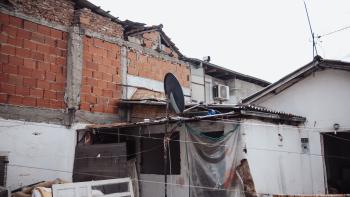
In a context of soaring inflation and energy prices, more households will be affected by energy poverty in the coming months, and countries in the Central and Eastern European (CEE) region and in the former Soviet Union republics (CIS region) are no exception. This region has the most energy-poor people in Europe, due to high energy prices and poor energy efficiency of the buildings, heating systems and household appliances. It also has a high share of multi apartment family buildings, making renovation works more complex and difficult to undertake without coordinated action.
ComAct aims to develop a new approach to make interventions affordable, substantially influence energy costs and consequently reduce the high energy poverty level in the CEE and CIS region. What makes ComAct stand out is that it tackles energy poverty using three main dimensions: by activating communities, by developing and adapting financial tools and by optimising technical solutions that provide most favourable cost-benefit ratio for multi apartment buildings. Present in five pilot locations Hungary, Bulgaria, Republic of North Macedonia, Lithuania and Ukraine, ComAct partners directly engage with energy-poor households and all relevant key local stakeholders. These pilots will demonstrate applicability, benefits and potential for alleviating energy poverty in the 5 countries.
The Fit for 55 package and 2021 recast EPBD proposal stress the importance of energy poverty alleviation. Despite welcoming the increasing attention of the Commission for energy poverty, there is a need for a more comprehensive and tailored coverage of energy poverty in EU policy. ComAct calls for an EU-wide definition of energy poverty, a crucial step in order to monitor at national level, share best practices and take concrete steps to alleviate energy poverty. In the first phase of the project, ComAct created a new understanding of energy poverty in the context of multi-family buildings in the CEE and CIS environment.