The more than 375 Habitat organizations are calling on Congress to support six specific legislative initiatives that will boost affordable homeownership.
The more than 375 Habitat organizations are calling on Congress to support six specific legislative initiatives that will boost affordable homeownership.
Good news spreads fast in Thushanthini’s village of Navagirinagar, located in Sri Lanka’s Eastern Province. So, of course, in February 2018, the talk of the town was her newly constructed Habitat home made from compressed stabilized earth blocks or CSEBs.
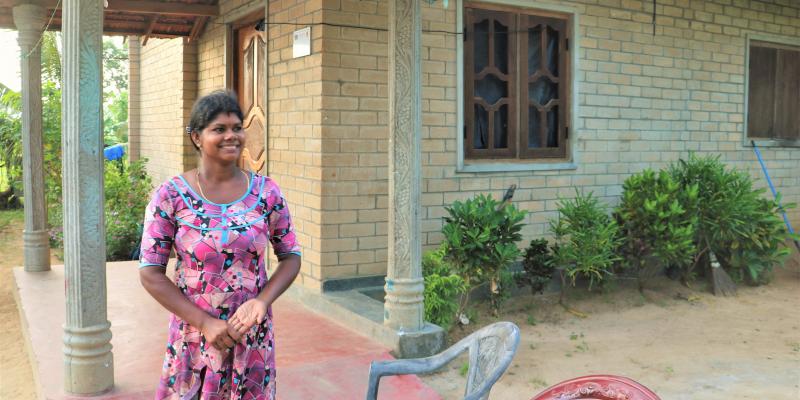
Good news spreads fast in Thushanthini’s village of Navagirinagar, located in Sri Lanka’s Eastern Province. So, of course, in February 2018, the talk of the town was her newly constructed Habitat home made from compressed stabilized earth blocks or CSEBs.
“Ours was the first CSEB home in our tightly knit community,” Thushanthini says. “Many of my neighbors came to visit us out of curiosity about this new material. Once they saw how versatile the bricks are and how nice they look even without plastering, the CSEBs became a popular selection for home construction.”
CSEBs are among the eco-friendly construction materials and technologies promoted under Habitat Sri Lanka’s Homes not Houses project, funded by the European Union. The blocks are known for their lower environmental impact and their ability to keep a house cool in warm weather and warm in cool weather. As of May 2021, more than 2,360 homes have been completed as part of the initiative.
The blocks have the added benefit of boosting the local economy. Thushanthini’s husband, Mathivathanan, was among 138 people trained to produce CSEBs and build with them through Habitat Sri Lanka’s partnership with World Vision Sri Lanka.
With a grant provided as part of the project, Mathivathanan bought a hand-operated machine for producing CSEBs and a mold for making decorative bricks that also help improve ventilation. He and the other trainees now supply their handmade materials to construction projects in the community.
Thushanthini’s house has grown into a true home. In the evening, she and her family often sit together on the veranda to watch the sun set. “This home is my most precious possession,” she says.
Miriam lives in the San Pedro de Macorís province of the Dominican Republic with her family. By partnering with Habitat Dominican Republic and working directly with a Habitat engineer, they were able to complete several projects that helped increase her family’s safety and security.
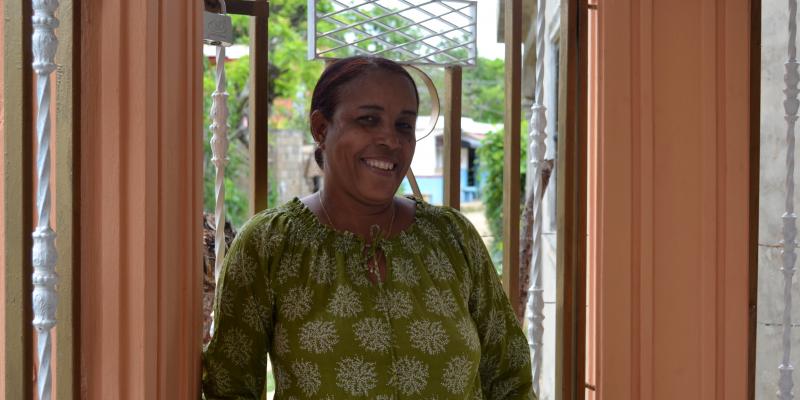
Miriam lives in the San Pedro de Macorís province of the Dominican Republic with her husband, Carlos, and youngest child, Oscarly.
Like many families around the world, they have improved their home bit by bit over the years as time and resources allowed. “We did what we could,” says the 51-year-old.
Dirt floors like the one Miriam had are common throughout extremely low-income communities in Central America. During the dry season, the dust they stir up is a regular respiratory irritant, while the rainy season brings puddles that can become breeding grounds for mosquitos and the diseases they carry. During both seasons, dirt floors, by nature, are impossible to sanitize or clean.
By partnering with Habitat Dominican Republic and working directly with a Habitat engineer, Miriam’s family was able to complete several projects — installing a concrete floor and making other improvements to increase her family’s safety and security.
“My house is beautiful and safer now,” says Miriam, who now plans to add space to set up a business. “This home represents for me the health of my family, and that my son can have a safe and comfortable space for his education.”
What does it mean to have equity in housing, and why is it so important?
What does it mean to have equity in housing, and why is it so important?
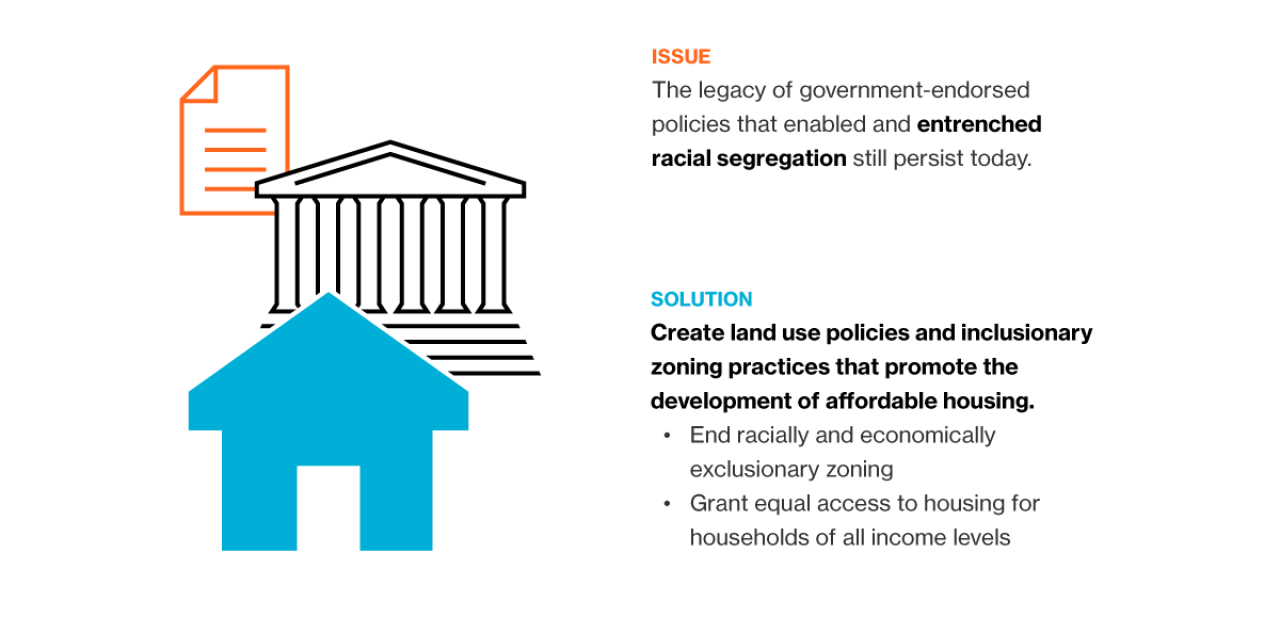
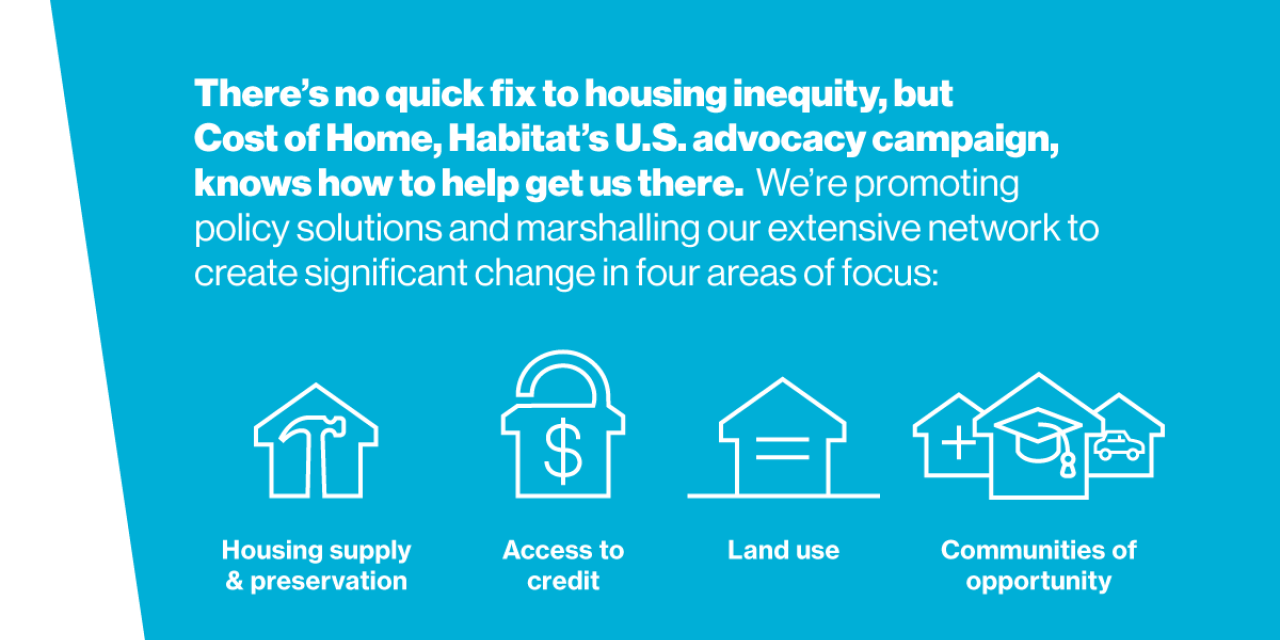
Below we break down what housing equity is and how you can join us to make sure it’s a reality for everyone.
Habitat for Humanity and ShelterBox have started distributing emergency shelter aid to communities who lost homes in the 7.2 magnitude earthquake that recently devastated southwestern Haiti.
Earlier this year, Phala, Chariya and their four children moved into a climate-sensitive Habitat home they helped build Cambodia’s Battambang province. The look of their home is similar to others in the area — but the difference is in the details.
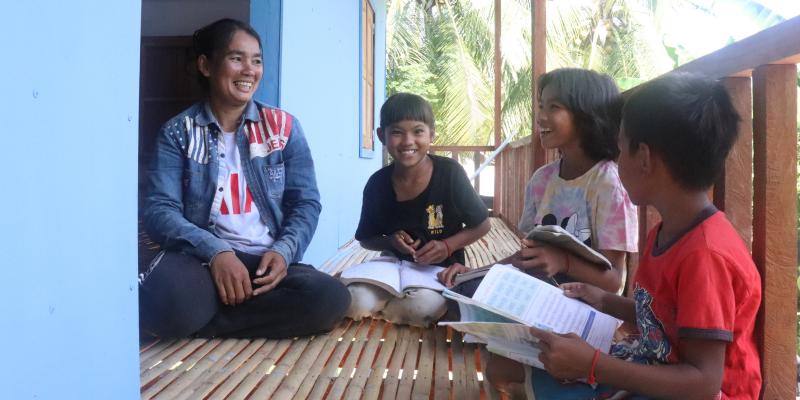
Earlier this year, Phala, Chariya and their four children moved into a climate-sensitive Habitat home they helped build Cambodia’s Battambang province. The look of their home is similar to others in the area — but the difference is in the details.
Adapted window design that increases ventilation. Polycarbonate walls that let in more light, with other materials that reduce interior heat by 80%. Larger water tanks in a rainwater catchment system for home gardening.
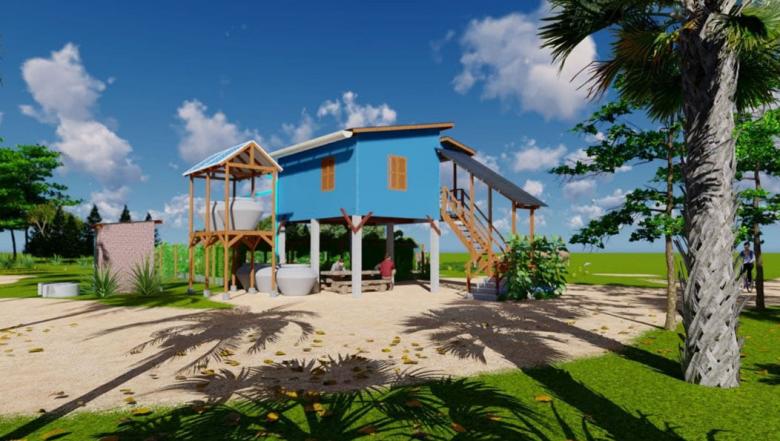
Over the next three years, Habitat Cambodia plans to build 15 additional climate-sensitive houses in the province. Each home will be adjusted to meet the family’s distinct needs and circumstances.
Additional features might include a biogas cookstove to reduce the use of household fuel, a twin pit toilet for eco-friendly waste management, or a micro-drip irrigation system that sends water directly to the roots of plants. Each feature is designed to work with nature, to improve the functionality of the structure, to reduce energy usage — and to help families thrive.
“There is more space for my children, and my family sleeps well every night,” says Chariya. “When we were living in the old house, I needed to get plastic sheets to cover things whenever it rained. Now there is no need to because the new house protects us well.”