Co-founders of ModulusTech recognized in Top 30 Under 30

The co-founders of ShelterTech India alumnus ModulusTech – Yaseen Khalid, M. Saquib Malik and Nabeel Siddiqui – were recognized in Forbes Asia’s Top 30 Under 30 for their work on the affordable housing crisis. ModulusTech offers innovative flat-packed homes that produce 50 times less greenhouse gas emissions compared to concrete buildings. 

Modular homes are the future of housing

ShelterTech Southeast Asia participant CUBO Modular was featured in the Phillipines’ Daily Tribune for their affordable and sustainable modular homes made from bamboo.

Young Champions of the Earth: turning plastics into paving in Kenya

ShelterTech Kenya alumnus Nzambi Mattee, founder of Gjenge Makers Ltd, was one of seven innovators recognized as the United Nations Environmental Programme’s Young Champions of the Earth for 2020. Gjenge Makers turns plastic waste into durable housing construction materials, including driveway pavers, while creating youth employment opportunities. 

Burning bright: Homeowner celebrates her final mortgage payment

In 1996, Maria applied to Black Hills Area Habitat for Humanity’s homeownership program in the hopes of providing a safe and stable home for her five children. Now 25 years later, she and her friends celebrated her final mortgage payment, and in Habitat tradition, they burned the mortgage papers she signed all those years ago.

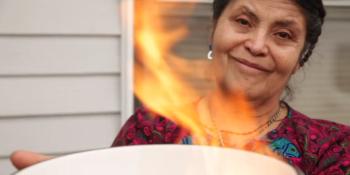
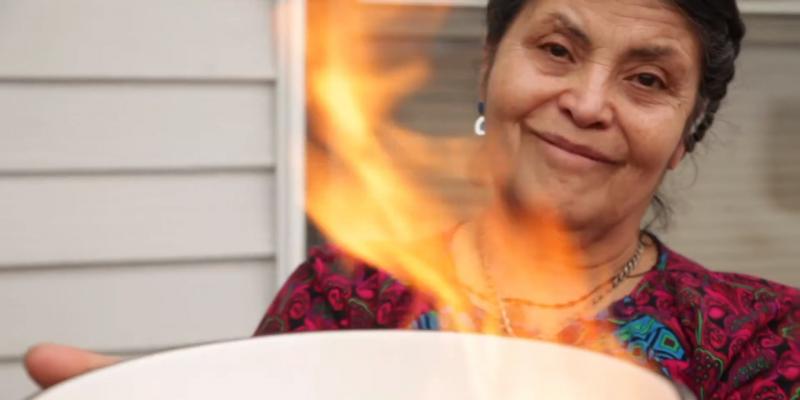
Maria holding up a bowl that contains a fire burning her mortgage papers.

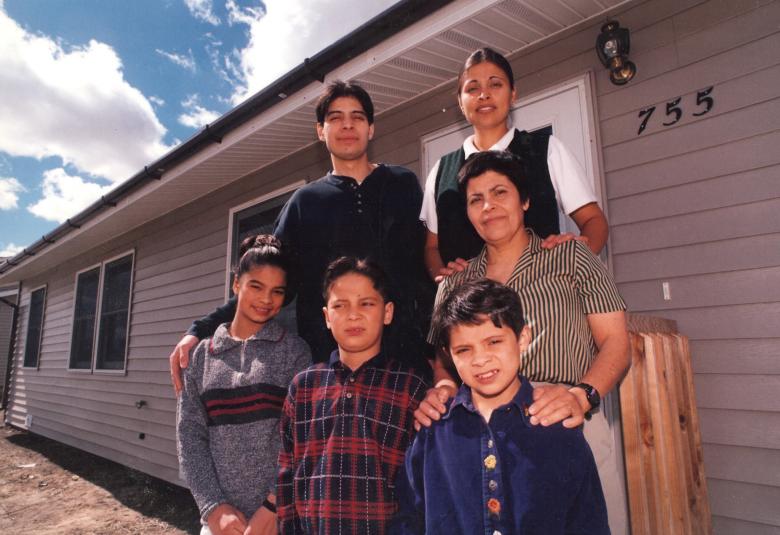
Nearly 25 years ago, Maria applied to Black Hills Area Habitat for Humanity’s homeownership program in the hopes of providing a safe and stable home for her five children. As a residential cleaner and the children’s only caretaker, she hadn’t been able to find steady housing that accommodated their needs and budget.

“It took faith for me to be able to apply for this program — faith in God and in the hope that everything was going to be OK. My children were the motive through it all,” says Maria. “It was through the grace of God that I was able to qualify for the program and I became a homeowner.”

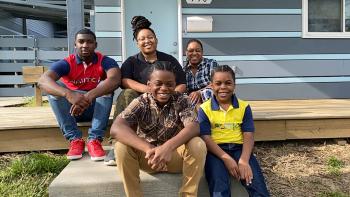
Maria and her five children standing in front of their grey home in 1996.

Since then, her children have grown up, attended college and started careers of their own — milestones that Maria credits to having a safe roof under which they could grow in health and in comfort.

Now, all these years later, in front of the home that has protected her children into adulthood, Maria gathered with a small group of friends and supporters. They celebrated her final mortgage payment, and in Habitat tradition, they burned the mortgage papers she signed back in 1996 — a ceremonial recognition of the completion of her partnership with Black Hills Area Habitat.

“May the fire of this symbolize the fire that all of you have in your heart that God placed in you,” she said as the papers caught fire and emotion caught in her voice. “Never let the flame of your love for charity, for others, extinguish.”
Basic

Building a home with heart

Star loves winding down with her family in their modern-style Habitat home after a busy day. Evenings are filled with joy and laughter when her family gathers together for movie and game nights.

Read more

Making a difference for home, from home

Even in the midst of the COVID-19 pandemic and the measures undertaken by Habitat to ensure the safety of everyone with whom we work, our volunteers set out to use their skills in new, creative and socially distanced ways.

Read more
Off
Maria holds up a bowl that contains a fire burning her final mortgage payment.

Burning bright: Homeowner celebrates her final mortgage payment

Research series: How do racial inequities limit homeownership opportunities?

Black and Hispanic/Latino households face unique barriers to homeownership, which in turn prevents access to the associated beneficial outcomes. This brief provides an overview of these structural and institutional obstacles and their far-reaching effects.

A young girl with pigtails stands by a window smiling.

Black and Hispanic/Latino households face unique barriers to homeownership that prevent access to the beneficial outcomes associated with homeownership, such as wealth building, improved health and higher educational attainment. Historically, structural and institutional obstacles faced by racial and ethnic minorities compounded over time to produce these inequities.

Through a series of evidence briefs, Habitat is bringing to light research on the impact that affordable housing has on individuals and families at home and beyond. This brief provides an overview of the barriers to homeownership that Black and Hispanic/Latino households face and the far-reaching effects of these obstacles. Check out our highlights below and download the full brief.

Research highlights

Brief history of racial inequities in housing

  • Starting in the 1930s, the federal government began a practice of “redlining,” or refusing to guarantee mortgages for homes in communities where households of color lived. While this was largely targeted toward Black households, the discrimination impacted all homebuyers of color, including Hispanic/Latino households.
  • This severely limited access to mortgages for Black homeowners. Between 1934 and 1962, households of color received only 2% of all government-backed mortgages.
  • The Federal Housing Administration also encouraged practices aimed to segregate communities of color. These included racially restrictive deed covenants, strict zoning ordinances and social enforcement of racially segregated neighborhoods.
  • Many Black households were also forced to pay higher rents in segregated communities, due to limited rental supply and increased demand, and those looking to instead purchase a house often faced inflated home prices that frequently resulted in home loss. Urban renewal efforts also leveled many Black and integrated neighborhoods under the guise of new development, which often never materialized.
  • These racial policies and practices led to the ghettoization of Black communities, as these communities confronted a lack of resources, disinvestment and overcrowding. Many of these communities were located near environmental hazards, further driving down property values and trapping residents in these areas.

Key barriers to accessing affordable homeownership for Black and Hispanic/Latino homebuyers

  • Higher income and wealth and greater access to credit are associated with higher homeownership rates, but Black households’ income and wealth distributions are notably lower than those of white households, and they are less likely to have sufficient credit.
  • Systematic inequities hamper homeownership rates for households of color — as much as 17% of the homeownership gap cannot be explained by sociodemographic factors.

Key barriers to building home equity for Black and Hispanic/Latino homebuyers

  • Black and Hispanic/Latino homebuyers use more debt to finance homeownership and have more expensive mortgage terms. On average, Black homebuyers pay 29 basis points more than comparable white homebuyers. Homes purchased by Black homebuyers tend to be lower-valued, appreciate more slowly and have higher property taxes.
  • Black and Hispanic/Latino households are less likely to sustain homeownership. Less than half of homeowners of color with low income remained homeowners within four years of becoming a homeowner, compared with 60% of white homeowners with low income.

Key place-based barriers to improving racial disparities in health

  • Black and Hispanic/Latino populations with low incomes tend to live in the least desirable neighborhoods with fewer health-promoting characteristics.
  • Black and Hispanic/Latino populations are more likely to live in substandard housing conditions that create unhealthy environments.

Key place-based barriers to improving racial disparities in education

  • Black and Hispanic/Latino students remain concentrated in segregated, high-poverty neighborhoods with low-performing schools. About 45% of Black and Hispanic/Latino students attend high-poverty schools.
Off
A young girl with pigtails stands by a window smiling.

Research series: How do racial inequities limit homeownership opportunities?

Guidance for raising concerns

Learn more about raising concerns and how to confidentially and anonymously report any issue or concern that may arise.

Making a difference for home, from home

Even in the midst of the COVID-19 pandemic and the measures undertaken by Habitat to ensure the safety of everyone with whom we work, our volunteers set out to use their skills in new, creative and socially distanced ways.

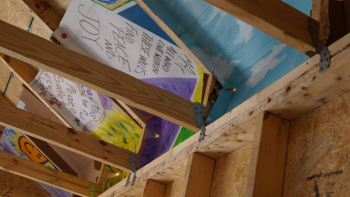
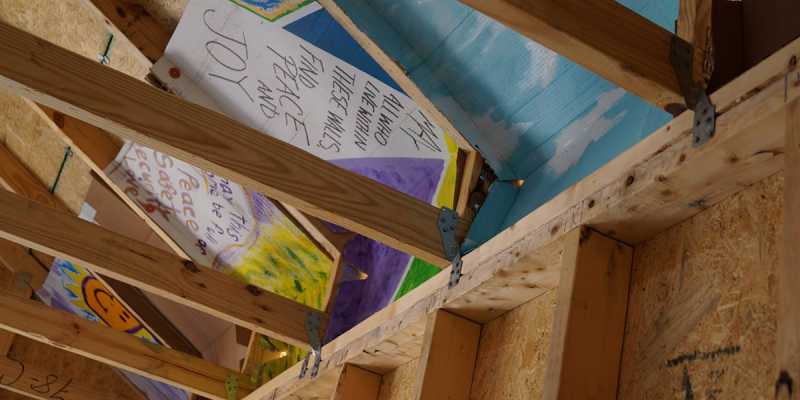
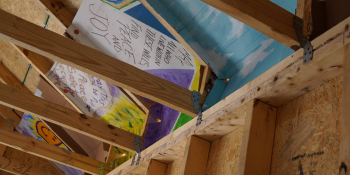
A photo of the underside of a roof with writing.

Habitat for Humanity volunteers make our mission happen. With their passion and determination, they help families build and repair homes, revitalize neighborhoods and help change policies so that even more can benefit from affordable homeownership.

In the midst of the COVID-19 pandemic, our dedicated volunteers set out to use their skills in new, creative and socially distanced ways. They helped their neighbors at a time when safe, decent housing has never been more crucial.

Read on and be inspired by some of the ways housing champions across the country have continued to use their time and talents to help others. We certainly have been!

Basic
image

Letter writing in Atlanta

One of the most meaningful aspects of building with Habitat is the trust, support and friendships formed on the build site. In place of those face-to-face meetings during the pandemic, Atlanta Habitat asked volunteers to compose letters of support for soon-to-be homeowners letting them know their community was always with them — even if, temporarily, not in person. Between June 2020 and December 2021, more than 580 people composed stacks of letters filled with their congratulations and well-wishes for 36 first-time homeowner families.

A blue-line icon of a baffles.

Building baffles in Raleigh, North Carolina

Volunteers of all ages are leaving their mark on Habitat Wake homes by creating part of them at their own home. Baffles — made of cardboard, metal, foam or plastic — are installed in the interior of homes between the eaves overhang and outside wall soffit. They help improve airflow in the attic as well as keep insulation in place.

Each Habitat Wake home uses about 50 to 55 baffles. Under the guidance of their parents, kids and teens have been making baffles out of large pieces of cardboard and dropping them off at the Habitat office to be added to future new builds. In addition to helping complete homes, the baffles provide a blank canvas for the young volunteers to personalize with drawings and notes of encouragement for their future neighbors. More than 500 baffles have been made and donated to date.

A blue-line icon of a computer with a coffee cup in front of it.

Office assistance in Independence, Missouri

During the pandemic, Truman Heritage Habitat turned its attention inwards, revising and reimagining the operational aspects of their work to better and more efficiently serve their community. By posting specific skills-based, project-focused opportunities on a volunteer matching website and by partnering with a database consulting business, they recruited highly experienced virtual volunteers from around the country to tackle several items on their to-do list.

From crafting fundraising materials to completing more than 300 support tickets to improve their database, administrative volunteers saved Truman Heritage Habitat more than $150,000 over an 18-month period. The support and savings have helped the affiliate increase their operational capacity — allowing them to grow their financial education program, increase home repair and Aging in Place projects, and facilitate the opening of a new homeownership center that will serve as both office space and a gathering space for the community.

A blue-line icon of a school desk.

Desk building in Westwood, New Jersey

After several customers visited the Habitat ReStore looking for desks for their school-aged kids, volunteers at Bergen County Habitat began constructing desks and donating them to students in need of a personal place to attend online classes and complete their schoolwork at home. The project has given neighbors a way to connect and give back — either by funding the materials for a desk or constructing the desks themselves. Since 2020, volunteers have built more than 200 desks to help students across 12 local schools get the most out of their homes and their studies.

An icon of word bubbles.

Translating in Bloomington, Indiana

Through translation services, bilingual volunteers have helped Habitat Monroe County make their homeownership programs more accessible to more of the area’s Spanish-speaking families. The volunteers’ remote translation support — from explaining the process to new applicants over the phone to translating documents online — has helped families feel supported on every step of their homeownership journeys. The translated resources provide the partnering families with practical knowledge, skills and encouragement helpful to becoming successful homeowners.

A blue-line icon of a speaker phone.

Advocating in St. Paul, Minnesota

Public policy is a powerful, far-reaching tool for combatting the ongoing housing crisis. During its annual Hill Day advocacy events in 2020, 2021 and 2022, Twin Cities Habitat in Minnesota went virtual, offering volunteers overviews of the state’s legislative process, insight on tangible pieces of legislation to advocate for and training on how to use their voices to influence change.

The events culminated in hundreds of advocates putting their training into practice by meeting with their respective lawmakers via teleconference. During these meetings, attendees discuss the importance of safe and affordable housing, share personal stories of its impact, and advocate for policies designed to help more Minnesotans.

Off
A photo of a Habitat home roof with writing on the underside.

Making a difference for home, from home

Subscribe to