World Malaria Day 2026 | Rethinking homes to stop malaria
In many parts of the world, the word home evokes safety. But for millions of families living in substandard housing, home is where some of the greatest health risks begin. From respiratory diseases to heat-related illnesses and vector‑borne illnesses like malaria, unsafe housing conditions expose low‑income families to dangers that no one should have to endure.
This World Malaria Day, Habitat for Humanity recognizes the life‑saving power of healthy housing, because preventing malaria requires a holistic approach, where mainstream tools like nets and medicine work hand in hand with strong walls, secure roofs, good ventilation and the dignity of a home that protects the people who live in it.
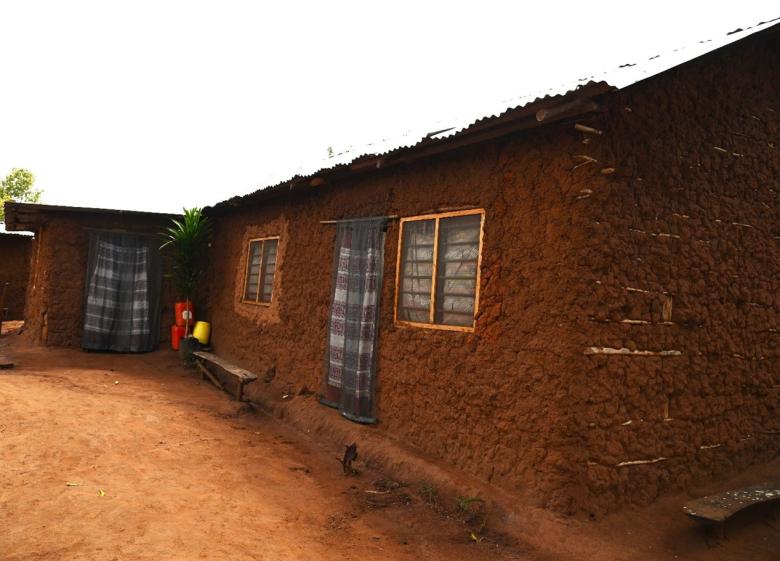
The exterior of Mzee Bakari’s home in Kenya.
For low-income families, health and adequate housing can feel like an impossible tradeoff. Many are incremental builders—shut out of formal housing markets and unable to afford high‑quality materials or certified labor—who construct their homes slowly, with whatever resources are available. In places like Kenya, high material costs and long‑standing building practices mean that many homes, particularly in rural areas, have grass‑thatched roofs, unsealed eaves, poorly sized or unscreened windows, ill‑fitting doors, and insufficient mosquito screening. It creates ideal entry points for mosquitoes that spread malaria. Bakari’s home was no exception.
Yet even small improvements can make a difference.
In sub‑Saharan Africa, Habitat’s healthy housing programming includes malaria prevention and water, sanitation and hygiene interventions. Replacing dirt floors with concrete reduces parasitic infections. Repairing leaky roofs eliminates mold. Installing screens keeps disease‑carrying insects out. Even simple home upgrades can dramatically reduce vulnerability to malaria and other illnesses.
“We want malaria to become a top‑of‑mind issue for everyone involved in the housing sector—not just for public health actors,” says Roland Pearson, vice president at Habitat for Humanity’s Terwilliger Center for Innovation in Shelter. “When we frame malaria as a challenge that can be addressed through smart, cost‑effective housing improvements, we can encourage the entire housing value chain to incorporate targeted solutions into their products and services. That’s how malaria prevention becomes mainstream, and how homes become safer for families across all income levels.”
Innovations that close the door to malaria
To strengthen the links between health and malaria free homes, Habitat’s Terwilliger Center for Innovation in Shelter is helping drive scientific, community‑informed and market‑ready solutions that reduce mosquito entry into homes.
In 2021, the Terwilliger Center partnered with SeaFreight Labs to launch an open‑innovation challenge seeking practical and affordable ways to modify existing homes and reduce malaria transmission in Kenya. Among 78 submissions, the winning concept, “Mosquito Free Homes: Air Cavities and Screens,” proposed a simple and affordable modification which included the installation of air cavities for improved ventilation and lighting while blocking mosquito entry, combined with striped nets and Velcro‑based screens for windows, doors, and eaves.
The solution caught the attention of local stakeholders. When tested at the Kenya Medical Research Institute in Kisumu, this solution reduced indoor mosquitoes by an astonishing 89%.
Though initial field pilots in rural communities raised concerns about aesthetics, privacy and cold temperatures during cold months, the innovation generated valuable insights that continue to shape new prototypes and community‑driven refinements.
Habitat’s collaboration with KEMRI deepened in 2022, leading to a landmark peer-reviewed, field study published in Nature Medicine in early 2026. The study evaluated low‑cost modifications—including cool roofs, cross‑ventilation, papyrus‑mat ceilings and mosquito screening—across rural homes in western Kenya. And the results were clear:
- Screens reduced the number of malaria‑carrying mosquitoes indoors by 77%.
- Cool roofs significantly lowered indoor temperatures by up to 3.3°C, helping households withstand extreme heat.
- 85% of participating families expressed their willingness to invest their own resources in similar upgrades.
In addition to the immediate health and wellbeing benefits of these interventions, the interest of families in investing in these homes is crucial. It signals real potential for long‑term, market‑driven adoption of healthier housing designs.
“Collaborating with Habitat for Humanity has strengthened our ability to test housing‑related malaria interventions in real‑world settings,” Dr. Bernard Abong’o, lead researcher at KEMRI’s Centre for Global Health Research. “KEMRI brings the research, and Habitat contributes practical insights into how housing improvements are adopted, built, and financed by low‑income households. This combination helps ensure solutions are evaluated not only for their technical performance, but also for their affordability and suitability for the communities that are most affected.”
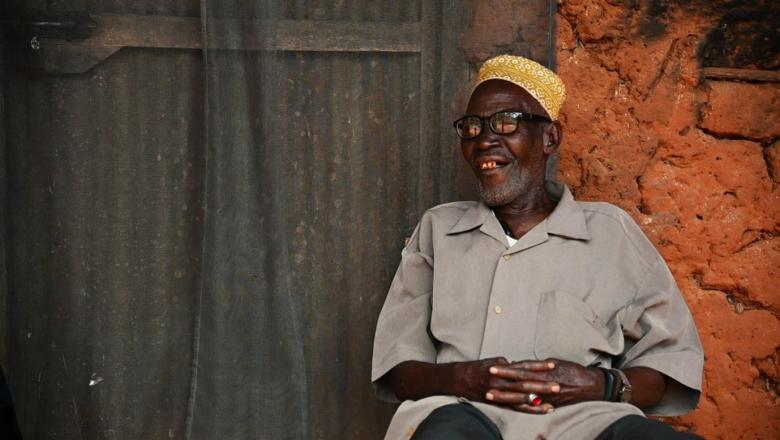
Mzee Bakari in front of his home, now with nets on windows, doors and eaves.
Mzee Bakari has seen firsthand how these simple home modifications have improved life for his family. Sealed gaps and screened openings now keep mosquitoes out, and a reflective paint coating on the corrugated iron roof has reduced indoor heat and even helped soften the sound of rain. “Nowadays we sleep peacefully,” he says. “We do not experience mosquitoes in the house.”
In Kwale County, Agnes’ family bore the constant toll of mosquitoes and oppressive heat. Malaria was a regular and exhausting presence in their home. “Every few weeks, one of my children would come down with malaria,” she recalled. After several months of community sensitization, Agnes partnered with KEMRI to implement improvements based on the study’s findings. The impact was felt almost immediately. “The house is now cool, and the number of mosquitoes has reduced. We can sit comfortably indoors, and we haven’t had a case of malaria recently,” she said.
For families, these benefits extend far beyond mosquito reduction. Cooler homes improve thermal comfort and reduce heat‑related illness, while better ventilation improves air quality. Well-placed screens on windows and doors protect against a range of disease‑carrying insects—not only the malaria-transmitting Anopheles mosquito but also flies that spread other diseases.
Looking ahead
Despite promising advances, the work is far from over. In 2025, Habitat and SeaFreight Labs launched a second innovation challenge, “Reducing Malaria Spread with Improved Air Quality Ventilation,” to refine and optimize air cavity designs. As of March 2026, five promising concepts are undergoing community review before being tested in the community.
Meanwhile, the Terwilliger Center and KEMRI are advancing a new cluster randomized trial involving 300 households. This research will test scalable combinations of cooling and mosquito‑control solutions to identify the most` effective, affordable models for low‑income families. The goal is to ensure these innovations work not just in laboratories, but in real homes, built by local masons, purchased by families and sustained by markets.
The changes have also drawn interest from Bakari’s neighbors, many of whom are now curious about making similar improvements to their own homes. “Because of what I have seen and felt,” he says, “it is easy for me to convince others to try these modifications.”
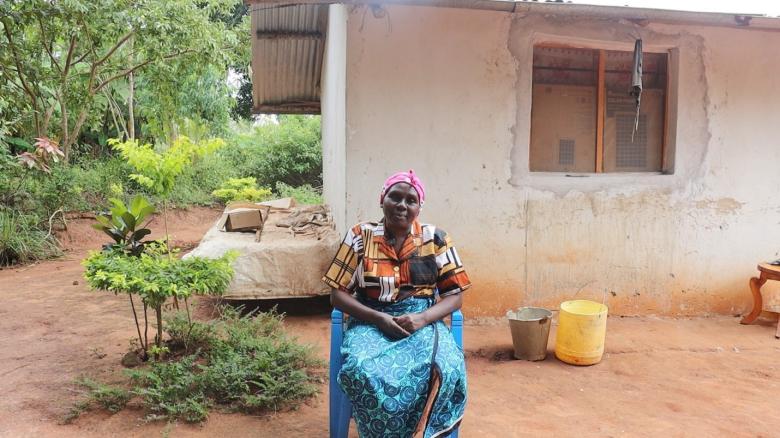
Agnes sits in front of her newly modified home in Mwambalazi, Kwale County, Kenya.
Agnes is eager for others to benefit too, “Our lives are different. I would encourage my neighbors and anyone else to try out these interventions,” she concluded.
In Africa and around the world, Habitat works with communities to create homes designed not only for stability, but also for health. A decent, affordable and healthy home—one that keeps mosquitoes out, stays cool in rising temperatures, and supports the physical and mental well‑being of its occupants—is one of the most powerful tools against climate‑and disease‑related risks.
On World Malaria Day, we honor the families, researchers, local builders and community partners who are working together to create a world where home is a place of health.