
Webinar Measuring and Reporting Social Impact

Measuring and Reporting Social Impact

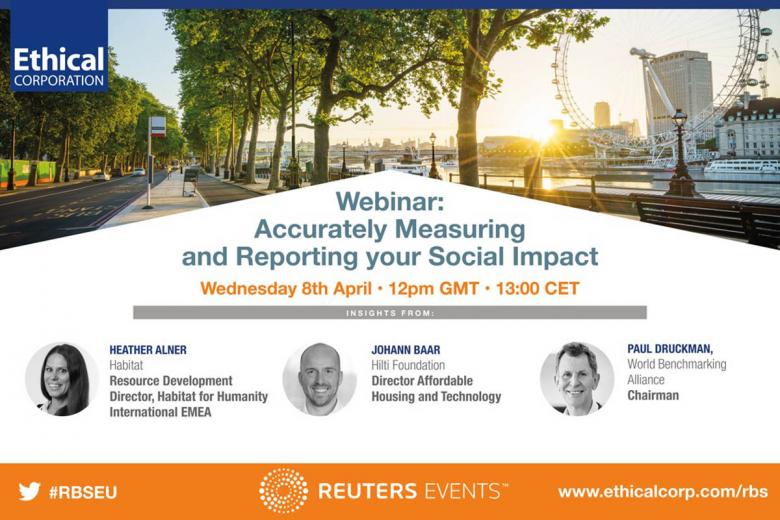
It is always hard to measure impact of your work, coupled with the evolution of technology, it’s even harder to understand the social implications of it.
 

Join us on Wednesday April 8, 2020 at 12:00 GMT/ 13:00 CET for a live one-hour webinar on the topic: https://bit.ly/2UQYNxF
 

Ethical Corporation by Reuters Events hosts a one-hour webinar with senior leaders sharing their practical ideas on how to approach measuring and reporting social impact. This discussion is moderated by Heather Alner, EMEA Resource Development Director, Habitat for Humanity International


Speakers:

  • Paul Druckman, Chairman, World Benchmarking Alliance
  • Johann Baar, Director Affordable Housing and Technology, Hilti Foundation

Areas of discussion include:

  • How to navigate the data measurement challenge
  • How to identify and understanding what data material is
  • How the SDGs could be the key to framing your social impact


Join next week and be part of the discussion. Simply click here to register and be part of the webinar.
Webinar Measuring and Reporting Social Impact

Webinar Measuring and Reporting Social Impact
Featured stories

Restoring mangroves, opening the door to coastal resilience in Côte d'Ivoire and Ghana

For thousands of coastal families in Côte d’Ivoire and Ghana, a safe home depends not only on strong walls and roofs, but also on healthy ecosystems. Mangroves serve as a natural barrier against flooding, erosion and storm surges, helping protect homes, livelihoods and communities from the growing impacts of climate change.To mark the 2026 World Mangrove Day, Habitat for Humanity joined partners including UN-Habitat Côte d’Ivoire and ActionAid Ghana alongside communities to launch large-scale mangrove restoration activities under the Improved Resilience of Coastal Communities (IRCC) Project, supported by the Adaptation Fund.

Read more

Opening the door to health, dignity and resilience in Kenya: From jigger-free homes to stronger, healthier manyattas in Maasai communities.

Many families live in homes that are poorly ventilated. Homes built without durable materials crumble under the pressure of changing climate, demanding constant repair while bare mud floors harbour parasites that impact the health and dignity of the families living in them. These are not isolated problems. The connection between inadequate housing and poor health is direct, documented but too often overlooked.

Read more

How alternative building technologies are expanding affordable housing in Kenya

Decent housing remains out of reach for many low-income families in Kenya due to rising construction costs and limited access to affordable building materials. To help address this challenge Habitat for Humanity Kenya is championing alternative building technologies that reduce construction costs, create local economic opportunities and expand access to safe sustainable housing.

Read more