What is energy poverty?

Energy powers communities. Healthcare workers and teachers depend on energy to heal and educate their communities. Energy keeps homes warm in the winter and cool in the summer.
Energy powers communities. Healthcare workers and teachers depend on energy to heal and educate their communities. Energy keeps homes warm in the winter and cool in the summer. Moreover, it fuels agricultural and manufacturing production, generating food, revenue, and jobs.

Energy’s presence is not just essential—it’s lifesaving, acting as an engine for economic growth and social development. However, access to affordable, reliable, quality, safe, and environmentally sound energy services isn’t evenly distributed.

Energy poverty emerges when families either lack access to modern energy services or allocate a significant portion of their income to energy bills. Those experiencing energy poverty find themselves in a relentless cycle, unable to afford the energy essential for their health, well-being, education, and quality of life.

The Energy Efficiency Directive offered the European Union its inaugural common definition of “energy poverty.” This refers to a household’s inadequate access to vital energy services. These services, indispensable for a decent standard of living and health, include adequate heating, hot water, cooling, lighting, and the energy to power appliances. Several factors contribute to this deficiency, including affordability challenges, constrained disposable income, high energy costs, and residences with subpar energy efficiency.

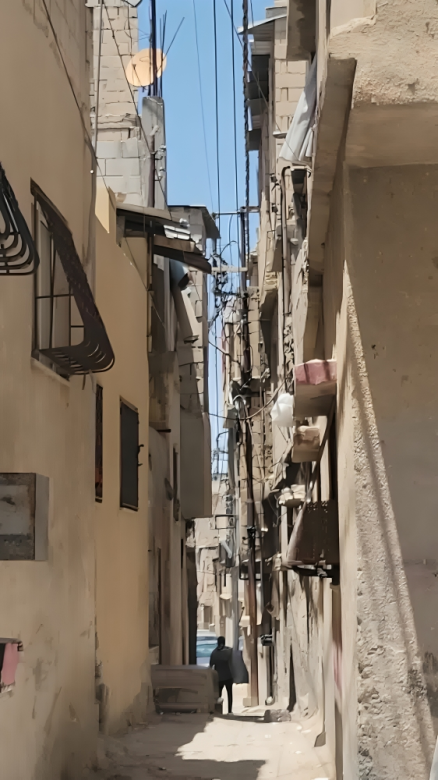
Even in areas where energy seems plentiful, inefficiencies and elevated costs burden families. Over 50 million people in the European Union grapple with energy poverty. Its effects intensify during the summer and winter, when the demand and expenses for cooling and heating surge.

The repercussions of energy poverty can be severe, especially as global warming accelerates and climatic conditions become erratic. The extreme heat in Europe during the summer of 2022 resulted in the tragic loss of more than 61,000 lives. In the winter of the same year, approximately 9% of European Union inhabitants struggled to maintain warmth in their homes.

Improving residential energy efficiency in Central and Eastern Europe

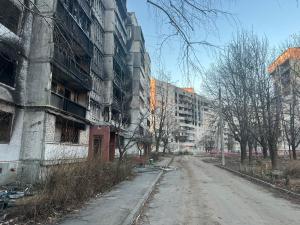
Habitat for Humanity addresses energy poverty in many ways. One example is through our work partnering with families to improve residential energy efficiency across Central and Eastern Europe. Nearly half of the housing stock in the region consists of large-scale residential buildings constructed between 1960 and 1990 with little-to-no consideration for energy efficiency. These aging, inefficient buildings combined with the region’s rising energy costs force families to spend a high share of their income on utility bills.

“In Europe, you’ll find energy poverty everywhere,” says Besim Nebiu, Habitat’s director of housing programs and regional operations for Central and Eastern Europe and the Commonwealth of Independent States. “In the winter months, your energy bill becomes your highest housing expense. Many families underheat their apartments and make compromises in their standard of living.”

Retrofitting old buildings can reduce energy consumption by 40-50%, which leads to direct savings and enables families to moderate the temperatures in their homes more affordably. Despite the advantages, building upgrades in the region require considerable investment and coordination among apartment owners.

Following mass privatization in the 1990s, residents became responsible for maintaining and managing their apartment blocks, a burden previously handled by the state. Without a proper system for upkeep, many buildings in the region fell into disrepair, including Mile’s 110-unit apartment complex in Skopje, North Macedonia.

Mile says his Yugoslavia-era building was a “horror situation” before partnering with Habitat. Pieces of the façade were falling, there was broken glass and the elevators had frequent outages. The building’s poor energy efficiency also left residents vulnerable to high energy costs.

Saving money and keeping warm in the winter

Mile rallied his neighbors to make a change. The municipality linked Mile to Habitat, who financed window replacements throughout the building by offering affordable loans to the apartment owners. “When the renovation of the façade and the windows were completed, we felt the effects through the heating bills. Our heating bills have been reduced by at least 30%,” Mile says.

For nearly 15 years, Habitat has been working in the region to empower and mobilize residents like Mile to make energy upgrades in their buildings. “We’re creating an ecosystem conducive of renovation at scale,” Besim explains. “We work with apartment owners, homeowner associations, municipalities, banks and financial institutions to bring about sustainable, mass renovation.”

In Europe, Habitat’s past and current energy-related projects span a dozen countries — Armenia, Bosnia and Herzegovina, Bulgaria, Croatia, Greece, Hungary, Lithuania, North Macedonia, Poland, Romania, Spain and Ukraine. This work has improved the energy efficiency of hundreds of buildings, helping thousands of homeowners save money and become more comfortable in their homes.

“Energy poverty is a housing issue”

Access to affordable and reliable energy is essential for meeting basic human needs, improving living standards and fostering sustainable and equitable communities. Besim says our expertise and thought leadership in the space puts us in a position to drive more people out of energy poverty.

“Energy poverty is not an energy issue; it’s a housing issue and a social issue. We know how impactful it can be to have access to affordable energy services. We’re well positioned to continue bringing actors together and making affordable renovations available to homeowners,” Besim says.

Off
What is energy poverty?
light bulb

What is energy poverty?

Teaser image
light bulb

Europe Housing Day

The first edition of the Europe Housing Day will take place on November 14, at Thon Hotel EU in Brussels.


Teaser title
Europe Housing Day

Build better lives

On the 29th August 2023, ahead of the second EPBD trilogue under the Spanish Council Presidency, 67 civil society organisations, social, health and environmental NGOs, trade unions and youth movements across Europe have signed onto a joint statement calling on their elected representatives to deliver an ambitious and socially just EU Buildings Directive (EPBD) before the end of the year.

On the 29th August 2023, ahead of the second EPBD trilogue under the Spanish Council Presidency, 67 civil society organisations, social, health and environmental NGOs, trade unions and youth movements across Europe have signed onto a joint statement calling on their elected representatives to deliver an ambitious and socially just EU Buildings Directive (EPBD) before the end of the year.

The ‘trilemma’ of rising energy costs, a cost of living crisis and a climate emergency have arrived at our front doors, with millions of households having to choose between eating or heating. Making our homes and buildings energy efficient and renewable-based is the answer to these issues as it can help reduce our dependence on dangerous, expensive and volatile fossil fuels, help shield people from energy poverty, and improve air quality while also combatting the climate crisis.

This starts with a strong EU policy framework, along with investments and resources that can be directed towards activating the relevant actors on the ground who can make the transition in our buildings a reality. Creating more energy efficient homes saves us energy and money, protecting the right to a comfortable and healthy living environment for all.

You can read the joint statement here.


build better lives
Build better lives
Off
Build better lives
Teaser image
Build better lives

A mother's journey to building home, future, and hope for herself and family

Iryna, a new mother, found herself saying things she never expected. On an ordinary day in February, her life and her family’s life took a sudden turn. This one event forced her to make a decision that would change everything forever.

“Mum, are those fireworks?”

“No, dear. It’s the beginning of the war.”

Iryna, a new mother, found herself saying things she never expected. On an ordinary day in February, her life and her family’s life took a sudden turn. This one event forced her to make a decision that would change everything forever.

Iryna, with her mother Tetiana and infant son Sava, had to leave Odesa in Ukraine in search for safety. Her husband and her father stayed back in Ukraine to serve the Ukrainian Armed Forces. Alone and unprepared, Iryna and her mother embarked on a journey full of uncertainty.

mother and child
“At the time, I was sure the war wouldn't last long—just a few months, and we'd be back,” Iryna recalls, thinking back to that day.

Amid the chaos, Iryna and her mother joined the other women and children seeking safety. Remarkably, Sava, just a nursing baby, was among them. On March 9, 2022, they arrived to Poland. With no familiar faces or friends to help them, these strong women showed an extraordinary spirit that carried them through this tough time.

Tetiana, Iryna’s mother, remembers her daughter’s incredible drive, especially during the darkest hours. It was Iryna’s determination that kept them going, her focus on protecting her mother and son, and on building a place they could call home.

little boy in his new home
“Every mother needs to know her kids have a safe place they can call home.”

“I never really thought about what a ‘home’ means before—it was just where you returned each day. But now, after everything, and after coming to Poland, I’ve come to realize that home is where safety resides, where your soul finds peace. Home is like a stronghold, where you’re surrounded by love and smiles await you—a place of safety. Every mother wants that secure place for her children.”

Picture of food on a table

Today, Iryna and her family can say they’ve found their home in Poland. The kindness and support of the Polish people helped them find comfort and move past the hardships and terrors of war.

“Today, we can fall asleep and rest peacefully until morning,” Iryna says. “We’re surrounded by care and empathy. Many kind people have helped us move past our difficult experiences. We want to thank the Polish people for their kindness and support. With the help of Habitat for Humanity Poland, we’re rebuilding our life. The incredible hospitality we’ve experienced makes us want to extend a helping hand to others who are struggling, to help them find happiness in Poland like we did. Just as Warsaw and the whole country helped us, we want to give back the warmth and support we’ve received!”

In a world of uncertainty, Iryna’s story shows the unbreakable spirit of families seeking safety and unity. Through her courage and the warmth of the Polish people, Iryna has paved a path for her family, proving that even in tough times, hope and resilience can light the way.

Learn more

Off
Finding a new home in seek of safety
New home for Ukrainian family

A mother's journey to building home, future, and hope for herself and family

Teaser image
Ukrainian family in their new home
Subscribe to