Research series: How does housing impact health?

The CDC identified housing as an important social determinant of health, highlighting the link between where people live and their health. This evidence brief summarizes research on key factors to improving health through housing in populations with low incomes and illustrates how the work of Habitat for Humanity contributes to positive health outcomes.

Volunteer raises and tears down walls with Habitat Tucson

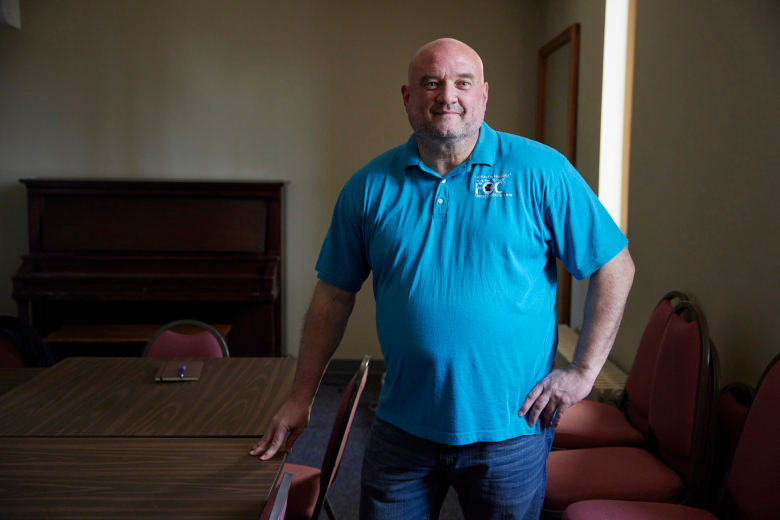
Kevin Walters has long been a champion of decent and affordable housing. In 2012, he helped revive Habitat Tucson’s Rainbow Build, a build funded by LGBTQ+ organizations and individuals during which hundreds of LGBTQ+ community members and allies come together to volunteer. 

Kevin Walters has long been a champion of decent and affordable housing. For decades, he volunteered with organizations devoted to helping families secure safe and stable shelter in his home state of Virginia.

After moving to Arizona several years ago, he was naturally drawn to Habitat for Humanity Tucson’s mission to increase housing affordability in his new community.

“Housing has always been important to me — going all the way back to my grandmother’s house where I was raised. And Habitat makes it easy to give back,” says Kevin. “You can come in with a new idea, and they’ll just take that and run with it and make it happen. It encourages volunteers to do more because we know there’s a willing group of people who wants to support us.”

Kevin headshot.

As a member of Habitat Tucson’s Home and Community Design Committee, Kevin uses his background in feng shui and urban planning to help ensure that every completed home is designed to be an open, accessible, productive and healing space for all. He wants to make sure every home under construction and every Habitat work site are that way, too.

A renewed commitment

In 2005, Habitat Tucson held its first-ever Rainbow Build, which brought together lesbian, gay, bisexual, transgender and queer community members to make a hands-on impact on the growing housing crisis.

The build also helped shed light on how that crisis disproportionately impacts the LGBTQ+ community. The successful event brought together a diverse array of organizations and people to work alongside a southern Arizona family as they built their forever home. However, without someone to lead them, subsequent events were put on hold.

“I knew there are so many people in the community that would like to help, but we weren’t asking them,” says Kevin. “So I took it on to ask them.” In 2012, the Rainbow Build was reborn. 

Under Kevin’s leadership, Habitat Tucson’s Rainbow Build has built six homes alongside families in need of decent and affordable housing. The homes were made possible by funding from LGBTQ+ organizations and individuals and constructed by hundreds of LGBTQ+ community members and allies. 

“It started with Kevin having an amazing idea on how to make low-income housing better,” says T. VanHook, CEO of Habitat Tucson. “But in that quest to change homes, he changed a lot of lives.” 

A lasting imprint

In addition to the friendships they take away, one of the most meaningful aspects of every Rainbow Build is what Kevin and other participants leave behind. At the site of every build, a rainbow flag is raised and signed by the volunteers and donors contributing to the home’s construction.

“It’s energy. It’s passing positive, incredibly loving energy from all those people to this object which will carry that energy through to the house,” says Kevin.

“People don’t always think about energy, but everything you do leaves an imprint,” he adds. “You want to be sure it’s the best imprint you can possibly leave.”

Volunteer

Volunteer with Habitat in your community and around the world. With our help, families can achieve the strength, stability and independence they need to build a better life.

Read more

The power of volunteering

On his first day as a volunteer with Habitat for Humanity of Greater Sacramento, sometime in the mid-1980s, Cliff Popejoy, an air quality scientist, decided to give the electricians a hand. Although seemingly simple at the time, that decision would go on to change the trajectory of Cliff’s life in ways he couldn’t have imagined. 

Read more
Basic
Off
Photo of a signed rainbow flag with a white hard helmet on top.

Volunteer raises and tears down walls with Habitat Tucson

Building homes, connections with the LGBTQ+ community

Teaser image
Photo of a signed rainbow flag with a hardhat on top.

The power of volunteering

On his first day as a volunteer with Habitat for Humanity of Greater Sacramento, sometime in the mid-1980s, Cliff Popejoy, an air quality scientist, decided to give the electricians a hand. Although seemingly simple at the time, that decision would go on to change the trajectory of Cliff’s life in ways he couldn’t have imagined. 

On his first day as a volunteer with Habitat for Humanity of Greater Sacramento, sometime in the mid-1980s, Cliff Popejoy, an air quality scientist, was presented with a choice: help insulate the home or wire it. Despite his limited electrical experience, he opted to give the electricians a hand. Although seemingly simple at the time, that decision would go on to change the trajectory of Cliff’s life in ways he couldn’t have imagined. 

In the weeks to come, Cliff became a regular on the all-volunteer electrical crew — a group dedicated to completing the electrical work on every new and renovated Habitat Greater Sacramento home. Under the mentorship of the crew’s leader, he spent most Saturdays running, splicing and connecting wires to power Habitat homes. “There were about a dozen of us,” he says of that first cohort. “We were constantly learning and improving. And Bill, our leader, he led our band of amateurs valiantly.”

After working side by side for several years, when Bill needed to step down, he asked Cliff if he would take on the role of crew leader. Cliff, honored by the request and encouraged by his crewmates, humbly accepted. “I will do you proud,” he promised Bill. 

Cliff and the electrical crew in orange shirts.

Going all in

For the next 20 years, Cliff has held tight to that promise. “In the beginning, I studied and studied while looking for ways I could get more expertise and experience in the field,” he says.

Over the decades, that mindset has led to new and unexpected opportunities. Opportunities like passing the electrical contractor exam and earning his license; leaving his long-held job as a scientist to open his own small business as a full-time electrician; becoming a nationally recognized expert in old home wiring; and writing and editing technical manuals, articles and books for tool companies, national publications and home renovation experts. All of these were accomplished while he continued to recruit, train and lead Habitat Greater Sacramento’s growing electrical crew. 

Today, the crew boosts 25 active members and a total rotating rooster of 80. Crew members come from all different backgrounds and careers — including retired pharmacists, salespeople, veterans — and 40% are women. Cliff and his co-leader, Jim Campo, are working to involve more young people and people of color, helping them become skilled in an in-demand trade which could lead to career opportunities.

Powering homes, empowering people

In his more than 30 years with Habitat — 10 as a crew member and 20 as crew leader — Cliff estimates he has helped complete the wiring on roughly 95% of all new Habitat Greater Sacramento homes — helping more than 160 families achieve their dream of homeownership. 

“I started on this path simply because of joy I experienced while helping people, and that joy is what kept me going,” he says. “My favorite moment is when the parents show their kids the house for the first time. Their eyes are as big as saucers. I’ve witnessed it many times — this wonder and excitement,” he says, pausing as emotion catches in his throat. “But it never gets old.”

His and the crew’s work has saved the affiliate an estimated $600,000 over the years. The quality of the crew’s work and the energy efficiency of the homes has also helped reduce the cost of power for homeowners.

“I remember Sophie and Richard’s electric utility bill was $0,” Cliff says, of a family of five who partnered with Habitat to build their first permanent home. In the summer, their solar panels pump enough energy back into the grid to offset their household’s usage in an all-electric home.

“We’re building homes to last — and that includes affordability. A family averaging $0 in electrical costs over a year? It doesn’t get any better than that.”  

Guiding light 

At 68, Cliff doesn’t plan on slowing down any time soon. In fact, he says he has doubled down on living life to the fullest — a worldview that puts giving to the fullest in the center. That commitment was reinforced after his first wife, Debora, an ardent champion of his work with Habitat, unexpectedly passed away in 2014. 

“I’d always been an enthusiastic liver of life, but losing her was a wake-up call,” he says. “The universe was reminding me: Don’t miss an opportunity. And so here I am. Reporting for life.”

His leadership, encouragement and commitment to the electrical crew and his work with future homeowners each represents life-affirming, can’t-miss opportunities for Cliff. And, after finding love again and remarrying, he’s experiencing them all with his wife, Antonia, who has joined as a crew member. 

“Habitat gave me a way to engage with the community, but also to find some sort of meaning,” he says, looking back on why the decision to spend his weekends on Habitat construction sites for the last 30 years has been a relatively easy one.

“It’s a gift to give this love, this life, back in some small way,” Cliff says.

Basic
Off
Cliff on the build site.

The power of volunteering

Teaser image
Cliff in a blue shirt, holding a pencil to paper as he stands in a partially constructed house.

Innovating and offering skills training

Good news spreads fast in Thushanthini’s village of Navagirinagar, located in Sri Lanka’s Eastern Province. So, of course, in February 2018, the talk of the town was her newly constructed Habitat home made from compressed stabilized earth blocks or CSEBs.

Thushanthini in a floral dress outside her home.

Good news spreads fast in Thushanthini’s village of Navagirinagar, located in Sri Lanka’s Eastern Province. So, of course, in February 2018, the talk of the town was her newly constructed Habitat home made from compressed stabilized earth blocks or CSEBs.

“Ours was the first CSEB home in our tightly knit community,” Thushanthini says. “Many of my neighbors came to visit us out of curiosity about this new material. Once they saw how versatile the bricks are and how nice they look even without plastering, the CSEBs became a popular selection for home construction.”

CSEBs are among the eco-friendly construction materials and technologies promoted under Habitat Sri Lanka’s Homes not Houses project, funded by the European Union. The blocks are known for their lower environmental impact and their ability to keep a house cool in warm weather and warm in cool weather. As of May 2021, more than 2,360 homes have been completed as part of the initiative.

The blocks have the added benefit of boosting the local economy. Thushanthini’s husband, Mathivathanan, was among 138 people trained to produce CSEBs and build with them through Habitat Sri Lanka’s partnership with World Vision Sri Lanka.

With a grant provided as part of the project, Mathivathanan bought a hand-operated machine for producing CSEBs and a mold for making decorative bricks that also help improve ventilation. He and the other trainees now supply their handmade materials to construction projects in the community.

Thushanthini’s house has grown into a true home. In the evening, she and her family often sit together on the veranda to watch the sun set. “This home is my most precious possession,” she says.

Basic
Off
Thushanthini in a floral dress outside her home.

Innovating and offering skills training in Sri Lanka

Helping families make vital changes

Miriam lives in the San Pedro de Macorís province of the Dominican Republic with her family. By partnering with Habitat Dominican Republic and working directly with a Habitat engineer, they were able to complete several projects that helped increase her family’s safety and security.

Miriam smiling in her doorway.

Miriam lives in the San Pedro de Macorís province of the Dominican Republic with her husband, Carlos, and youngest child, Oscarly.

Like many families around the world, they have improved their home bit by bit over the years as time and resources allowed. “We did what we could,” says the 51-year-old.

Dirt floors like the one Miriam had are common throughout extremely low-income communities in Central America. During the dry season, the dust they stir up is a regular respiratory irritant, while the rainy season brings puddles that can become breeding grounds for mosquitos and the diseases they carry. During both seasons, dirt floors, by nature, are impossible to sanitize or clean.

“My house is beautiful and safer now.”
— Miriam, homeowner who partnered with Habitat Dominican Republic to make repairs to her home

By partnering with Habitat Dominican Republic and working directly with a Habitat engineer, Miriam’s family was able to complete several projects — installing a concrete floor and making other improvements to increase her family’s safety and security.

“My house is beautiful and safer now,” says Miriam, who now plans to add space to set up a business. “This home represents for me the health of my family, and that my son can have a safe and comfortable space for his education.”

Basic
Off
A woman smiling in a doorway.

Helping families make vital changes

Subscribe to