Kyrgyzstan - Kompanion
KazMicroFinance
AzerCredit
Urwego - Rwanda
Slovakia partnerships
Georgia - Credo
Africa
A place to ‘sleep in peace’ Ukrainian family flees bombing, settles into temporary home
The loud explosions jolted Marina and her husband from their slumber just before dawn outside Dnipro, a central Ukrainian city that spreads out from the banks of the Dnieper River. Confused, they wandered outside their nine-story apartment building and couldn’t believe what they saw: plumes of smoke rising high in the distance. Bombs had hit the airport, just 5 kilometers away.
The loud explosions jolted Marina and her husband from their slumber just before dawn outside Dnipro, a central Ukrainian city that spreads out from the banks of the Dnieper River. Confused, they wandered outside their nine-story apartment building and couldn’t believe what they saw: plumes of smoke rising high in the distance. Bombs had hit the airport, just 5 kilometers away.
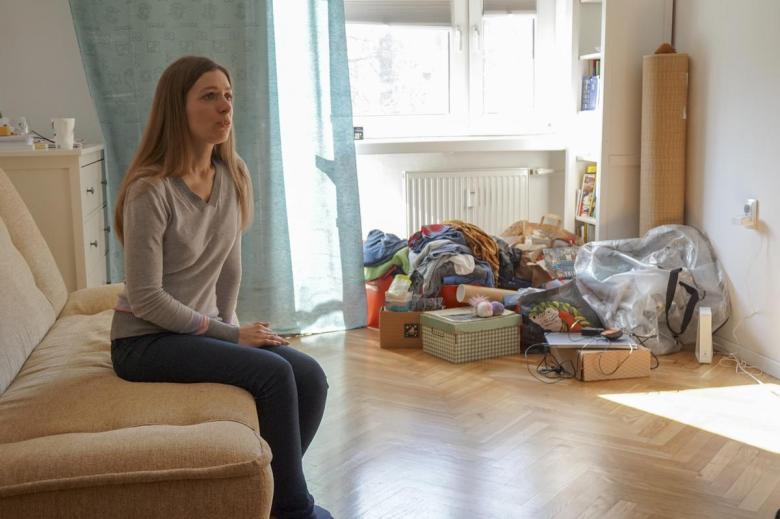
Marina, who fled bombing in central Ukraine with her two daughters, sits a Warsaw apartment that Habitat for Humanity Poland helped secure for the family as part of a partnership with the city to house refugees from Ukraine.
“We didn’t understand what it was, what was happening,” she said. “There were no sirens yet, nothing. It was the first day. And when we were told that across the whole of Ukraine airfields or infrastructure facilities had been bombed, we couldn’t even believe that this was a war.”
In the ensuing days Russia’s invasion of Ukraine intensified, and the nearby bombings continued. Each time the air raid sirens would go off, Marina, her husband and their daughters — Kristina, 10, and Alisa, 5 — would crowd into the hallway of their two-bedroom apartment. “We don’t even have a bomb shelter nearby, where we could hide. Our block of flats is made of prefab slabs, meaning that, if anything were to hit us, or even land nearby, the building would simply collapse into itself.” They decided she would need to leave with the children, even if their final destination was unclear.
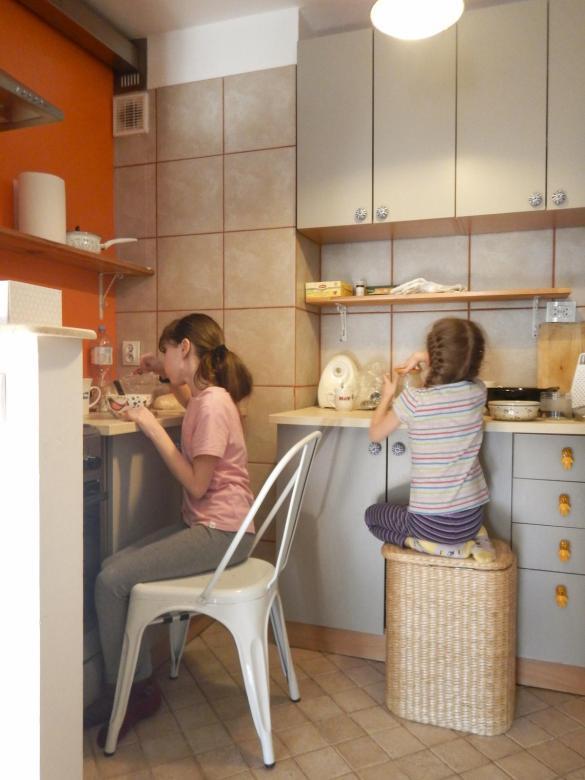
Kristina, 10, and Alisa, 5, eat a lunch in the Warsaw apartment.
Marina learned that the bank where she works as a business analyst would be supplying buses to employees and their families who wanted to leave. Her husband would remain, however, and continue his job as an industrial engineer, to support Ukraine’s economy.
“We were looking for a safe place, because, well, like all mothers who are taking their children away, they simply worry and want their children to stay alive.”
A tearful goodbye: ‘We didn’t know if we would see each other again’
On the eve of their departure, Marina packed her laptop, some clothes, and plenty of water and food because they had heard the shelves were bare at shops along the routes out of Ukraine. Marina told Kristina and Alisa they could each fill a backpack with whatever they wanted. Kristina chose art supplies and a few logic games. Alisa filled her Hello Kitty backpack with stuffed animals, including with her favourites: a My Little Pony toy, Snowflake the white kitty cat, and a blue-collared terrier named Rocky whose grey and white hair has been matted by love.
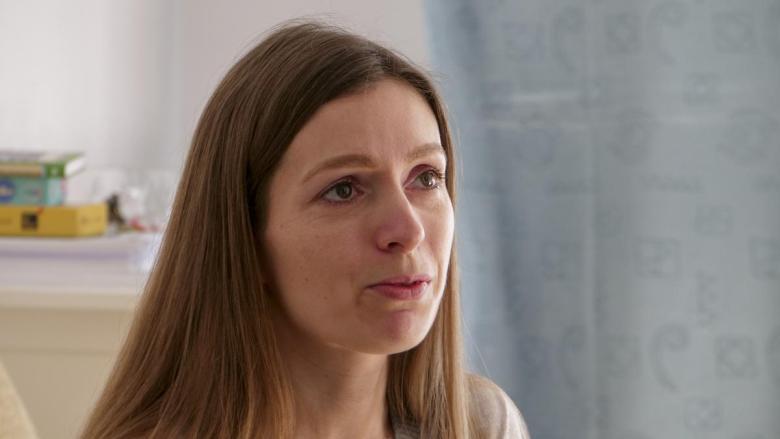
Marina, who fled bombing in central Ukraine with her two daughters shares her story.
Marina tears up as she recalls her husband and all the other fathers saying goodbye to their wives and children as the buses prepared to leave. “On that day for the first time I saw my husband crying,” she said. “Because we didn’t know if we would ever see each other again. We all cried. The children cried. The wives cried. It was awful. The children kept on saying, ‘Mummy, let’s go back home. Let’s return to Daddy.’”
Marina and the girls headed to the city of Lviv, then to a smaller town farther west. Along the way she was in touch with relatives, frantically trying to determine where they should go. Then, friends of the family called and said there’s a housing help desk at the Warsaw East transit station run by Habitat for Humanity Poland.
A new home: ‘We can now sleep in peace’
“This is some miracle, how my friends found this organisation, Habitat,” she says, sitting on a beige sleeper sofa inside a one-bedroom Warsaw apartment where Habitat for Humanity Poland has placed Marina and her two daughters. “When we entered the flat for the first time, it seemed to us that here was a place where we can now sleep in peace, without being woken by sirens in the middle of the night, without having to sit in the hallway for three hours in a row . . . My children had a good night’s sleep for the first time. We felt that we had finally found a home.”
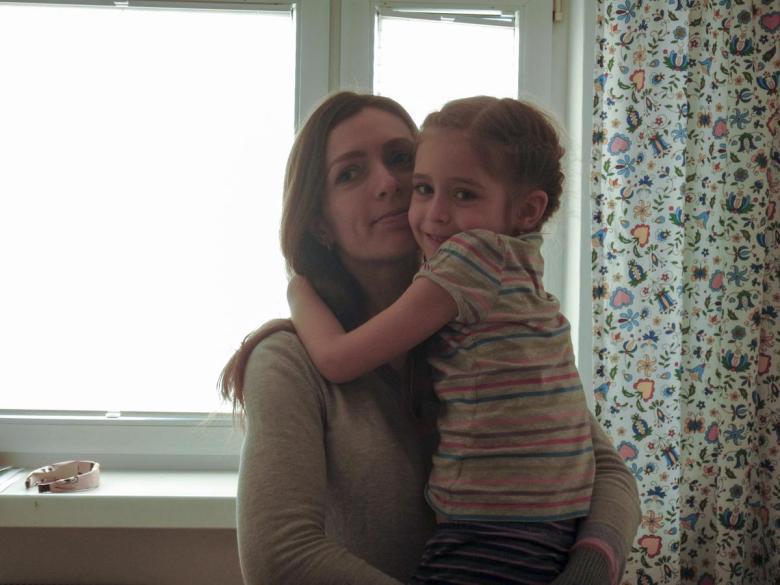
Marina and her daughter Alisa, 5, share an embrace in the bedroom of a Warsaw apartment that Habitat for Humanity Poland helped secure.
Habitat Poland is helping secure shelter for refugees in partnership with the city of Warsaw, which has a database of more than 4,000 residents who have agreed to open their homes to refugees. Habitat runs a kiosk at the Warsaw East transit station, helping get refugees settled into apartments, both those available through the city database and those secured by Habitat Poland through other means. Habitat also arranges hotel rooms for refugees who are headed to other destinations in Poland or other parts of Europe and simply need a day or two to regroup.
The owner of Marina’s apartment said she and her daughters can stay for at least six months. “I am very grateful that we have a roof over our heads, that my children live in safety,” Marina says over the sounds of birds chirping on the balcony and the occasional giggling of Kristina and Alisa, who are playing in the bedroom.
Kristina and Alisa have started to decorate the apartment, putting magnetic butterflies on the stainless-steel refrigerator and the My Little Pony toy on the mantel. They sleep on floor mattresses topped with thick comforters. Alisa has created a neat line of stuffed animals behind her pillow, including Winnie the Pooh, Piglet, and others donated by Polish families. Rocky and Snowflake are there, too, within arm’s reach when she goes to sleep at night.
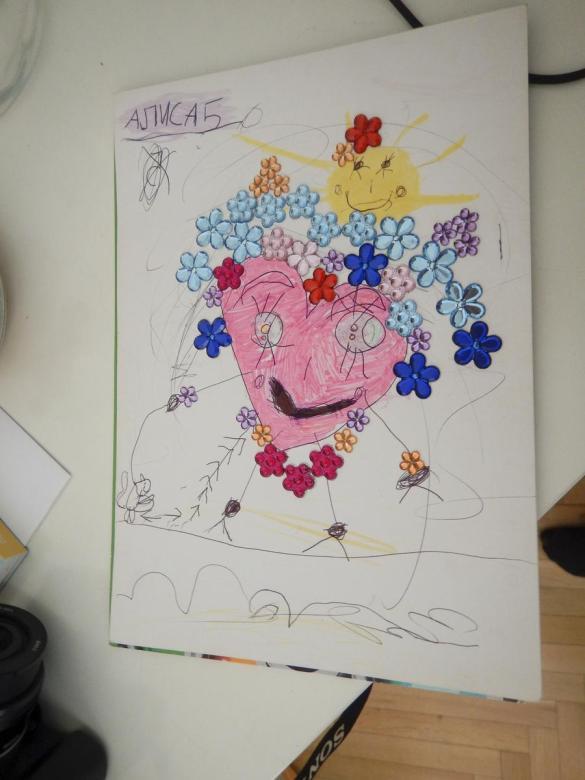
Alisa, 5, has been busy drawing since arriving to Warsaw.
The Habitat Poland’s ReStore in Warsaw, which, if needed, furnishes apartments that Habitat secures for refugees, is preparing to deliver a bunk bed for the girls along with other furniture and household supplies.
Longing for home: ‘We didn’t realise that this was simply great’
Marina is in contact with her husband often. “He goes shopping on his own, when there is no air raid alert,” she says. “They tell us that the economy of Ukraine should be working …He works for the good of Ukraine now.”

The sales floor at Habitat for Humanity’s ReStore in Poland -- half empty in early March as Habitat moved furniture and supplies into apartments housing refugees – had filled back up two weeks later as Polish families continued to donate items.
But she fears for his safety. A few days earlier another residential building only 100 meters from their apartment building was hit by bomb and caught fire. Fortunately, Marina says, no one perished.
Marina said she fully expects to return home, but, like so many displaced by the conflict, she has no idea when. Asked what she misses most, Marina says it’s the time spent sprawled on the floor in her daughters’ room, where bright sunlight would wash over all the toys and games. They would play together for hours.
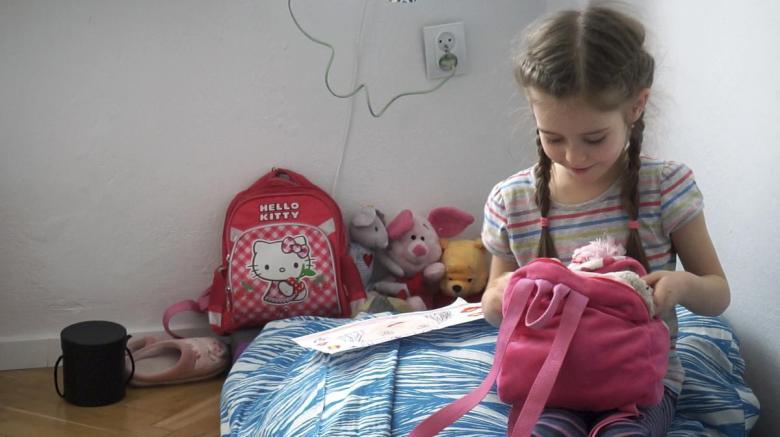
Alisa, 5, sits in the bedroom of a Warsaw apartment.
Marina said she’s incredibly thankful for the support the people of Warsaw have given her family. Habitat Poland checks on her regularly, as does the woman who owns the flat. Alisa has started kindergarten and has found comfort in meeting several other Ukrainian refugee children in her class. Kristina, meanwhile, can continue remote classes because her school in Ukraine went to a virtual format when the war started.
But even as Marina tries to settle in more than 1,000 kilometers from home, she longs for the rhythm of daily life before the war. “My husband and I worked, our children went to school, kindergarten, attended studio classes,” she says. “We were always on the go, never had the time for everything we wanted to do... We didn’t realise that this was simply great. It was life. And that things may somehow go otherwise.”
Support disaster response efforts for Ukraine and in communities around the world.
Off
A place to ‘sleep in peace’: Ukrainian family flees bombing, settles into temporary home

A place to ‘sleep in peace’
Ukrainian family flees bombing, settles into temporary home
What you need to know about the Africa Housing Forum
The first Africa Housing Forum is rapidly approaching, and we can’t wait to lead off the discussions on the future of African cities. This hybrid event will take place both virtually and in-person at the Safari Park Hotel in Nairobi, Kenya on 12 – 14 May 2022.
The first Africa Housing Forum is rapidly approaching, and we can’t wait to lead off the discussions on the future of African cities. This hybrid event will take place both virtually and in-person at the Safari Park Hotel in Nairobi, Kenya on 12 – 14 May 2022. www.africahousingforum.org

There have been many takeaways from the COVID-19 pandemic. But one of the most important is that it’s vital for citizens to have access to safe, secure, and adequate housing during a global health crisis. Despite barriers, gaps, and exclusions to decent shelter existing before the pandemic, it’s worsened, particularly in Africa.
The Centre for Affordable Housing Finance Africa estimates that less than 15% of the country’s urban population can’t afford to purchase developer-built homes. There are also surrounding mortgage finance systems limiting access to the necessary funding.
The Africa Housing Forum, hosted by Habitat for Humanity International in collaboration with partner organizations and institutions, will provide a setting for housing professionals, stakeholders, and local and central authorities to come together.
The forum will be a venue for collaboration and sharing of ideas, experiences, and lessons on solutions to address housing ecosystem issues in the African region.
Fostering inclusivity and resilience in housing in Africa
The theme for the Africa Housing Forum is fostering inclusivity in housing in Africa. It emphasizes the urgency needed to build adequate, affordable, and inclusive shelters that meet the demand of the region. It’s estimated 238 million people are currently in slums or substandard living conditions.
There is an opportunity to place housing at the center of economic recovery. Inclusive housing strategies can trigger multiple effects, including financial growth. At the same time, it can contribute to safety, security and generate employment opportunities for citizens.
The goals of the Africa Housing Forum
The housing forum aims to promote innovation, share promising ideas, and enable connections and collaboration. The hope is to improve policies and practical solutions that increase access to safe, decent, and affordable housing. For Africa, there are additional objectives aimed at addressing this situation. Some of the most critical include:
- Build coalitions that can influence market approaches and policy in favor of affordable and sustainable housing in Africa
- Enable the ability to scale low-cost, affordable housing for socio-economic segments in the African region.
- Recognize and act on the importance of housing as a driver of inclusive economic growth, resilience, and sustainability in human settlements.
- Promote, celebrate and reward innovative and high-impact affordable housing initiatives in the African region
The Africa Housing Innovation Awards
The Innovation Awards will also play a significant role in the event as part of the Africa Housing Forum. It is designed to promote and celebrate innovative housing solutions that can improve access to decent, affordable, and disaster-resilient shelter.
The Awards is divided into three categories.
1. Best Practices
This category relates to practices that originate from public or public-private partnerships that contribute to the improvement of communities and settlements. These also seek to increase access to affordable housing for disadvantaged citizens.
2. Public Policies
This category targets public policies across all levels of government. It must help reduce the housing deficit while considering the specific needs of minorities, vulnerable, and marginalized populations.
3. ShelterTech
This category focuses on technology innovations. They can be products or services that provide practical solutions to affordable housing challenges. These innovations must also allow for it to be commercially scaled and replicated to increase community impact.
One winner from each category will win a cash prize of $US5,000.00 and will be receiving additional visibility from Habitat for Humanity and its partners.
How to enter
Applications can be filled out on the African Housing Forum website. Please read the terms and conditions before entering to ensure your eligibility. Applications will close on March 31.
How to attend the Africa Housing Forum and other ways to participate
The first-ever Africa Housing Forum will be held at the Safari Park Hotel, Nairobi, Kenya, from May 12 to 14. You can attend the event in-person or virtually.
Exhibition opportunities are also available.
Registration is complimentary for all participants, for a limited time and with limited space for in-person participation. Do you want to secure your spot? Head over to www.africahousingforum.org now to reserve your space and/or to contact us for more information.
Off
What you need to know about the Africa Housing Forum
Teaser image