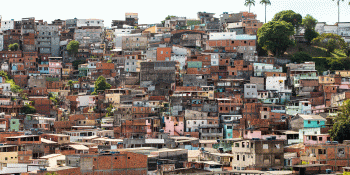
Housing Poverty in Romania: A New Housing Model

Habitat for Humanity Romania has recently launched a pilot project which aims to find the most cost-effective housing solution. There have been 6 buildings already built. Is it possible to build a house in 5 days? Find out more in this episode with our guest Roberto Pătrășcoiu - national director of Habitat for Humanity Romania.

Did you know that an estimated five million people live in poverty in Romania? Of this total, 1.5 million are children.

Urgent repair is required on over 20% of the country’s housing stock. This is due to the very poor condition they are in. In winter, 12% of Romanians cannot keep their homes adequately warm.

Habitat for Humanity recently launched a pilot project which aims to find the most cost-effective housing model. The design of these homes is based on a winning model that was chosen out of 40 submitted proposals at the architectural competition, Home for Humanity, which the Hilti Foundation supported. There are six buildings already constructed.

Will this new housing model be sufficient to address poverty in Romania?


What is the New Housing Model?

At the moment, the project is a pilot. Six test units have been constructed within two stages.

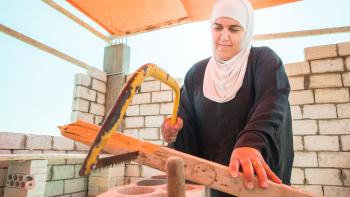
Construction was accelerated last August with the assistance of volunteers. 70% to 80% of the buildings were created within five days. By the end of January 2022, they were completed.

The winning design from Home for Humanity had some clear advantages. Firstly, it had the lowest budget. There was also the simplicity of the invention as it was modular. It means it can be modified to suit the needs of the residents. It can have one to three modules to determine the size of the home.

The design also respected the core house concept. It means that the family who resides within it can expand that structure if they require additional space. When people get better jobs or access to more money, they can develop their homes on their own.

Lastly, the building can be built fast with volunteers. It was tested with helpers and found to be very efficient.
Listen to Home Sapiens podcast.

What Does the Core House Consist Of?

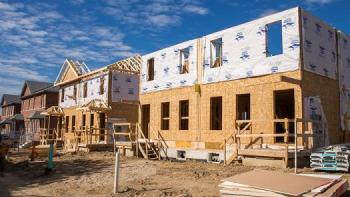
The core house includes a large and small unit, much like a duplex. There is a common wall that separates them. It makes the home more functional and efficient in terms of land and costs.

The small unit is roughly 34 square meters, and the larger one is approximately 50 square meters. In the smaller space, the kitchen and living room are one space. There is also one bedroom. So it can house a maximum of three people.

The larger unit is similar to a two-bedroom apartment. The living room is 18 square meters and coupled with the kitchen and bathroom. Each bedroom is roughly 16 square meters. It can house a family of four or five people.


Where Were the Units Built?

Two duplexes or four homes were built in a small village in the northeast part of Romania known as Poduri. Approximately 1500 people live in this area, and it is located in one of the poorest regions, not just in the country but in the European Union.

The other unit is located in the Kumpana village, which is a little bigger. There are roughly 6000 people who live here. It is in the Eastern part of Romania near the Black Sea.

80% of the construction was completed by 20 volunteers and took five days to finish. More than half of the assistants didn’t have construction experience and could still get the work done in this amount of time. After five days, some technical interior work such as electrical and thermal installations were conducted by specialists.


Will More Houses Be Created with This Design?

The next plan is to build over 200 homes in the coming years.

As this is a pilot project, there will be a review to see what lessons can be learned. Most parts are working. But there are some areas of improvement that can help make the design even better.

For example, one of the aspects that will get adjusted is simplifying the structure. This will result in even more cost efficiencies and make it faster to build. Solutions are already in place, and specialists have been engaged. There is also a need to increase the surface, particularly in the small unit. This will increase the cost, but the budget will balance out with the benefits of simplifying the process.


Stay Up to Date with the Project

Home means happiness, peace of mind, and family.

Projects like these can help reduce poverty in Europe and bring more people together across the region. If you want to learn more and support our work in Romania visit www.habitat.ro.


Listen to Home Sapiens podcast:

Apple Podcasts

Spotify

Podbean

<Go back> <Previous Episode>

Find out more

Climate Change and Housing: How Must Our Homes Adapt

Climate change affects all areas of our daily lives. Recent study published by The Intergovernmental Panel on Climate Change which is the United Nations body for assessing the science related to climate change says that Climate change is already affecting every inhabited region across the world. Do our homes need to change or has the process already started? How can we save energy? This and much more in the first episode of season 2 of Home Sapiens Podcast with our speaker Besim Nebiu. 

Read more

Equality in an unequal society

Episode 4 brings up the issue of gender equality. We take a closer look at customs and traditions in Lesotho. Stories of women evicted from their homes are typical in many communities in this country. Fungai Mukorah, national director of Habitat for Humanity Lesotho,  walks us through women’s experiences and their fight for shelter. 

Read more

Studying by candlelight

Episode 5 is driven by young enthusiasts. Linus Wahome, founder and CEO of ManPro Systems Ltd, shares his childhood and school memories . As a family of three tried hard to provide best conditions for their children, Linus and his siblings had to share one candle while doing their homework. Fortunately, this story has a happy ending.  

Read more
Off
Housing Poverty in Romania: A New Housing Model
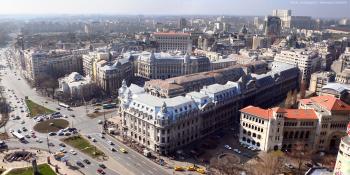
landscape-city-bucharest-romania-stock

Housing Poverty in Romania: A New Housing Model

Teaser image
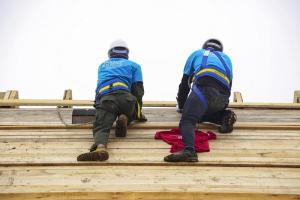
roof construction

Climate Change and Housing: How Must Our Homes Adapt

Climate change affects all areas of our daily lives. Recent study published by The Intergovernmental Panel on Climate Change which is the United Nations body for assessing the science related to climate change says that Climate change is already affecting every inhabited region across the world. Do our homes need to change or has the process already started? How can we save energy? This and much more in the first episode of season 2 of Home Sapiens Podcast with our speaker Besim Nebiu. 

Climate change affects all areas of our daily lives.

A recent study published by the Intergovernmental Panel on Climate Change, the United Nations body for assessing the science related to the phenomena, says that it already affects every inhabited region across the globe and that human influence contributes to many observed changes in weather and climate extremes.

This undoubtedly affects the way we live.

So do our homes need to change, or has the process already started?


Are We Building Houses Differently?

How homes are built has dramatically changed over the past fifty years. Not just once, but several times.

On average, houses in the 20th century tend to be much larger and leave a bigger footprint. There are additional rooms. There are larger spaces. People are consuming more, which seems to be why they need bigger places. They want more room to cook, heat, and protect cars. We have also discovered new habits, behaviors, and patterns which require extra space.

Listen to Home Sapiens podcast.

Have These Changes Influenced the Housing Industry?

These changes to the way homes are built have influenced construction techniques and materials. It has even changed the entire thought process of how a property is built. There are also impacts to real estate markets, costs to purchase properties, and insurances.

These changes negatively affect vulnerable groups. Those who can buy a home are more likely to get a more resilient property and better equipped to address situations of risk that are coming from the impact of climate change. This can be anything from fires to floods to cyclones.


Who are the Vulnerable Groups That are Impacted?

Lower-income earners are more likely to have housing that can’t withstand the impacts of climate change. They may not have access to proper settlements, and they’re more likely to live within a less resilient community.

The pavements need repairs. The elevation isn’t high enough. There is limited access to the construction and maintenance of the area as well as the property.


How is Housing Contributing to Climate Change?

It’s a well-known and publicized fact that approximately 40% of greenhouse gas emissions come from buildings. While public and industrial structures play a part, burning, cooling, and heating primarily happen in the housing sector.

Even though there is awareness of the impacts of housing on climate change, it has not been prioritized appropriately as it’s more complex than other issues. For example, a lot of the housing is privately owned. It’s also costly, and many different stakeholders need to be engaged.


What is the Importance of Energy Efficiency?

In the past 50 years, a lot of housing construction was completed rapidly, particularly in Eastern Europe. It was prefabricated, and its purpose was to house significant segments of the population who were moving from the countryside to newly established urban centers.

There was very little attention to energy features when these properties were built. It was cheaper and socialized. But it created an inefficient housing stock and burned more energy than it should for heating, cooling, lighting, and cooking.

Now retrofitting is required to this building stock to meet the requirements of today’s standards. The technical component is relatively easy. There is technology that is readily accessible. It can decrease heat leakage from the façade, roof, or windows, reducing energy use by up to 70%.

The organizational aspect is more complex, so it has not been completed at scale. These changes require a lot of social facilitation. It involves meeting with tenants or homeowners. There is also the review of laws, regulations, government subsidies, bank loans, and energy policies. They all must come together, and it requires someone to organize it.


Is There Anything Homeowners Can Do Now to Make Homes More Energy Efficient?

The best thing homeowners can do is organize and work collectively with associations.

They will create a process of maintaining and managing their own property and neighbors. When this occurs, it will result in the improvement of features. Often the saving of energy is not dependent on investment. Sometimes it’s behavioral and requires more awareness and information of where you use energy unnecessarily.

Some of the behavioral changes that can be made that are low cost and high impact include using different light bulbs, changing patterns and regimes for heating, and updating light switches.


How to Stay Up to Date with Climate Change and Housing

Home is where you spend most of your time in your life.

It’s where you create and live through most of your feelings. You hear good news, bad news, sad news, happy news. Home is where you celebrate with friends and family. These days it is also the place where you work from.

This is also why our dwellings need to be energy efficient. If you want to learn more about how housing impacts climate change and the importance of energy-efficient buildings, make sure to sign up for our newsletter to remain in the conversation.


Listen to Home Sapiens podcast:

Apple Podcasts

Spotify

Podbean

Find out more
Does the right to housing exist?

Episode 1 welcomes listeners to the world of housing. Architect Esben Neander Kristensen, Director at Gehl, explains the difference between home and housing, discusses the right to housing, and provides insights into how the COVID-19 pandemic changed our perception of home. This episode opens the first season of Home Sapiens. 

Read more

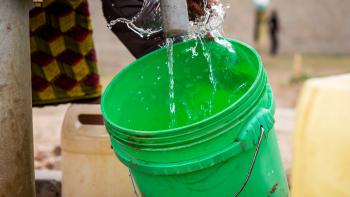
Water is life

In Zambia, many families are challenged every day to survive. Mathabo Makuta, national director of Habitat for Humanity Zambia, discusses problems with access to clean water and water borne diseases.  

Read more
Off
Climate Change and Housing: How Must Our Homes Adapt
house-in-poland

Climate Change and Housing: How Must Our Homes Adapt

Teaser image
poland-house

Join Europe Housing Forum 2021 online

The Europe Housing Forum 2021 takes place online on November 16-19, 2021. The importance of housing as a driver of economic growth and sustainability in human settlements will be one of the central discussions during the Forum. The Europe Housing Forum aims to bring together different stakeholders to discuss solutions to complex housing problems in the region. Sessions take place in the afternoons.

The Europe Housing Forum 2021 takes place online on November 16-19, 2021. Register for the event by following this link to the Europe Housing Forum website: www.europehousingforum.eu/registration.

Speakers of the Forum include Deputy mayor of Paris for Housing, Ian Brossat, Barbara Steenbergen, Head of the International Union of Tenants, Manuel Pizarro, Member of European Parliament, Paolo Ciccarelli, Head of Unit Sustainable Transport and Urban Development at Department General INTPA at the European Commission and many others.

The importance of housing as a driver of economic growth and sustainability in human settlements will be one of the central discussions during the Forum. It also aims to strengthen the regional community’s commitment to the UN Sustainable Development Goals and align climate change initiatives with national priorities. Other topics that cover both European and global housing issues will include:

  • Affordable and social housing;
  • Energy poverty and sustainability;
  • The new EU Bauhaus initiative;
  • How COVID-19 impacts housing;

Reasons to join online

The Europe Housing Forum aims to bring together different stakeholders to discuss solutions to complex housing problems in the region. Sessions take place in the afternoons. They will range from roundtables to panels and workshops with key people from the housing sector, policymakers, business leaders, urban planners, donor agencies and youth organizations. Global and regional supporters of the Forum include the Hilti Foundation, Whirlpool, the Somfy Foundation and Wienerberger.

Habitat for Humanity International and its partner organizations, UNECE, UNDP, UN-HABITAT and the International Federation of the Red Cross and Red Crescent, organized Europe Housing Forums in 2011, 2013 and 2015 to call on developing an integrated EU Housing Policy approach.

Join us online at the Europe Housing Forum to learn and exchange ideas about the future of housing.

To register, visit www.europehousingforum.eu/registration. In case you have any further questions, feel free to email us [email protected].

Off

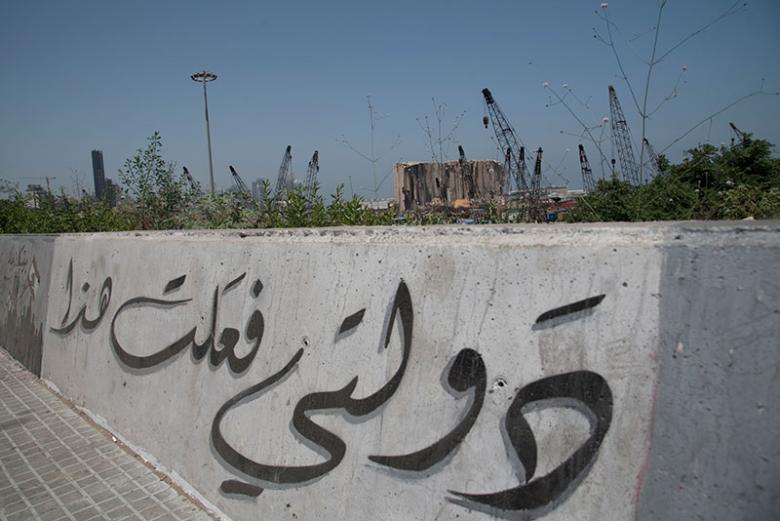
Rebuilding Beirut: Supporting the most vulnerable

A devastating blast ripped through the Port of Beirut on Aug. 4, 2020 destroying entire sections of the city. Officials estimate that more than 170,000 people live in homes that need to be reconstructed. A year later, investigation findings have not been disclosed and no one has been held accountable.  

woman-in-beirut

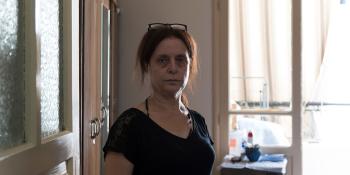
“It was an earthquake. I can only call it an earthquake, but the difference is that it was man-made. Nature did not bring this upon us, people did,” says Deebeh Al Dkak, a resident of Burj Hammoud district in Beirut, as she recalls events last year. A devastating blast ripped through the Port of Beirut on Aug. 4, 2020 destroying entire sections of the city. Officials estimate that more than 170,000 people live in homes that need to be reconstructed. A year later, investigation findings have not been disclosed and no one has been held accountable.  

As the eldest of four sisters, Deebeh moved to Beirut, Lebanon’s capital, from Zahle in the Bekaa Valley four decades ago seeking employment. She began working at a factory. Since then, she has lived in the same small flat in Burj Hammoud. As she recollects the events of that first Tuesday in August, she trembles and tries to hold back her tears.

wall-in-beirut

Port of Beirut

Deebeh was walking home from work when she heard a loud earth-shattering sound. “I quickly turned my back to the sound, closed my eyes and faced the corner. When the explosion happened, I felt my soul was blown out of my body,” she says. At home she couldn’t unlock her door as the explosion had dislodged it. She got in with the help of her neighbours and found the bathroom door knocked out, the wooden window frames and glass broken, the stove and washing machine knocked over and the cupboards hanging off their hinges.

Today, the windows and doors in Deebeh’s apartment are fully restored, the plumbing in the bathroom and kitchen fixed and a water heater added. “Many agencies and civil organizations surveyed the area, all asking the same questions and promising to come back. No one did, except you,” she says referring to Habitat for Humanity and the Catholic Relief Services who had joined forces to respond to the Beirut Port explosion and oversee repairs in homes such as Deebeh’s.

Lebanon is facing a multi-faceted crisis. The COVID-19 pandemic complicates matters further. Economic and political chaos sent poverty levels up and placed extreme pressure on vulnerable families struggling to secure food, water, electricity and healthcare. Habitat for Humanity and CRS are supporting those whose homes suffered minor or moderate damage. Partner organizations also provide financial and technical assistance to a selection of local nonprofit organizations focused on shelter rehabilitation.

Read more

Off
Rebuilding Beirut: Supporting the most vulnerable

Rebuilding Beirut: Supporting the most vulnerable

Generous Support in Difficult Times

The high school in Dhahran, Saudi Arabia, usually volunteers with Habitat for Humanity’s Global Village program. With the COVID-19 pandemic going on, there was no way they could travel to the build site. Many students know how important a decent home to protect against diseases. They decided to raise and donate funds to Habitat for home construction. In these difficult times, the school collected 16,000 USD to support Habitat programs in Lebanon and India.

The high school in Dhahran, Saudi Arabia, usually volunteers with Habitat for Humanity’s Global Village program. With the COVID-19 pandemic going on, there was no way they could travel to the build site. Many students know how important a decent home to protect against diseases. They decided to raise and donate funds to Habitat for home construction. In these difficult times, the school collected 16,000 USD to support Habitat programs in Lebanon and India.


The Dhahran High School has been partnering with Habitat since 2009. They completed 27 volunteer builds with almost 600 participants. “Going virtual due to the pandemic was a challenge for the school’s Habitat for Humanity club. Each year, the organization depends on student-organized and student-led events to raise funds. Seeing that in-person activities are no longer possible, the club’s executive team came up with a plan,” explained Alichia Gerber, a teacher at DHS. The club launched their first ever year-long group competition: dividing members into groups to compete against each other in raising funds. Throughout the year, they held virtual events to benefit the housing cause.

rose

A cupcake in the shape of a rose made by one student for a virtual student fundraiser

“The year started with the virtual iDo Series, 12 student-led sessions teaching everything from cooking to painting and more. Later, students also engaged in tutoring, baby sitting and selling homemade masks to raise funds,” said Alichia Gerber. In the second semester, students organized a Walkathon Month, when club members walked, ran, biked, and swam to reach the club’s goal of covering distance from Lebanon to India, a total of 4,400 km. As students did this, they also recruited sponsors to donate money for the distance they travelled. The final fundraiser was called the Habitat Garage Sale, when students sold what they had or created and donated proceeds to Habitat. At the end of the year, students had opportunities to create Habitat displays to convey what they had learned and take extra online courses to educate themselves about Habitat and housing.


Students presented two cheques, totaling USD 16,000, for Lebanon and Habitat India during the online sessions with representatives of Habitat for Humanity from the area office, volunteering programs and countries, India and Lebanon.

Make a difference

Off
Generous Support in Difficult Times
students

Generous Support in Difficult Times

What is a slum

In episode 3 of our podcast series, we talk about informal settlements in Africa with Charles Witbooi, Program Head for Advocacy and Volunteering Engagement at Habitat for Humanity South Africa.

In episode 3 of our podcast series, we talk about informal settlements in Africa with Charles Witbooi, Program Head for Advocacy and Volunteering Engagement at Habitat for Humanity South Africa.

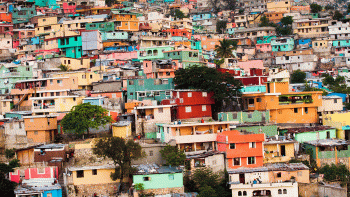
The first very important point Charles clarifies is the term “slum” itself. In South Africa, “slum” is not used due to its political implications. The country’s past was marked by Slum Clearance Acts, which were used by the government to evict people who lived in poor conditions. For this reason, the preferred terms are “informal settlements” or “squatter camps”.

As in other parts of the world, despite the different terms, what they describe is areas where people live in temporary households and without basic services. However, the degree of poverty varies from one settlement to the other; some of them have rudimentary services – shared toilets or electricity – some have none.

In South Africa, the origins of informal settlements can be traced back to the years of segregation. In those days, the population was segmented according to official racial groups which all had their own geographical area to live in.

After 1994, the year when segregation ended, and the country opened to the world. Black South Africans, who until then had been cut out of key areas of the economy, had the chance to get job opportunities and move freely, often closer to big cities. As a result, the number of informal settlements around urban areas grew quickly.

As of today, the biggest squatter camps are indeed located around metropolitan cities, such as Johannesburg, the centre of economic life, Soweto, or Cape Town, Khayelitsha.

The latter for example, Khayelitsha, is a suburb of Cape Town, which features a variety of different living conditions: from formal housing with decent economic opportunities and even some basic services to areas where services are very limited, with no access to running water or electricity.

Listen to Home Sapiens podcast.

In addition, in the Cape Town area, informal settlements are often located 30-35km or more from the urban core, which is the centre of all economic activities. Therefore, people can really find themselves marginalised in many ways. Being so isolated, these areas often do not represent a pleasant or safe environment, especially for women and children.

The housing diversity in settlements such as Khayelitsha is mainly due to the policies of last 27 years. Since then, the government has been giving free housing to those eligible. However, the process often takes longer than expected, and many have been on a waiting list for years.

Since there is no money to acquire a house on the market, most people have no other alternatives than keep living in informal, temporary settlements while hoping and waiting for the next housing project to improve the quality of their lives.

What people living in squatter camps all tend to share is a life on a very low income. However, the reasons why they chose to live there can be different for each community. In the metropolitan areas, for example, most people came from rural areas – where there are less opportunities – in order to find a better job, better education for their children, or simply better social services, and live in temporary housing in the meantime.

As much as we like to feature success stories of the people we support, however, not many South Africans living in those conditions have to opportunity to make it and improve their life conditions, which is why our work with these communities is so critical.

The current pandemic has highlighted the core of the issue: shelter. When people have access to proper housing, hygiene can be preserved, and distancing or self-isolation can be easily put into practice, so that is the starting point for a change.

The process, according to Charles Witbooi, should be driven by the government but should have all actors – NGOs, local communities, companies – actively involved, each playing their own role but all working together to achieve a common goal – improving the life conditions of the informal settlements’ dwellers.

In Charles’s opinion, a home is a place where a family can live together in a secure environment, with sufficient space and, most importantly, with dignity. A place that allows children to go to school and study safely, so that they can improve the quality of their lives in the future, if compared to previous generations. This is what all housing projects should be based on: the promise of a place one can become proud owner of and, finally, the transformation of that promise into a reality.

Home Sapiens podcast was produced as a part of the Build Solid Ground Project, founded by the European Union, Habitat for Humanity. Its content is the sole responsibility of Habitat for Humanity and does not necessarily reflect the views of the European Union


Listen now:

Apple Podcasts

Spotify

Google Podcasts

<Go back> <Next Episode>

Discover more

Equality in an unequal society

Episode 4 brings up the issue of gender equality. We take a closer look at customs and traditions in Lesotho. Stories of women evicted from their homes are typical in many communities in this country. Fungai Mukorah, national director of Habitat for Humanity Lesotho,  walks us through women’s experiences and their fight for shelter. 

Read more

Studying by candlelight

Episode 5 is driven by young enthusiasts. Linus Wahome, founder and CEO of ManPro Systems Ltd, shares his childhood and school memories . As a family of three tried hard to provide best conditions for their children, Linus and his siblings had to share one candle while doing their homework. Fortunately, this story has a happy ending.  

Read more

Does the right to housing exist?

Episode 1 welcomes listeners to the world of housing. Architect Esben Neander Kristensen, Director at Gehl, explains the difference between home and housing, discusses the right to housing, and provides insights into how the COVID-19 pandemic changed our perception of home. This episode opens the first season of Home Sapiens. 

Read more

Water is life

In Zambia, many families are challenged every day to survive. Mathabo Makuta, national director of Habitat for Humanity Zambia, discusses problems with access to clean water and water borne diseases.  

Read more
Off
slum-housing

What is a slum?

a look into Khayelitsha, one of the world's biggest slums

Subscribe to